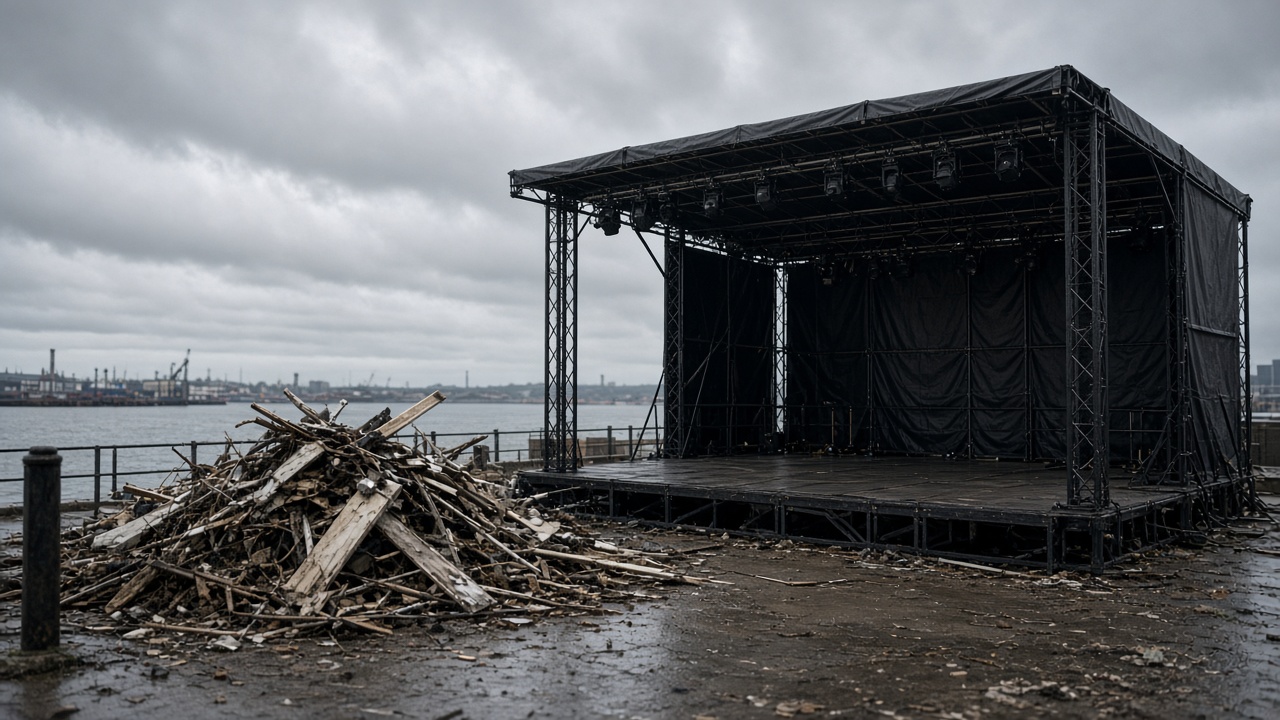
The Kaohsiung Symphony Orchestra relocated a Sunday charity concert from Pier 2’s open-air stage to the indoor Music Center hall after Typhoon Champi washed timber and plastic debris onto the waterfront performance area, organizers said Saturday night.
Harbor stage safety
Champi’s swells sent logs and dock floats into the arts pier that hosts pop-up orchestras during mild weather. Engineers who inspected the stage Sunday morning found saltwater in cable trenches and loose ballast on speaker towers. Rather than delay only a few hours, the symphony moved the 7 p.m. program indoors where humidity controls could protect borrowed string instruments.
Ticket holders were told to use the same QR codes at the Music Center entrance; sponsors kept donation bins active for typhoon relief accounts vetted by the city social affairs bureau.
Audience and repertoire changes
Music director Lin Wei-chieh trimmed outdoor-only fanfares and added a shorter chamber set so crews could strike the harbor stage before Monday high tides. The program still featured Taiwanese composers who wrote about harbor fog, a nod to Kaohsiung’s port identity even though listeners sat in upholstered seats instead of sea breeze.
Broader cultural calendar
Other weekend events in southern Taiwan faced similar calls: night markets reopened only after health inspectors cleared mud from aisles, while outdoor film screenings canceled entirely. The symphony’s quick pivot kept musicians paid and preserved a charity tie-in that might otherwise have been postponed until Lunar New Year.
What’s next on the waterfront
Port maintenance crews said they would need until midweek to dredge lumber from the pier approach, pushing the next scheduled waterfront concert to late November. For audiences, the indoor detour was a reminder that Kaohsiung’s harbor aesthetic comes with storm maintenance bills—and that culture offices are now part of disaster reopening plans, not an afterthought once roads clear.
Looking ahead
Officials said they would publish updated guidance before the work week resumes, and urged residents to keep checking government portals rather than forwarded messages. For Taiwan’s east coast, the recovery rhythm is still measured in ferry timetables, clinic hours and baseball innings—not a single headline.