Premier Cho Jung-tai ordered Taiwan’s agriculture ministry to approve and pay disaster aid within three days of receiving county paperwork, as official tallies showed Champi farm losses reaching NT$193.32 million with Yunlin County alone accounting for NT$126.62 million.
Sunday inspections in Yilan
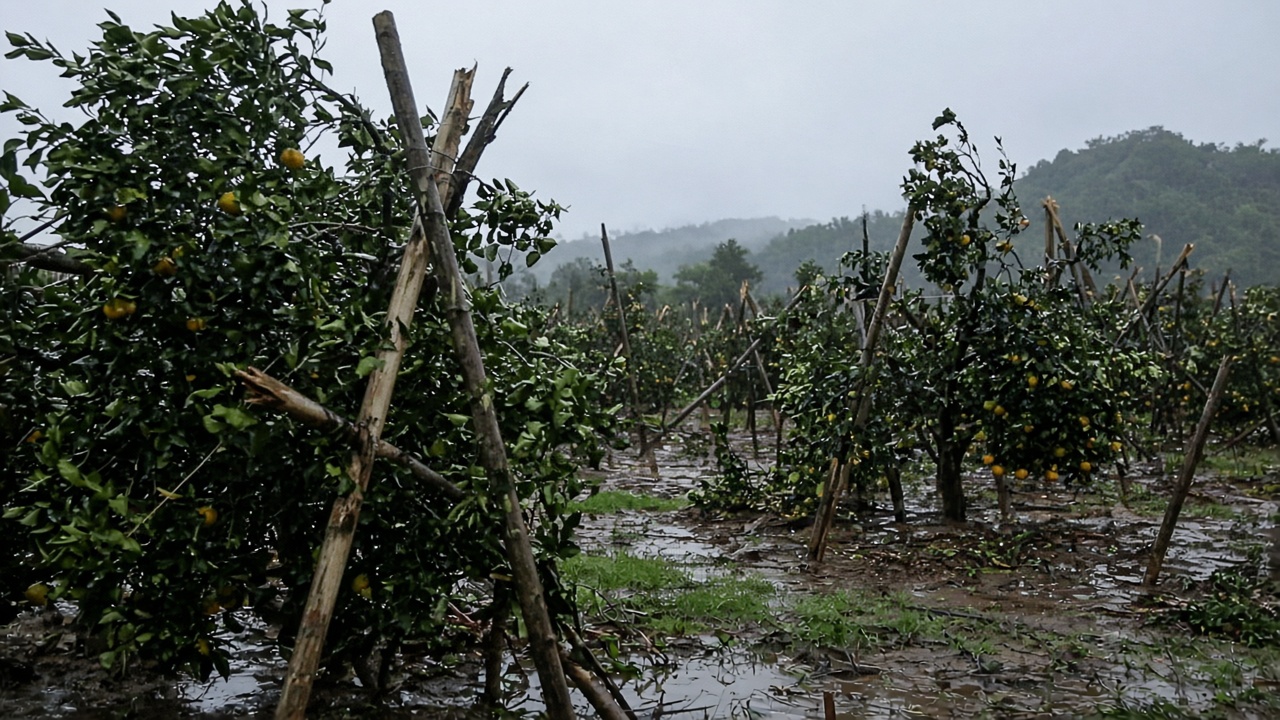
Cho spent Sunday touring damaged orchards and a public grain warehouse in Yilan, urging the “faster, broader, simpler” processing that he repeated at each stop. Agriculture Minister Chen Jun-chi told reporters that once a county submits verified loss reports, central reviewers would aim to release payments within 72 hours rather than the longer cycles farmers complained about after previous storms.
Yilan qualified for whole-county crop assistance, including citrus grants of NT$95,000 per hectare and subsidies for horizontal trellis systems that can cost NT$540,000 per hectare for pomelo orchards. Cho said technical teams would help farmers replant and manage pest risks once mud is cleared from rootstock.
Where losses concentrate
By Sunday evening the agriculture ministry’s rapid estimate put total losses at NT$193.32 million across crops and private facilities. Yunlin’s garlic, peanut and onion fields dominated the figure, while Miaoli, New Taipei and Yilan followed with smaller but still painful hits. Insurers said parameter-based policies for crops such as bananas and citrus could trigger roughly NT$70 million in payouts without field inspections, speeding cash to holders of weather-index policies.
Longer resilience spending
Cho also highlighted two longer-term programs—NT$6 billion for reinforced greenhouse structures and NT$9.2 billion for mechanization pilots—that the cabinet has bundled into a NT$15.2 billion resilience package for 2027–2030. Those figures do not replace immediate disaster checks, but they signal how the administration wants to answer critics who say Taiwan keeps rebuilding the same vulnerable net houses after every typhoon.
Political timing
With the legislature out of session for the holiday week, the executive branch is relying on administrative channels rather than a special appropriation bill. Opposition lawmakers have argued disaster reserves should be larger, while the premier countered that speeding existing programs matters more than announcing new headline numbers. Farmers’ associations in Yunlin said they will watch whether the three-day pledge holds once loss forms pile up midweek.
Looking ahead
Officials said they would publish updated guidance before the work week resumes, and urged residents to keep checking government portals rather than forwarded messages. For Taiwan’s east coast, the recovery rhythm is still measured in ferry timetables, clinic hours and baseball innings—not a single headline.