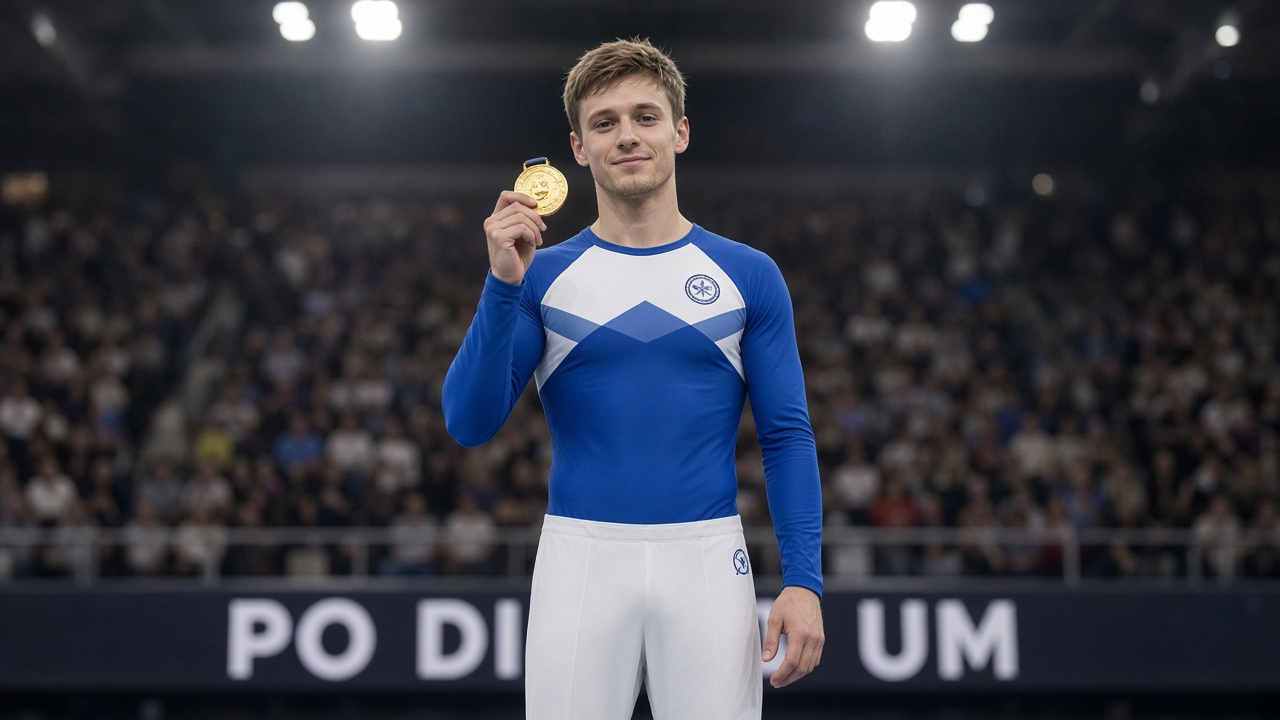
Tang Chia-Hung stood atop the horizontal bar podium in Rotterdam on Sunday with Taiwan’s flag rising for a world gymnastics title for the first time, turning a third world final appearance into a 14.966-point gold medal performance.
The 30-year-old, who won Olympic bronze on the same apparatus in Paris, posted a 6.6 difficulty score and an 8.366 execution mark to edge Japan’s reigning Olympic champion Shinnosuke Oka, who took silver at 14.800. Russia’s Sergei Naidin shared that total for bronze, with Oka ahead on execution. Taiwan had never won gold at the World Artistic Gymnastics Championships before; its previous best on this stage were silver medals on vault in 1993 and pommel horse in 2019.
From near misses to a landmark medal
Tang told reporters he had reached two prior world finals without his best routines and entered Sunday’s session intending simply to enjoy the atmosphere. “This is my first world championships medal, and the first is gold,” he said in comments carried by International Gymnast. “Today I just wanted to enjoy the vibe and the competition, and do whatever I train at home.”
Qualification had placed him second behind Oka, and he competed fourth in the eight-man final. Taiwanese media noted the performance as redemption after a missed routine at the Asian Games in Nagoya, where a fall had cost him a shot at another major title. In Rotterdam, his high-flying release moves drew audible reactions from the crowd before a controlled landing sealed the historic result.
What the medal means at home
World Gymnastics listed Chinese Taipei with a single gold in the medal table from Tang’s bar work, while the United States and China led the overall count as the Rotterdam meet closed. Taiwan’s sports administration and overseas representative offices congratulated Tang, and footage showed him emotional during the medal ceremony as the team anthem played.
The championships now shift focus toward the next Olympic cycle, but for Taiwan’s small elite gymnastics program the immediate significance is institutional: a first world gold validates investment in men’s apparatus specialists and gives Tang a signature result beyond his Olympic bronze. He said the victory had renewed his motivation to keep competing. “I did it and I will keep going,” he told International Gymnast.
Coaches in Taipei said the result could help recruitment for boys’ programs that have long trailed basketball and baseball in public attention. Tang’s difficulty choice in Rotterdam — a 6.6 routine that carried risk on each release — reflected a strategy of pushing execution scores rather than playing safe in a final where one low landing would have dropped him off the podium entirely. With Oka and Naidin both posting 14.800, the margin for error was effectively zero.