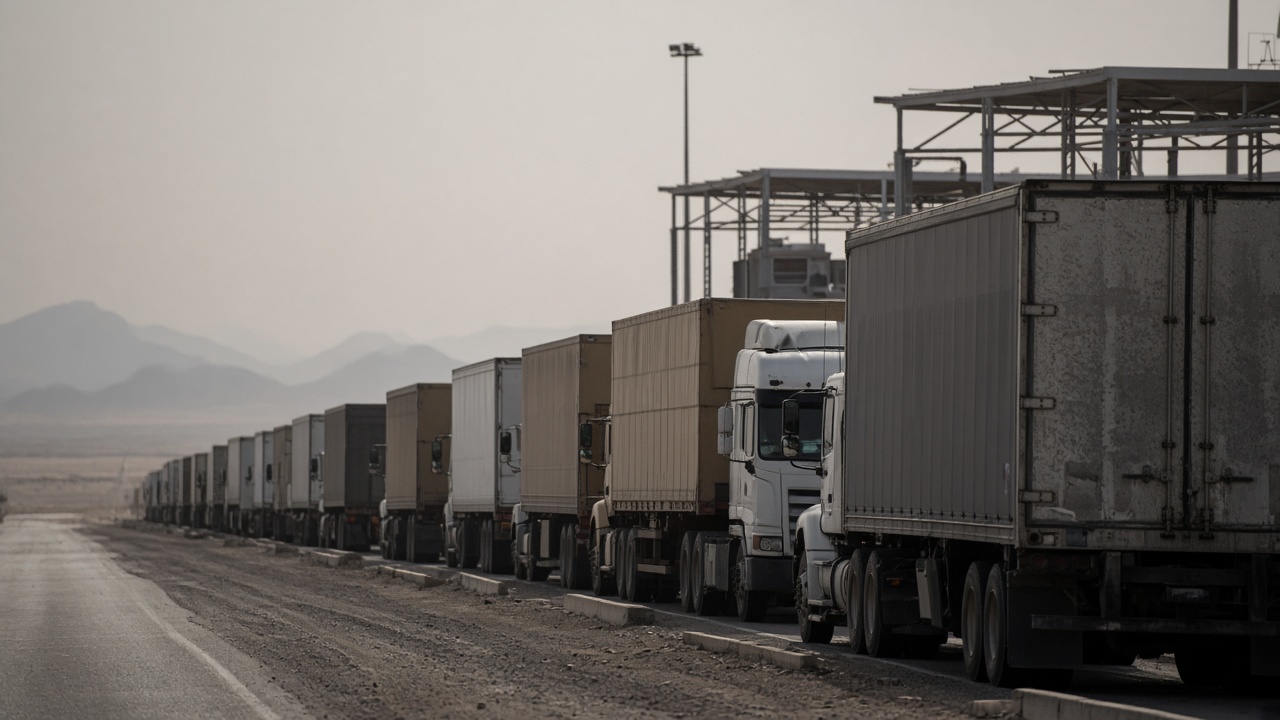
Syria shut its main southern border crossing with Jordan on Tuesday, halting passenger and commercial traffic in both directions as recriminations mounted over Jordanian air raids that Amman cast as retaliation for a lethal attack on a Greek Orthodox church.
The General Authority for Border Crossings and Customs said the Nassib gateway, known as Jaber on the Jordanian side, was closed “due to the current circumstances.” The move stranded trucks and travelers on a route that had only recently become a symbol of Damascus’s effort to normalize trade with neighbors after years of war.
What Jordan says it struck
Jordan’s armed forces said the operation targeted “terrorist organizations” and was coordinated with Syrian authorities. Officials in Amman have linked the raids to the investigation into the assault on the Church of the Holy Apostles in the Karak governorate, which left seven people dead and more than 30 wounded last week.
Damascus offered a sharply different account. Syria’s state news agency SANA quoted a health official in Daraa province as saying five civilians, including women and children, were killed when strikes hit several locations in the south. The foreign ministry said it had lodged a “complete reservation” over attacks carried out without what it described as adequate prior coordination, even as both capitals publicly stress the need for border security cooperation.
Why the crossing matters
Nassib is the principal land link between Jordan and Syria’s interior, feeding supply chains that reach Lebanon and, in quieter periods, Iraq. Closure notices ripple quickly through freight markets: perishable goods, construction materials and humanitarian convoys often queue for days when either government tightens controls.
Regional diplomats had hoped that reopening Nassib after the fall of Bashar al-Assad’s government would ease pressure on Jordan, which hosts large refugee populations and depends on overland trade for consumer prices. Tuesday’s shutdown is a reminder that security shocks can reverse those gains within hours.
What happens next
Neither government has published a timeline for reopening. Jordan is likely to keep defending the strikes as self-defense while investigators trace the church plotters’ networks. Syria, still consolidating control in the south, faces pressure to show it can police extremist cells without inviting foreign raids that kill civilians.
Third countries with troops or aid pipelines in the area—including Gulf states that have funded reconstruction—will watch whether military-to-military channels can contain the dispute. For now, the border itself is the story: closed, heavily policed, and once again a thermometer for how fragile the post-war neighborhood remains.