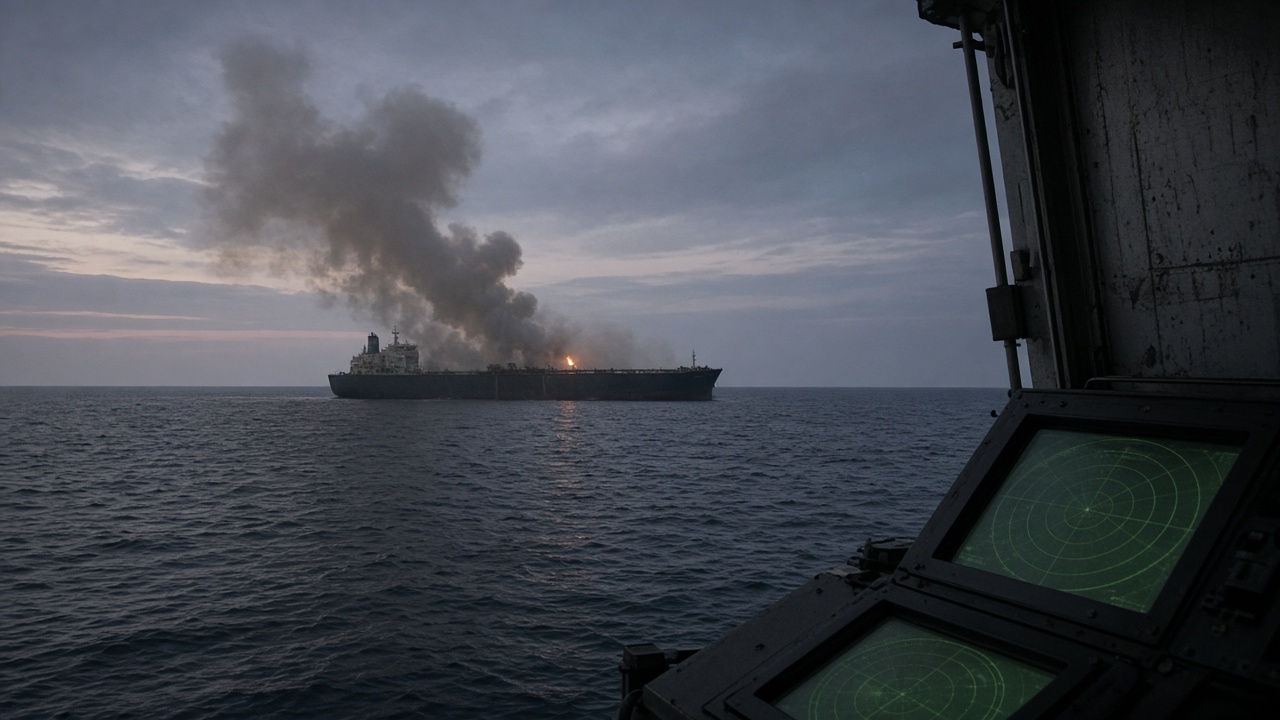
The United Kingdom Maritime Trade Operations agency said late Sunday that it had received multiple third-party reports of a vessel on fire about 63 nautical miles southeast of Al-Faw, Iraq, a commercial waypoint on the northern Gulf where tankers and bulk carriers thread between Kuwait, Iran and Iraq’s Basra province. Crew status, damage and any environmental spill remained unknown while authorities investigated, UKMTO said in warning notice 183-26 dated 26 October.
What UKMTO published
UKMTO classified the incident as suspicious activity rather than a confirmed attack. The bulletin did not name the ship, flag or cargo, and listed the exact time of the fire as still to be confirmed. The agency told masters to transit the area with caution and to report anything unusual while national authorities carried out their own checks.
Al-Faw sits at the mouth of the Shatt al-Arab waterway, making even unverified fires politically sensitive. Since the U.S. and Israeli campaign against Iran widened earlier this year, insurers and charterers have treated every flare-up in these lanes as a possible security event, not merely a mechanical failure.
Gulf context on Monday
The alert landed on the same day Iran’s leadership accused the United States of not being serious about negotiations to end the war, while senior envoys from Saudi Arabia, Pakistan and Turkey — the core of the so-called Mecca defence pact — met officials in Tehran and agreed to continue talking. Separately, Riyadh said its air defences had intercepted Houthi missiles and drones aimed at the kingdom, linking the Yemen front to the wider confrontation over Iran.
Shipping analysts noted that UKMTO often acts as an early relay for incidents that later involve coast guards or naval commands. Until Baghdad, Kuwait City or a flag state identifies the vessel, traders were left weighing whether to divert single-voyage tankers or accept delay fees at anchor.
What happens next
Maritime lawyers said owners would be filing notices of potential claim with P&I clubs even before fault was established, given the proximity to Iraqi export infrastructure and Iranian coastal traffic. Environmental groups warned that a sustained blaze without tug support could threaten fisheries along the Faw peninsula, though UKMTO had not confirmed pollution.
Washington has not publicly tied the fire to military action. For now the practical effect is tighter self-reporting: UKMTO’s switchboard and the U.S.-led Combined Maritime Forces continue to ask merchant crews for real-time updates, repeating guidance issued after earlier Hormuz and Gulf incidents when third-party reports preceded official casualty lists by hours.
Charterers said war-risk clauses written after June’s escalation already require masters to log every drift or engine alarm inside 100 nautical miles of the Iraqi coast. Until investigators board the stricken hull, the only hard fact in circulation remains UKMTO’s coordinates — 63 nautical miles southeast of Al-Faw — and the agency’s blunt instruction to treat the lane as live.