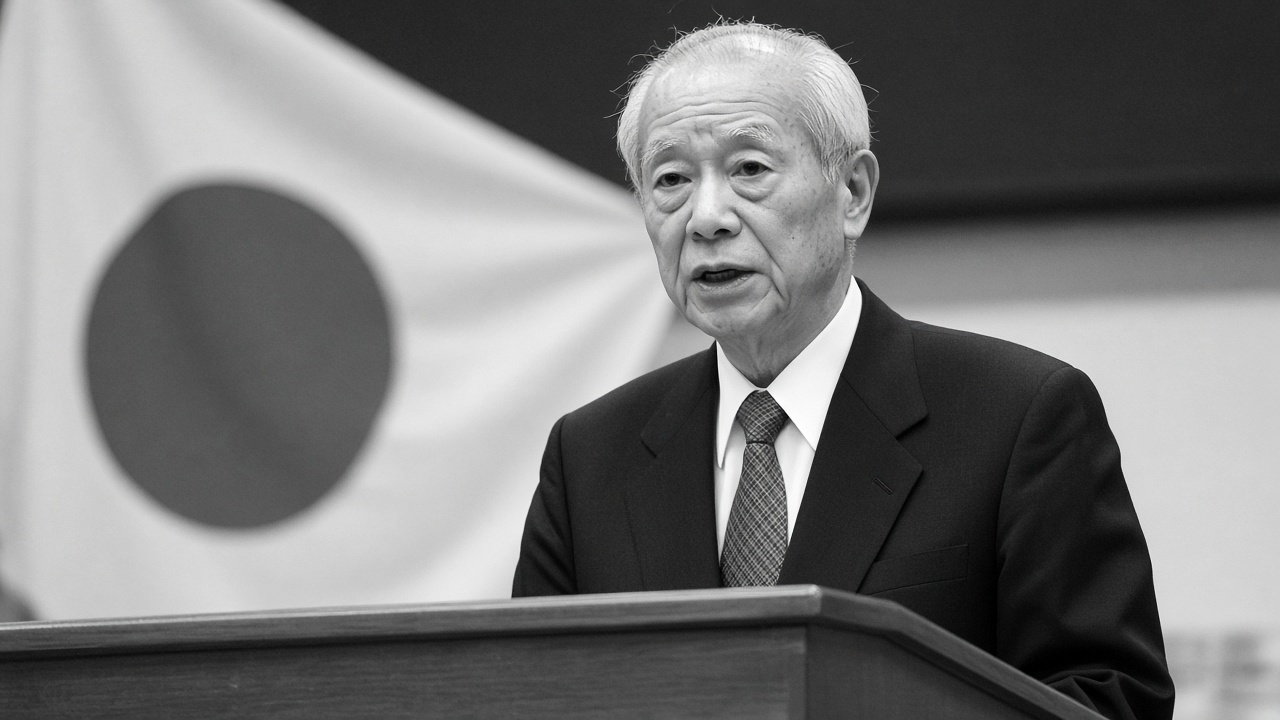
Yasuo Fukuda, who led Japan for a single turbulent year as prime minister and built a reputation as one of Tokyo's most China-friendly postwar leaders, has died at 90, the ruling Liberal Democratic Party said Monday. Kyodo News reported the announcement, which brings to a close a political career that spanned decades in the Diet and in cabinet posts under his father, former Prime Minister Takeo Fukuda.
Fukuda succeeded Shinzo Abe in September 2007 after Abe resigned citing health problems. He inherited a divided legislature: the opposition controlled the upper house, blocking key bills and forcing repeated confrontations over refueling missions for maritime operations and over a scandal involving lost pension records that had eroded public trust in bureaucracy.
China ties and the Hu visit
Where Fukuda left a durable mark was diplomacy, especially toward Beijing. He traveled to China three months after taking office, emphasizing what he called a "mutually beneficial relationship based on common strategic interests." In May 2008 he hosted Chinese President Hu Jintao in Japan, the first visit by a Chinese head of state in a decade and a centerpiece of his outreach.
The trip produced agreements on climate cooperation and East China Sea resource development, symbols of a moment when both capitals sought to steady relations after years of friction over history and territory. Fukuda's stance contrasted with harder-line voices inside the LDP and foreshadowed debates that continue today as Tokyo recalibrates security policy toward China.
A short premiership in a split Diet
Domestically, Fukuda struggled to impose discipline on his own party while negotiating with the Democratic Party of Japan, which used its upper-house majority to delay legislation. He pushed through a renewed anti-terror refueling law in January 2008 only after protracted talks, and he faced criticism for appearing to favor consensus over confrontation.
By summer 2008, with approval ratings sagging and the global financial crisis gathering force, Fukuda announced he would step down to avoid a "political vacuum." Taro Aso replaced him in September, ending a premiership that lasted just under a year. Fukuda later chaired dialogues on regional cooperation and remained a voice for stable Japan-China relations, even as security hawks gained influence in later LDP governments.
Family legacy and party reaction
Born in 1936, Fukuda was the son of Takeo Fukuda, who served as prime minister from 1976 to 1978 and signed the 1978 Japan-China peace and friendship treaty. The younger Fukuda served as chief cabinet secretary under Yoshirō Mori and Junichiro Koizumi, roles that made him the public face of government during crises including abductions issues involving North Korea.
LDP officials on Monday praised his calm demeanor and diplomatic experience. Opposition leaders also acknowledged his efforts to keep channels open with Beijing at a time when historical disputes regularly spilled into street protests in both countries.
What comes next
The party did not immediately release funeral arrangements. Current Prime Minister Sanae Takaichi, who has taken a firmer rhetorical line on Taiwan and regional security, may face questions about whether Fukuda's death prompts any symbolic gesture toward Beijing. For now, the news closes a chapter on an era when Japan's China policy was defined as much by summit choreography as by defense white papers.