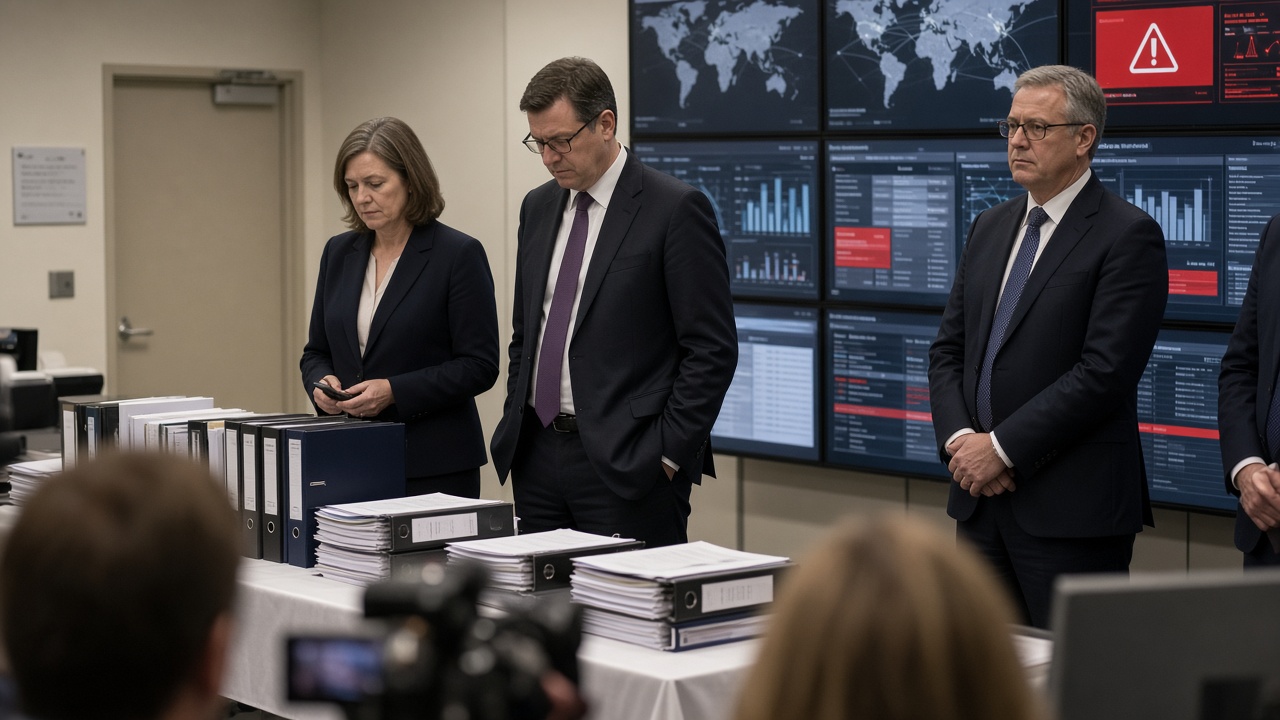
Australia’s cyber spy agency is telling governments, businesses and households to brace for more frequent outages, data breaches and service interruptions because artificial intelligence is letting criminals and state-backed hackers find flaws faster than defenders can patch them.
The Australian Signals Directorate released its seventh Annual Cyber Threat Report on Tuesday, reporting more than 82,000 cybercrime reports in 2025–26 — roughly one every six minutes — alongside responses to more than 1,500 cybersecurity incidents, a 20 percent increase on the prior year. Notifications to Australian entities about potentially malicious activity jumped almost 80 percent to more than 4,400.
Bradshaw: disruption is now the baseline
ASD director-general Abigail Bradshaw said frontier AI models had “redefined” the national threat picture. Speaking ahead of the report’s publication, she told the ABC that further capability gains would make disruption “inevitable,” whether that meant websites taken offline for emergency patching, stolen personal data or interruptions to digital services underpinning daily life.
The warning lands days after several Australian government sites, including ASD’s own public pages, were partially disabled while engineers fixed vulnerabilities. Bradshaw pointed to overseas incidents as well, including a recent case in France where attackers exploited flaws to raise temperatures in supermarket refrigeration systems — a reminder that cyber risk now reaches physical operations, not just laptops.
Autonomous agents and the health-sector wake-up
The report singles out AI as the defining force of the past year, enabling malicious actors to scan for weaknesses, craft convincing phishing material and launch campaigns at greater scale. It references an autonomous swarm of AI agents breaching health-sector defences in what officials described as the first autonomous hack of an Australian government-facing site, a case that forced ASD to tighten early-warning protocols with major U.S. model developers.
Bradshaw said contact procedures now shared with OpenAI and other labs were circulated across Five Eyes partners so agencies could be looped in before high-risk model testing. Defence Minister Richard Marles, speaking alongside the release, said Australians could not “turn the clock back” on AI adoption and urged basic hygiene: patching, multi-factor authentication and reporting suspicious activity to cyber.gov.au or 1300 CYBER1.
Who is in the crosshairs
State-sponsored activity remained focused on stealing sensitive or non-public information from government, critical infrastructure operators and private firms, the report said. ASD’s accompanying public messaging stresses that ransomware, scams and identity theft are also accelerating as generative tools lower the skill bar for entry-level criminals.
For operators of essential services, the agency’s advice is blunt: shrink patching windows, retire legacy kit where possible and treat AI-enabled reconnaissance as a standing condition, not a future scenario. Bradshaw’s bottom line is that every capability leap on the attacker side will show up first as inconvenience — and occasionally as crisis — for anyone who assumed yesterday’s defences would hold through tomorrow’s models.