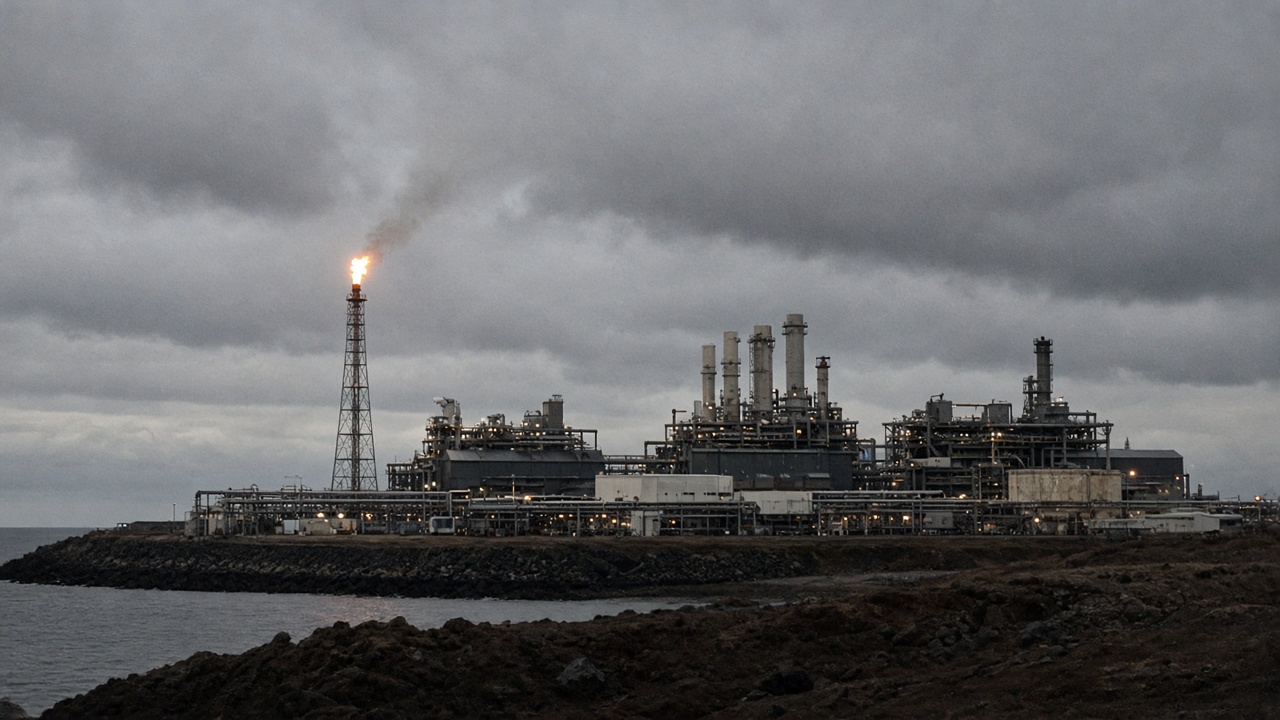
Western Australia’s Department of Water and Environmental Regulation confirmed on Tuesday that it is actively investigating repeated high-volume methane detections above Chevron’s Gorgon liquefied natural gas project on Barrow Island, reversing days of uncertainty about whether state inspectors had jurisdiction over offshore plumes tracked from space.
What satellites recorded
Carbon Mapper’s Tanager-1 satellite has logged five consecutive passes since November 2025 showing large methane clouds leaving the Gorgon complex, according to reporting by the ABC. The most recent observation cited an emissions rate of 7.8 tonnes of methane an hour near the plant’s acid-gas removal units — described as the highest methane emitter recorded in Western Australia in that dataset.
Methane traps far more heat than carbon dioxide over short horizons, and UN-linked monitors warned Chevron about the releases in July 2025 and again in August 2026. The company has corresponded with the UN over the measurements but, until this week, had not commented publicly on the state probe.
Regulators and politics
A government spokesperson said DWER was engaging Chevron to determine the appropriate response and that it would be inappropriate to speculate on causes while the investigation continued. The clarification followed questions in federal Senate estimates, where the Department of Climate Change, Energy, the Environment and Water told independent senator David Pocock that onshore and offshore emissions enforcement remained primarily a state matter.
WA Greens MLC Sophie McNeill said it was embarrassing that the state had not been monitoring the plumes proactively and argued the episode showed Australia’s petroleum oversight needed overhaul. Gorgon remains one of the country’s largest LNG export hubs, with three trains capable of 15.6 million tonnes a year, almost all shipped overseas under long-term contracts.
Production and permits
Chevron is separately pressing ahead with subsea compression and other infrastructure approved by the National Offshore Petroleum Safety and Environmental Management Authority to extend Gorgon production for decades. Domestic gas reservation rules require a slice of output for the WA market; Chevron says that share can power roughly 2.5 million households.
For east-coast readers watching power bills and export earnings, the methane probe does not immediately threaten cargoes, but it adds regulatory risk to a project already under scrutiny from climate investors. DWER has not set a public timeline; Chevron declined to comment on the state investigation when approached by the ABC, pointing only to its ongoing UN data discussions.
Barrow Island’s isolation once helped Gorgon market itself as a contained engineering feat; satellite passes now make the flare visible to anyone with an internet connection. If DWER issues a formal notice, it would test whether state penalties bite harder than diplomatic letters from Geneva — and whether Canberra’s gas reservation bargain still looks fair to households paying rising retail tariffs.