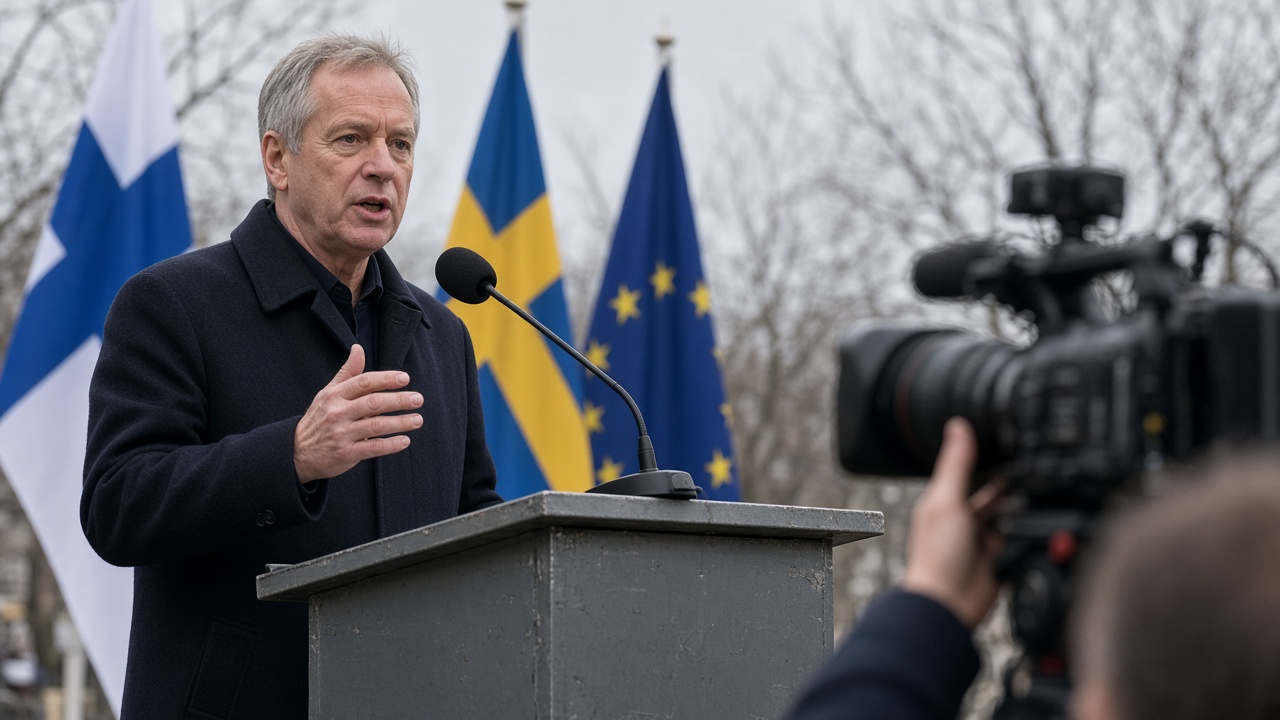
Finnish President Alexander Stubb and Norwegian Prime Minister Jonas Gahr Støre held a 90-minute telephone call with Russian President Vladimir Putin on Tuesday from Helsinki, the first joint Nordic contact with the Kremlin leader since Moscow’s full-scale invasion of Ukraine in 2022. Both governments said they initiated the conversation in consultation with Kyiv to stress that the war must end and negotiations should resume, even as several European allies questioned whether the outreach undermined a united front.
What the three leaders discussed
According to readouts from Helsinki, Oslo and Moscow, the call followed up on an Oct. 20 meeting in Oslo that included Ukrainian President Volodymyr Zelenskyy and U.S. envoy Steve Witkoff. Stubb and Støre told Putin that Finland and Norway—both NATO members that share a land border with Russia—would continue supporting Ukraine while seeking direct channels to reduce escalation.
Stubb called the exchange “frank and substantive,” adding that “ending the war requires direct discussions” because the outcome will shape security across the Baltic and the High North. Støre said the leaders emphasized de-escalation given the war’s human and material toll, and linked the conversation to planned Russia-Ukraine-U.S. talks in Abu Dhabi in early to mid-November.
Putin, in a Kremlin summary, welcomed the agreement to resume those trilateral discussions and repeated that a durable settlement must fully reflect Russia’s interests. He also pointed to the Oleshky humanitarian pause in Ukraine’s Kherson region, which took effect Tuesday under U.S. mediation, as evidence of steps toward civilian relief.
Nordic unity frays in public
Although Stubb and Støre said they spoke only for their own countries—not on behalf of the European Union—the call drew swift pushback elsewhere in northern Europe. Danish Prime Minister Mette Frederiksen, Swedish Prime Minister Ulf Kristersson and Estonian leaders publicly signaled skepticism about engaging Putin while fighting continues, according to European media coverage of the day.
Støre told reporters that “all our partners and allies were informed in advance,” and Ukraine’s foreign ministry said the conversation was coordinated with Kyiv. Zelenskyy spoke with Stubb and Støre afterward and urged “real de-escalatory steps” on the battlefield, not only diplomatic messaging.
What comes next
The three leaders agreed to keep a direct phone line open, a rare institutional channel at a moment when European capitals are debating how to pair military aid to Ukraine with any pathway to talks. For Washington, the Nordic initiative lands amid renewed Middle East diplomacy and a U.S. election week in which Trump administration officials have tied future Iran policy to post-midterm timing.
Analysts in Brussels noted that Finland and Norway can credibly claim neighbor-status with Russia, but that any perceived split among NATO’s northern tier could complicate messaging ahead of the Abu Dhabi round. The immediate test is whether Tuesday’s conversation produces lower violence around Oleshky and Kherson—or whether it becomes another data point in Europe’s argument over who should speak with Putin, and when.