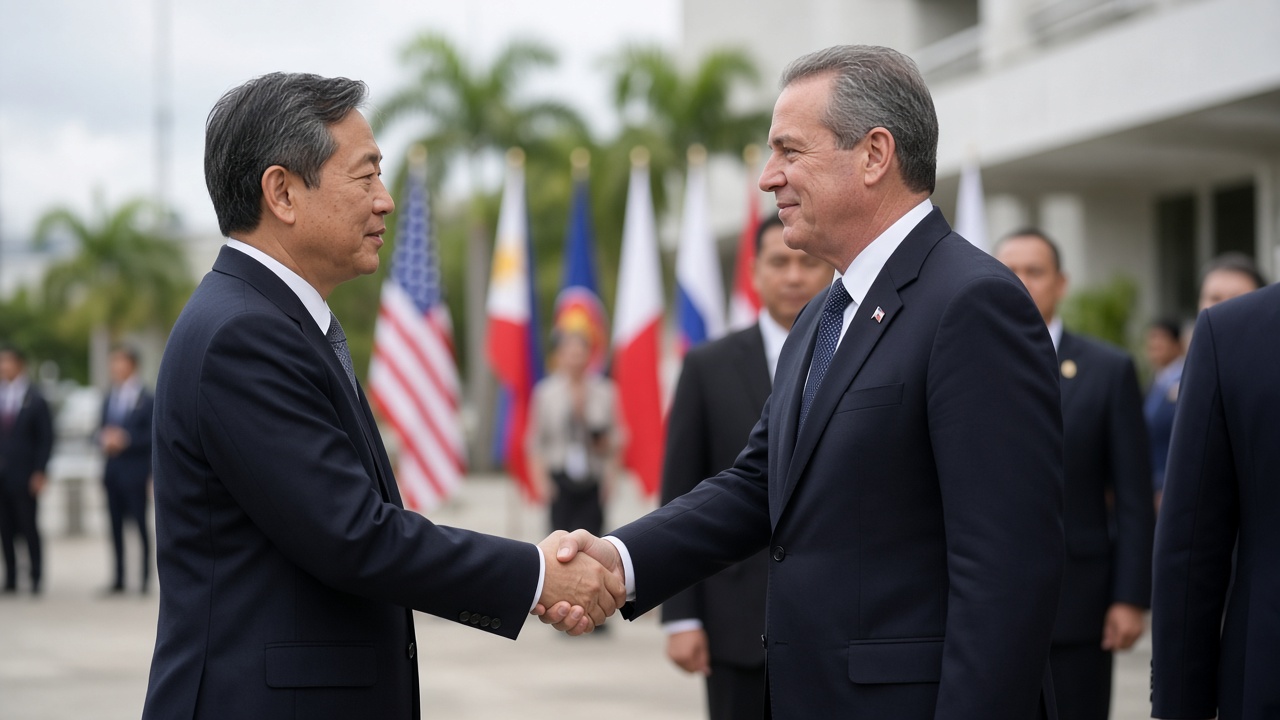
Japanese Defence Minister Shinjiro Koizumi and U.S. Defense Secretary Pete Hegseth agreed on Tuesday in Cebu to push defence investment and strategic alignment so the bilateral alliance can implement what the Pentagon called an “effective denial defence” across the First Island Chain—the arc of territory east of China's coast that includes Japan, Taiwan and the Philippines.
What the ministers committed to
The U.S. Defense Department said the two ministers stressed that increased spending and continued policy coordination are needed as China's military activity rises in the Western Pacific. Denial defence, in alliance planning terms, aims to convince an adversary that seizing territory or achieving a quick fait accompli would fail because combined forces can detect, intercept and impose costs early in a conflict.
Koizumi was in the Philippines for Association of Southeast Asian Nations-related defence meetings. His bilateral session with Hegseth came on the same day both governments face domestic pressure over basing and alliance burden-sharing, including fallout from the arrest of a U.S. Marine in Okinawa on suspicion of robbery and murder earlier in October.
Tokyo's strategy rewrite on the clock
Koizumi briefed Hegseth on Japan's work to update its national security strategy and related documents by the end of 2026, according to the Pentagon readout. Prime Minister Shigeru Ishiba's government has tied those revisions to higher defence spending and deeper integration with U.S. command structures, including plans for a joint operational headquarters.
The First Island Chain language matters because it explicitly links Japan's home islands, the Ryukyus and forward U.S. posture in Okinawa to contingencies involving Taiwan and the Philippines—without either capital issuing a formal change to their respective one-China or strategic ambiguity policies in this meeting.
Okinawa case still on the agenda
Separately, Koizumi and Hegseth confirmed that talks will continue on preventive measures after the Okinawa arrest, the Pentagon said. Base-related crime periodically strains the alliance in Japan even when security policy moves forward.
Neither side released new troop numbers or basing decisions from the Cebu talks. The practical effect for now is a public alignment signal ahead of Koizumi's participation in wider ASEAN defence forums on Wednesday and an expanded ADMM-Plus session scheduled for Thursday, where China and Russia also sit at the table.
Alliance economics still unsettled
Japan's parliament has already approved record defence budgets tied to the prior national security strategy, but Ishiba's cabinet still faces questions about how quickly joint command reforms can be staffed and whether local municipalities will accept additional missile-unit deployments. U.S. officials, meanwhile, continue to press allies for faster spending increases even as Washington's own supplemental requests for the Middle East compete for congressional attention.
Analysts in Tokyo said the First Island Chain phrasing in a Pentagon readout is less a new doctrine than a public restatement of geography both militaries already plan around. Still, repeating it beside Hegseth gives Koizumi domestic cover to argue that Southeast Asian meetings are extensions of Japan's core alliance work—not a distraction from it.