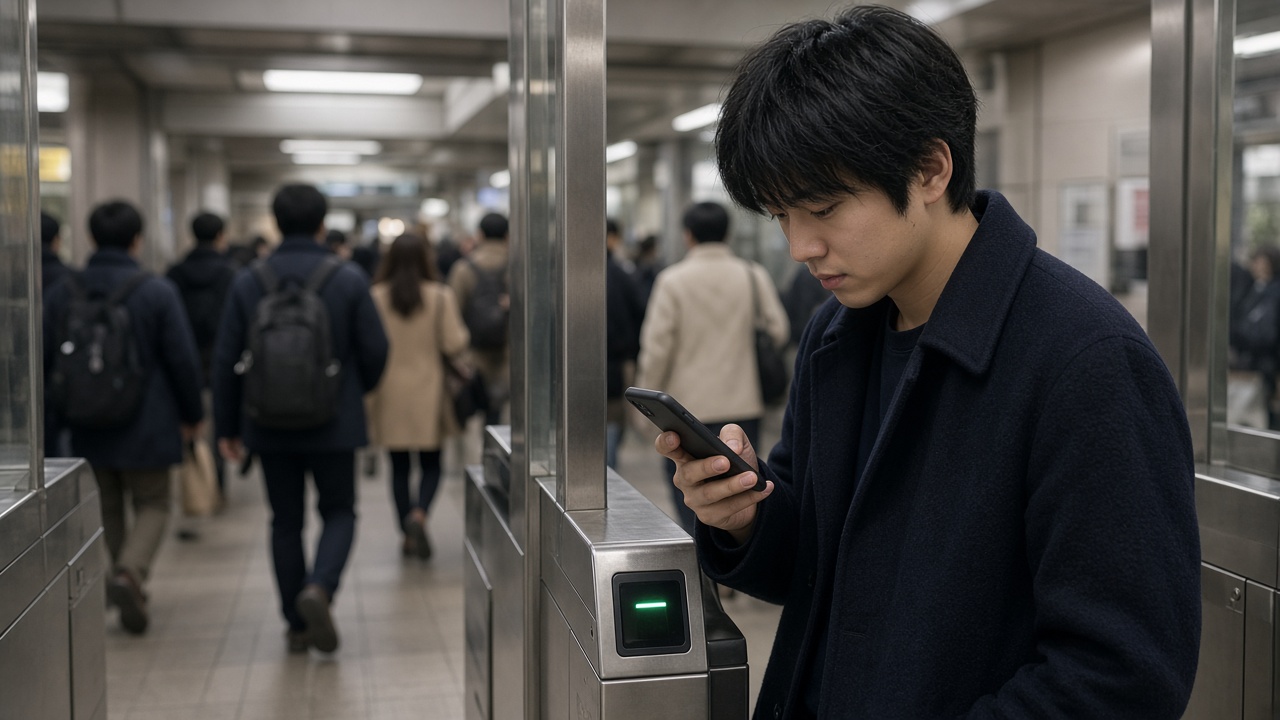
PayPay Card Co. said Monday it will let university students link JR East Suica commuter passes to its PayPay Card product starting November 3 without a conventional credit screening, provided applicants verify enrollment and show part-time payroll deposits. The change targets a narrow but vocal gap: young riders who can afford train passes but fail issuer income thresholds written for salaried adults.
How the pass link works
Students upload a student ID and grant read-only access to PayPay Bank payroll credits from approved part-time employers. If deposits hit a minimum monthly average—PayPay set the bar at 30,000 yen—the card issuer auto-loads Suica balances up to the commuter pass cap for their registered route. Missed deposits for two consecutive months trigger a pause, not a delinquency flag on a full credit file.
JR East’s Mobile Suica app already supports multiple payment backends; PayPay is adding a dedicated “student commuter” tile that shows pass validity and remaining autoload headroom. The product does not waive fare itself—it only changes how the pass is funded.
Why card issuers care
Japan’s credit-card penetration among 18–22 year-olds trails mobile-wallet adoption, and the Financial Services Agency has nudged banks to expand “thin file” onboarding without loosening misuse controls. PayPay’s parent SoftBank Group Corp. benefits when commuters keep balances inside its wallet rather than on rival Rakuten Card or EPOS products tied to department stores.
Consumer finance lawyers note the structure is technically a prepaid autoload tied to a co-branded card, which sits outside some revolving-credit marketing rules. Still, missed autoloads can still produce insufficient-funds fees if students overspend on the card side while the pass remains active.
Comparison with campus cards
Some private universities issue their own transit subsidies through partnerships with Sumitomo Mitsui Card Co., but those programs require guarantors. PayPay’s pitch is guarantor-free onboarding with tighter telemetry: GPS checks are not used, but route registration must match the Suica pass zone table JR East publishes each April.
For families in greater Tokyo, the practical stake is whether a freshman can commute from a parents’ home in Chiba without putting a parent’s income on the application—a workflow PayPay says currently forces roughly one in eight student applicants to abandon checkout, according to its pilot in Kanto last spring.
Abuse controls
PayPay said it will cap autoload at 20,000 yen per day for the student product, half the standard card limit, and block autoload if the phone’s OS is jailbroken. Device binding uses the same hardware attestation PayPay employs for its QR payment merchant app.
Banks that compete on student cards argue guarantor requirements protect issuers from bust-out abuse; PayPay counters that payroll telemetry is a stronger signal for commuters than parental income statements.
Rollout geography
November launch covers JR East zones including Tokyo, Chiba, Saitama, and Kanagawa; JR Central commuter passes join in February pending pilot metrics. Students at universities outside those zones can still apply but must pick a supported route table or use standard credit screening.
Regulatory view
The Financial Services Agency’s fintech panel listed “alternative onboarding data” as a theme for 2026 guidance; PayPay’s product will be an early test case. Lawyers say issuers must still provide statutory disclosure documents on interest rates even when revolving credit limits start at zero.
University partnerships
Waseda University and Keio University student co-ops will promote the pass link during November enrollment fairs, handing out QR codes that pre-fill route tables for campus-adjacent stations. PayPay said co-ops will not receive referral fees, avoiding conflicts with existing campus banking sponsors.