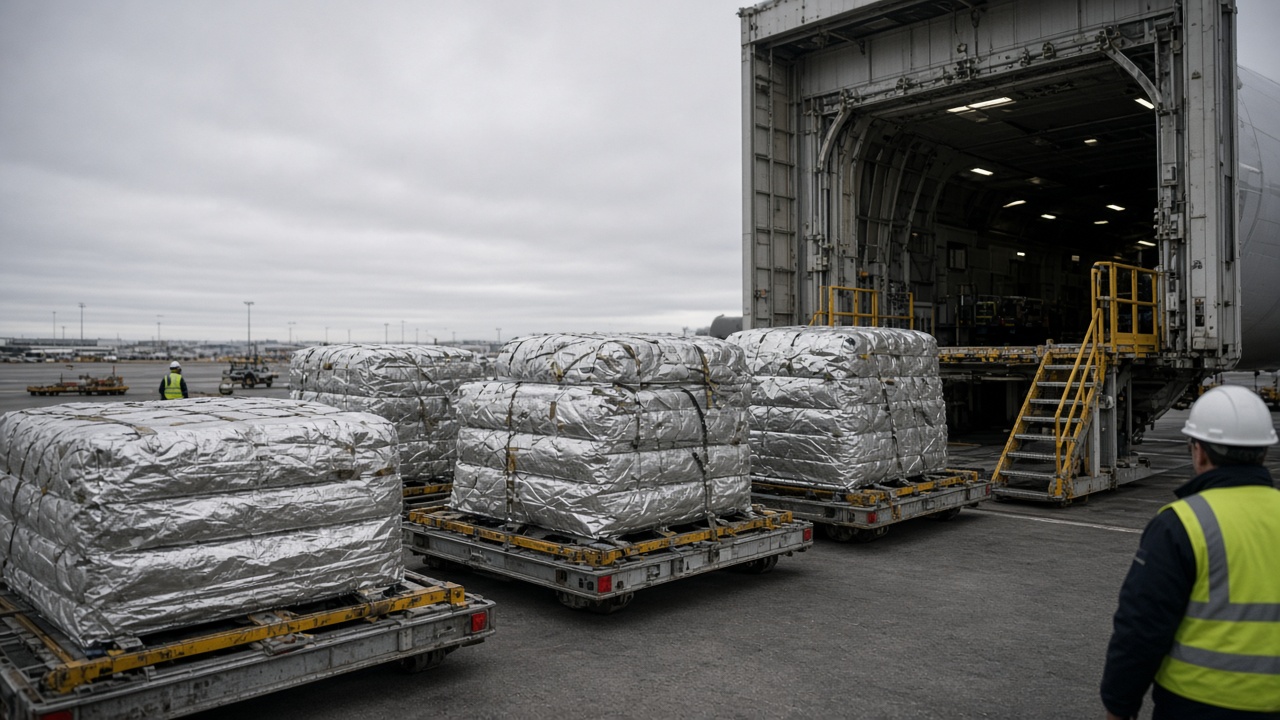
Qantas Freight opened a dedicated cold-chain hangar at Perth Airport on Tuesday, adding roughly 3,200 square metres of chilled staging space as Western Australian cherry exporters enter their tightest pre-Christmas export window.
The facility sits beside the airline’s existing international freighter apron and is designed to hold pallets between 2°C and 8°C while paperwork and security screening are completed. Qantas Freight chief executive Cam Wallace said the hangar would let growers consolidate loads that previously waited on tarmacs when multiple narrow-body passenger flights departed within the same hour.
Why air slots matter for WA cherries
Western Australia’s cherry harvest typically peaks in late October and November, with premium fruit bound for Singapore, Hong Kong and Tokyo. Unlike bulk grain, cherries cannot sit in port-side warehouses for long without quality penalties that erase export premiums.
Industry group Fruit West said forward bookings into Asia were running about 12 percent above last year’s pace, but belly-hold space on passenger jets remained uneven as carriers adjust schedules around higher fuel costs and Middle East routing constraints. Exporters said any delay at Perth could push fruit into the next day’s departure bank, costing a full shelf-life day in Asian retail cold chains.
What growers are paying for
Growers pay surcharges when freight moves from road trucks into temperature-controlled airside storage. Qantas Freight said the new hangar would reduce hand-offs between third-party cool rooms and the airline’s own build-up teams, which it argued should trim average dwell time by close to 90 minutes on busy nights.
Smaller packers without standing contracts said they were still shopping spot rates on forwarders that charter freighters from Adelaide and Melbourne when Perth belly space thins out. Wallace said Qantas would prioritise contracted horticulture customers but left the door open for ad hoc bookings when capacity allowed.
Competition on the tarmac
Singapore Airlines Cargo and Cathay Pacific continue to uplift perishables from Perth, and both carriers have added seasonal freighter rotations in prior years when cherry volumes spike. Qantas is betting that owning the last mile inside Perth — from truck dock to aircraft pallet — will keep more of that traffic on its own metal.
Analysts at Morgans said the capex outlay was modest relative to Qantas Group’s fleet renewal program, but it signalled management’s intent to defend high-yield freight margins as passenger yields normalise after the post-pandemic surge.
What happens next
Fruit West will publish weekly departure tallies through November, giving a live read on whether the hangar eases bottlenecks. Growers said their immediate test would be the first weekend when three separate cherry consignments compete for the same late-night departure to Changi.
If dwell times fall as promised, packers may renegotiate forward contracts that currently bake in a full day of buffer stock. If not, expect more charter talk — and more complaints in Canberra about aviation infrastructure lagging agricultural export targets.
Export logistics beyond cherries
While cherries dominate headlines, Qantas Freight said the hangar would also handle chilled seafood and pharmaceutical shipments that share the same temperature band. WA’s growing medical exports — including insulin formulations — have complained about Perth bottlenecks when passenger belly capacity shrinks during schedule changes tied to Middle East routings.
State trade officials said they would track export clearance times at the new facility through Customs and Border Protection dashboards, publishing monthly averages if delays fall. That transparency push follows federal criticism that agricultural exporters shoulder aviation costs without seeing service metrics.