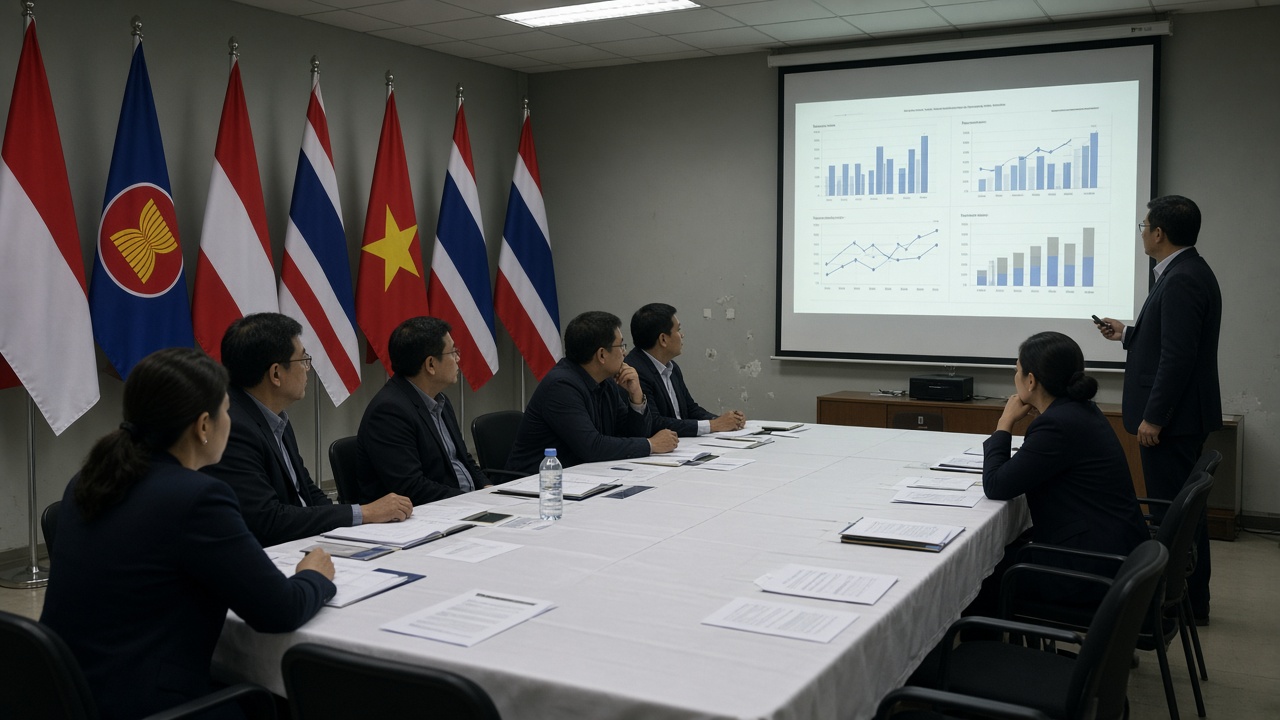
The Ministry of Manpower (MOM) launched the ASEAN Labour Statisticians Network on Tuesday (Oct 27) and named Singapore as convenor through 2030, anchoring a new ASEAN Labour Statistics Office that will coordinate jobs and skills data exchanges as member states brace for artificial intelligence, green-transition hiring and platform work.
What Singapore is hosting
Permanent Secretary for Manpower Stanley Loh told the inaugural three-day expert forum that no country can read labour-market shifts alone when hiring patterns change within a single budget cycle. The office, proposed by Singapore ahead of its 2027 ASEAN chairmanship, will run programmes agreed by member states and support a forthcoming ASEAN Labour Market Knowledge Portal for shared methodologies and research.
Manpower Research and Statistics Department (MRSD) director Ang Boon Heng, who also serves as MOM’s chief artificial intelligence and data officer, chairs the network. MRSD senior deputy director Fang Shun Wu heads the Singapore office as executive secretary. The Business Times reported the arrangement as the first regional network dedicated solely to labour statistics rather than general economic indicators.
Why Parliament watchers care
For Singapore politics readers, the launch is both diplomacy and domestic capacity-building. MRSD already produces the Labour Force Survey, occupational wage tables and job-vacancy statistics that feed Budget debates on foreign worker policy, Progressive Wage Model sectors and SkillsFuture subsidies. Hosting ALSN keeps Singapore’s statisticians inside the room when neighbours harmonise definitions for gig workers, renewable-energy technicians or care aides—categories that show up in town-hall questions about competition and training pipelines.
Channel NewsAsia noted that member states will use the portal to compare how they measure under-employment, job churn and skills mismatches. That matters when Malaysian or Indonesian labour ministries publish migration or levy changes that ripple through Singapore construction and marine yards within weeks.
Chairmanship timing
Singapore’s 2027 ASEAN chair year looms over the five-year convenor term. Diplomats have pitched the network as a low-drama deliverable that still answers demands for “tangible cooperation” after years of pandemic-disrupted surveys. Loh’s remarks stressed evidence-based policymaking rather than binding quotas—a nod to ASEAN’s consensus culture.
Opposition MPs have previously pressed the government to publish more granular retrenchment and vacancy data by sector; ALSN does not by itself open Singapore’s books wider, but it signals that MRSD’s models will be stress-tested against regional peers before the next GE cycle debates training transfers from carbon-intensive roles.
Workers and employers on the ground
Human-resource teams importing mid-level technicians may eventually see harmonised occupation codes in cross-border filings, reducing paperwork when a Johor plant and a Tuas fab share the same job title with different skill certificates. Polytechnics tracking AI-assisted logistics modules can cite regional skills forecasts instead of only OECD reports written for larger economies.
Trade unions monitoring platform-worker protections will watch whether ALSN publishes comparable counts of delivery riders and freelance carers—numbers that currently sit in incompatible national surveys. The network’s 2026 “build the foundation” roadmap, published on the ALSN site, lists capacity for indexes, analytics and AI tools by 2029, with a stated goal of seamless labour-market information systems by 2030.
What comes next
The expert forum runs through Thursday at the Singapore venue MOM selected for the launch. Member states must nominate focal points to feed the knowledge portal; Singapore has already staffed the executive secretariat. Watch for the first shared briefings on green-job taxonomies and AI task exposure—outputs that will land in employers’ inboxes long before they surface in parliamentary questions.
Until those briefings arrive, Tuesday’s announcement is the policy headline: Singapore houses the ASEAN Labour Statistics Office, MRSD leads the convenor work, and the region’s statisticians have a permanent table to compare how work is changing—not just how many payroll slots opened last quarter.
Delegates left Tuesday’s launch with a practical homework list: nominate national focal points, upload pilot dashboards to the knowledge portal and schedule bilateral technical visits before Singapore assumes the ASEAN chair. Missing any of those steps would leave the office as a press release rather than a statistics pipeline employers can cite.