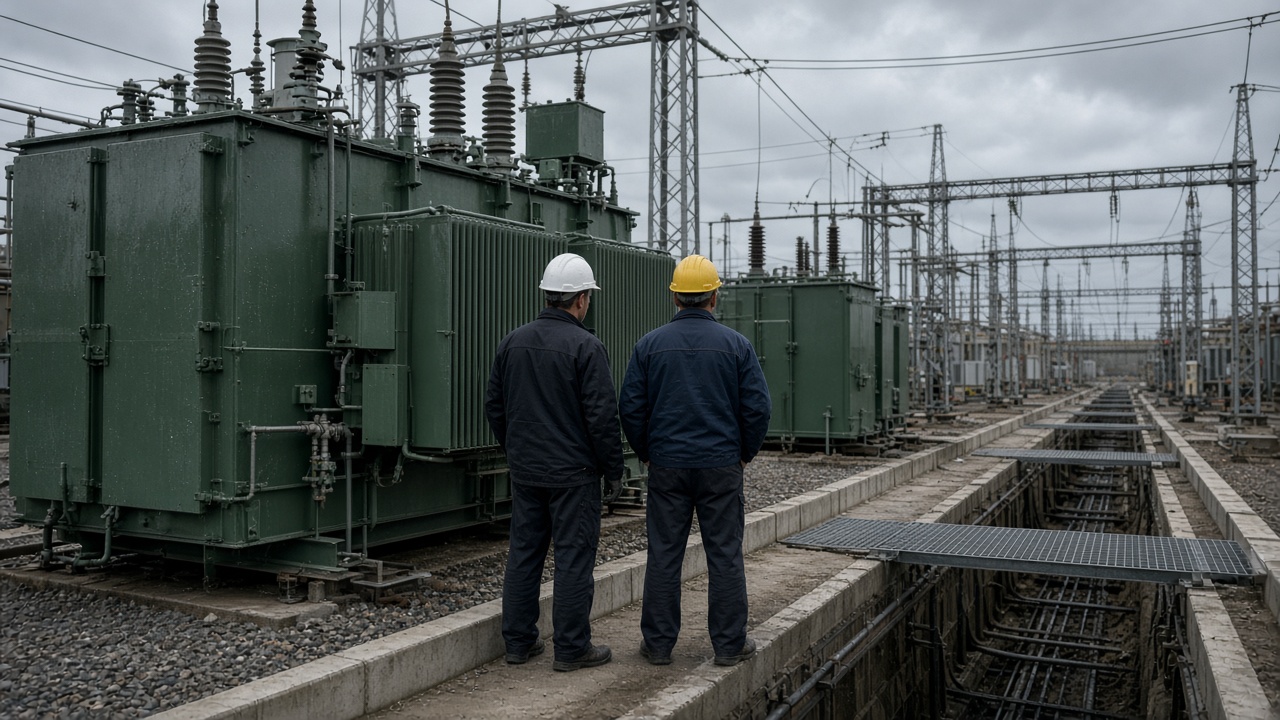
Singapore’s electricity planners mapped their largest grid reinforcement programme in decades on Monday (Oct 26), with the Energy Market Authority (EMA) detailing a S$5.3 billion package through 2031 as Minister for Energy, Trade and Industry (Energy and Industry) Tan See Leng told businesses to expect more supply shocks in a world of “resource nationalism.”
What the five-year plan buys
The Business Times reported that EMA will upgrade transmission cables, substations and digital monitoring as power demand climbs from data centres, electrified transport and industrial decarbonisation projects. Parallel plans call for trebling energy-storage capacity so the grid can ride through sudden plant outages or import curbs without repeating the price spikes households felt when Indonesian gas flows were trimmed this month.
Tan’s speech to industry leaders framed the spend as insurance: Singapore has diversified liquefied natural gas contracts and solar deployments, but neighbours can still renegotiate pipeline or border sales when domestic politics heat up—as seen in Jakarta’s recent gas-export debate tied to haze diplomacy.
Business planning implications
Factory managers in Jurong and Tuas should expect more underground cable works and substation expansions near existing plants. EMA typically coordinates outages with JTC estate managers; lead times for new high-voltage connections may lengthen while trenches are dug along industrial corridors serving semiconductor clean rooms and chemical crackers that cannot tolerate voltage sags.
Banks financing data-centre expansions will scrutinise whether tenants secured redundant feeds before applying for grid capacity. The authority’s storage push could let operators participate in demand-response contracts, but only if on-site batteries meet forthcoming technical standards EMA has been consulting on since mid-2026.
Household bill angle
Residential tariffs move on a regulated formula tied to fuel costs and grid charges approved by EMA. The S$5.3 billion figure is capital expenditure recovered over years through network charges—not a line item on October’s SP Group bill. Marcus Goh’s household-money readers should still note the timing: grid hardening proceeds while Q4 electricity tariffs have eased from haze-season peaks, giving policymakers room to argue that resilience spending prevents sharper future shocks.
Link to regional gas tension
Tan reiterated that Indonesia’s export reduction touched less than 2 per cent of Singapore’s daily gas needs, but urged importers to enforce contractual rights—a message aimed at Gas Supply and other traders after state-owned SKK Migas redirected Natuna molecules to domestic utilities. Grid upgrades do not replace gas, yet they reduce the seconds-long frequency dips that trip sensitive equipment when backup plants ramp.
What investors watch
Listed contractors with cable-laying and substation expertise traded mixed on Tuesday, but analysts said EMA’s roadmap could extend order books for firms already busy with coastal protection works. Sembcorp and Keppel units involved in energy storage may bid for utility-scale battery sites paired with solar farms on Semakau and Jurong Island.
EMA’s next public consultation will flesh out how much storage must sit near data-centre clusters versus import landing points. Until those details land, Monday’s headline is the number: S$5.3 billion for wires, transformers and buffers, paired with a ministerial warning that contract law—not wishful thinking—will define Singapore’s energy security this decade.
Consultation calendar
EMA said it will publish substation siting maps for public feedback before major cable corridors cut through mature housing estates. Residents in Bedok and Tampines who lived through earlier underground works should expect similar town-hall briefings, with noise mitigation contracts bundled into the S$5.3 billion envelope rather than billed as ad hoc projects.
Power sector unions, meanwhile, want training credits for linesmen upgrading to digital fault sensors. SkillsFuture subsidies already cover some advanced electrical safety modules; EMA’s workforce office may align those grants with the five-year build so retrenched offshore rig technicians can pivot into grid maintenance roles.