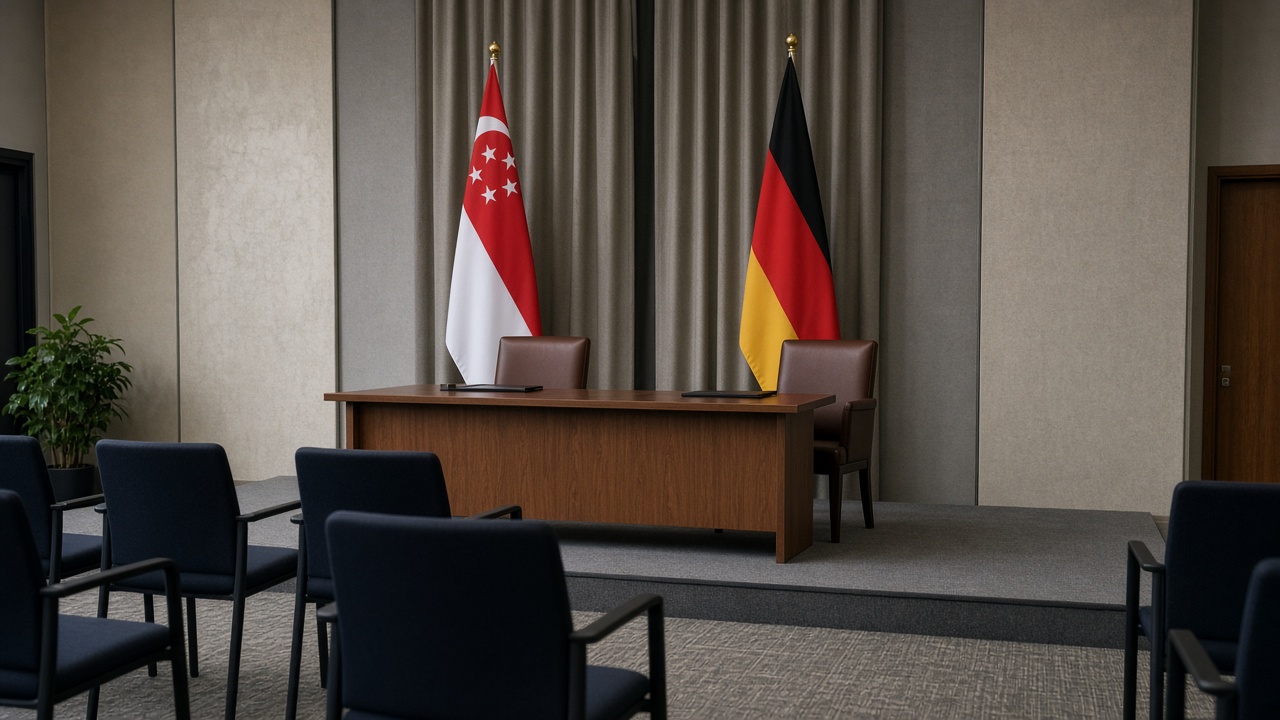
Prime Minister Lawrence Wong and German Chancellor Friedrich Merz widened a Singapore-Germany strategic partnership on Tuesday (Oct 27), signing a work plan that pairs artificial intelligence governance pilots with hydrogen research and university exchanges as both governments hunt for growth outside transatlantic trade friction.
What the work plan covers
Malay Mail and Singapore media pools reported that the refreshed pact deepens cooperation on AI safety testing, energy-transition technology and defence-science dialogues already running through universities such as TU Munich and the National University of Singapore. Adam Lee’s entertainment-and-culture beat treats major state visits as stage-managed spectacles: wreath layings, CEO roundtables and evening receptions where filmmakers pitch co-production treaties.
This visit’s headline acts are policy-heavy, but cultural agencies still slot in—a Berlin philharmonic outreach dinner and a showcase for Singapore game studios seeking European distribution partners ran on the margins, according to delegation schedules circulated to reporters.
AI and media angles
Singapore’s Infocomm Media Development Authority has been auditing app stores for harmful AI tools; Germany’s EU AI Act implementation offers a contrasting compliance laboratory. Joint testing could let local start-ups benchmark transparency documentation before launching chatbots aimed at ASEAN languages.
For audiences tracking entertainment technology, the partnership may ease licensing of German sports documentaries on Singapore streaming platforms and co-funding of virtual-production stages—topics raised at a Creative Industries Federation lunch Wong attended.
Energy and hydrogen
Hydrogen pilot memoranda tie Jurong Island storage studies to German industrial clusters experimenting with ammonia cracking. These projects do not lower October electricity tariffs, but they give local engineers overseas secondments—a career path younger voters notice when debating whether to stay in Singapore’s energy sector.
What comes home
Delegation members return with MOUs, not instant jobs. Watch for IMDA guidance citing German red-teaming standards and for universities announcing dual-degree intakes. Until those land, the visit’s entertainment value is diplomatic theatre with real paperwork: two governments betting that AI and energy cooperation can outlast headline-grabbing haze disputes elsewhere in Asia.
Film and games footnotes
Singapore Film Commission staff on the delegation scouted co-production treaties that could unlock German location rebates for Asian period dramas, while indie game studios demonstrated localized builds of narrative adventures seeking European publishing partners. None of those deals closed on the tarmac, but the side meetings keep cultural exchange from being drowned out by hydrogen jargon.
Students on exchange programmes may see expanded semester slots at Fraunhofer institutes working on grid batteries—another pipeline feeding Singapore’s talent shortage in power electronics.