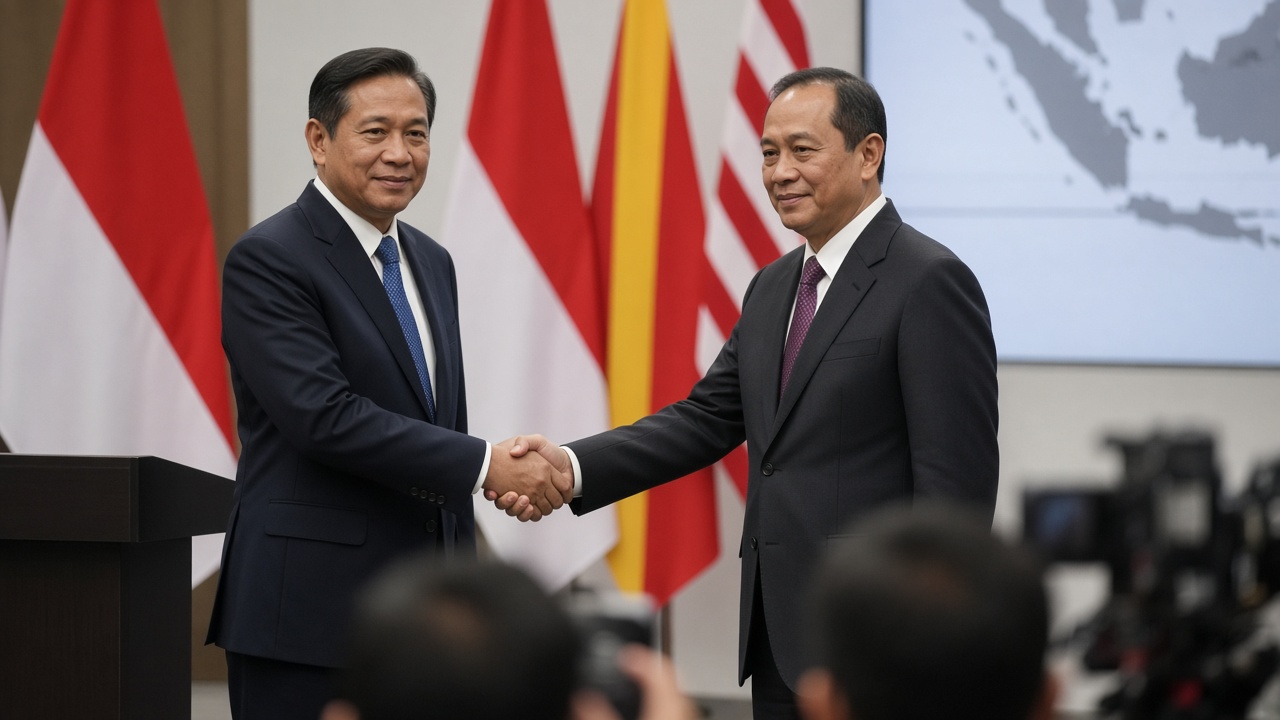
Singapore and Indonesia will establish a joint task force to investigate companies linked to forest and land fires that have sent smoke across the Strait of Malacca, the two countries’ foreign ministers announced Tuesday after talks in Jakarta aimed at cooling weeks of diplomatic friction.
Indonesian Foreign Minister Arrmanatha Nasir said smoke and money both cross borders, and that Jakarta welcomed Singapore’s offer to share corporate data as a “valuable opportunity” to follow financial trails left by firms suspected of profiting from burning land. Singapore Foreign Minister Vivian Balakrishnan framed the unit as a way to coordinate enforcement, intelligence sharing and evidence gathering with an eye toward possible asset recovery.
Diplomacy after a bruising haze season
The announcement comes as Singapore endures one of its longest haze episodes in more than a decade. National Environment Agency readings on Tuesday evening showed 24-hour Pollutant Standards Index levels in the moderate band, with one-hour PM2.5 concentrations far below September peaks but smoke still visible over Sumatra and Kalimantan on satellite imagery.
Tensions had flared beyond air quality. Indonesian officials pushed back on Singaporean commentary about gas-supply contracts, while Singapore widened legal pressure at home. The Ministry of Law stood up a specialist panel of law, audit and investigative firms to probe cross-border haze liability, and NEA issued notices to ten Singapore-registered companies under the Transboundary Haze Pollution Act — the first such use of the statute since it took effect.
Grace Fu flags legal upgrades
Environment Minister Grace Fu told a Singapore Environment Council event earlier Tuesday that the government is studying amendments to close enforcement gaps, particularly around gathering evidence abroad and securing cooperation from offshore entities. She distinguished between Section 9 notices, which ask firms to prevent fires without penalties for silence, and Section 10 demands for documents that feed active investigations.
Fu said at least twenty firms in Singapore and Indonesia have now been drawn into the widening probe, reflecting a shift from public-health advisories to courtroom-ready casework. The joint task force with Jakarta is the diplomatic counterpart to that domestic push — an attempt to align prosecutors and regulators on both sides of the border before the next wind shift brings smoke back over the city-state.
What comes next
Neither capital published a formal charter for the task force on Tuesday, but both ministers stressed that cooperation would extend beyond firefighting to corporate accountability. For Singaporeans, the immediate question is whether coordinated enforcement can shorten future haze seasons; for plantation groups with listings or subsidiaries in both countries, the message is that financial intelligence sharing is now on the table, not just aerial photos of hotspots.
Balakrishnan’s visit also served as a reset after sharper public exchanges, with both sides reaffirming broader ties even as they tackle an environmental crisis that has become a test of ASEAN neighbours’ ability to punish cross-border harm without derailing trade and energy links.