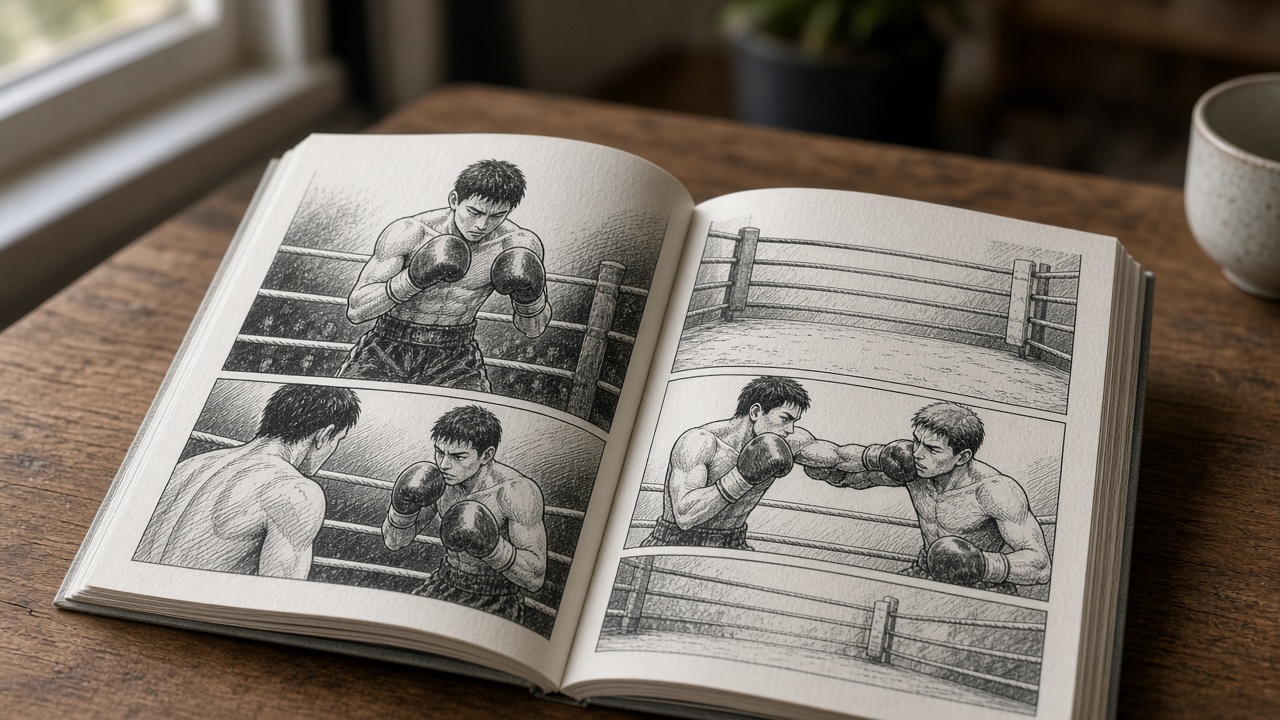
Tetsuya Chiba, the illustrator whose angular fighters and rain-soaked alleys defined Ashita no Joe, one of Japan’s most influential sports manga series, died on October 23 at a Tokyo hospital, the Japan Cartoonists Association announced Tuesday. He was 87.
A postwar story told in ink
Chiba drew the artwork for Ashita no Joe while writer Asao Takamori scripted the tale of orphan boxer Joe Yabuki, whose brutal honesty mirrored Japan’s recovery decades after World War II. Serialized from 1968 to 1973 in Kodansha’s Weekly Shonen Magazine, the series sold millions of copies and spawned anime adaptations, films, and a vocabulary of catchphrases still quoted in gyms and offices.
Chiba’s panels emphasized motion and exhaustion: slumped shoulders between rounds, cigarette smoke curling in locker rooms, crowds rendered as stark black shadows. Critics credited the pairing of Takamori’s dialogue and Chiba’s linework with elevating boxing manga from juvenile sport stories into social commentary on poverty, discipline, and redemption.
Career beyond Joe
Born in 1939, Chiba debuted professionally in the 1950s and worked across gekiga and shonen titles before Ashita no Joe made him a household name. He later created Ashita no Joe 2 and continued mentoring younger artists through the cartoonists association, where he served in leadership roles.
International editions, including English releases as Ashita no Joe: Fighting for Tomorrow, introduced the story to readers outside Japan. Anime director Isao Takahata and composer Yuji Ohno’s 1970 television adaptation kept the property in circulation for decades, influencing later sports series from Hajime no Ippo to more experimental animated features.
Tributes and what comes next
Kyodo News reported that the association disclosed the death after funeral services attended by family. Publishers and broadcasters queued retrospective programming Tuesday as fans shared panel reproductions online, many focusing on Joe’s final fight and the famous “cross-shaped counter” sequence.
Chiba’s death follows a year of high-profile losses in Japanese manga, but industry observers said his impact was singular because Ashita no Joe crossed from entertainment into national metaphor. Politicians, athletes, and labor leaders have cited Joe Yabuki when describing comeback narratives; museum exhibitions have displayed Chiba’s original boards as fine art.
Kodansha, which holds the series rights, has not announced new publishing plans. The association said details on a public memorial will follow consultation with Chiba’s family. Bookstores in Tokyo’s Jimbocho district, long a hub for manga collectors, reported steady foot traffic Tuesday as readers searched for vintage volumes of the series.
Scholars of Japanese popular culture often point to Ashita no Joe when explaining how manga absorbed working-class experience in the 1970s. Chiba’s survivors, according to the association statement carried by Kyodo, asked for privacy while thanking readers for decades of support.