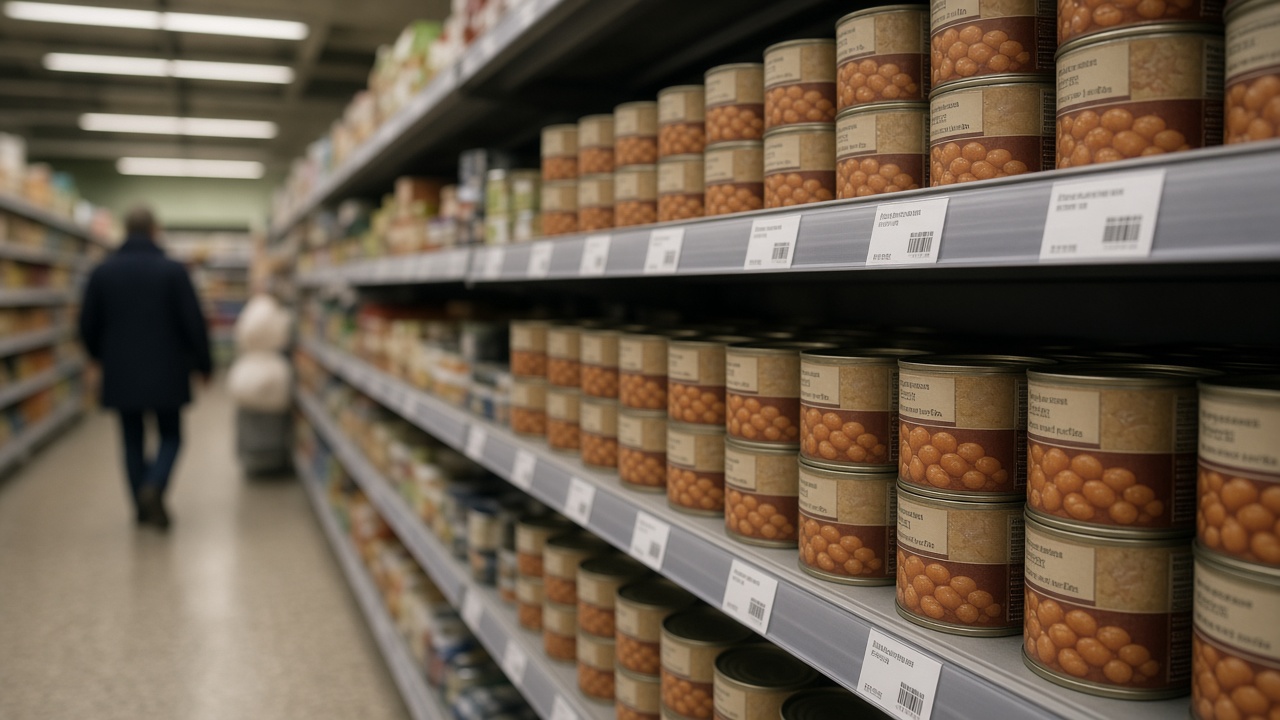
M&S and Tesco froze shelf prices on baked beans and other staple lines on Tuesday after the Treasury previewed tariff cuts on more than 100 imported foods, betting that shoppers will notice lower till prices before Chancellor John Healey delivers his first budget on Wednesday.
The pair of Britain’s largest grocers said they would hold prices on affected own-label and branded lines while they recalculate landed costs, rather than waiting for the formal budget statement. Both chains stressed that beans, tinned tomatoes and cooking sauces sit on high-velocity fixtures where even a few pence matters to weekly basket comparisons.
What ministers announced
Downing Street and the Treasury framed the tariff package as part of five “everyday fixes” designed to ease living costs without reopening the full tax-and-spend debate a day early. Officials said removing duties on baked beans, chocolate, gherkins and other cupboard staples would save households about £21 a year on average, with separate cuts on fertiliser aimed at farmers and a kerosene tariff reduction for homes on heating oil.
For retailers, the political timing is as important as the duty tables. Healey and Prime Minister Andy Burnham need visible wins on food inflation after data last week showed price growth running hotter than the Bank of England wanted, hardening bets on a November rate increase. Supermarkets that move first on shelf prices can claim credit even if wholesale markets take weeks to pass through savings.
How grocers are responding
M&S food trading teams told suppliers on Tuesday morning that prices on listed tariff lines would not rise before the budget, according to people briefed on internal calls. The chain’s value perception has improved since it simplified promotions, but analysts still watch how it prices against discounters on basics such as beans and pasta sauce.
Tesco, which commands the largest UK grocery share, issued a similar holding statement to category managers. The company has invested heavily in Clubcard Prices and is sensitive to any signal that government action could undercut its data-driven promotions. Holding headline prices steady on tariff-affected SKUs gives Tesco room to adjust multibuy mechanics later without looking as though it pocketed the duty cut.
More than 100 product lines sit in the Treasury tariff list ministers circulated on Tuesday.Limits of a tariff headline
Trade lawyers caution that tariff removal does not automatically flow to shelf prices. Currency moves, energy surcharges on cold storage and packaging costs all sit between the dock and the barcode. The British Retail Consortium welcomed the direction of travel but repeated its call for lower business rates and energy support, arguing that duty cuts alone cannot offset the cumulative cost pressure stores faced through 2025 and 2026.
Farm groups were split. Some welcomed cheaper imported inputs for processors; others warned that cutting duties on foreign baked beans could undercut UK pulse growers who already compete with large EU suppliers. Ministers paired the food tariff list with a fertiliser duty cut to reassure agricultural lobbyists that the package was not aimed solely at urban consumers.
Budget context
Healey’s wider fiscal statement is expected to lean on borrowing for investment through the National Wealth Fund while offering smaller tax tweaks to placate Labour backbenchers and City bond vigilantes. Food tariff cuts give ministers a consumer-friendly slide for broadcast clips without publishing the full scorecard a day early.
Investors will still watch gilt yields more closely than bean prices. Long-dated UK borrowing costs have hovered near 6 percent, raising the price of anything that looks like unfunded giveaway. Supermarket finance directors know that if markets react badly on Wednesday, the cost of working capital rises even as baked beans get cheaper on paper.
What shoppers should expect
Shoppers are unlikely to see uniform price cuts overnight. Own-label lines tied directly to imported ingredients should move first; fresh produce and meat follow different duty schedules. Loyalty app users may see targeted coupons before shelf edge labels change, a pattern Tesco and Sainsbury’s used during previous duty adjustments.
For households budgeting around Wednesday’s statement, the practical message is to compare unit prices rather than promotional banners. Tariff headlines set the political tone; barcodes determine what actually leaves the till cheaper this winter.