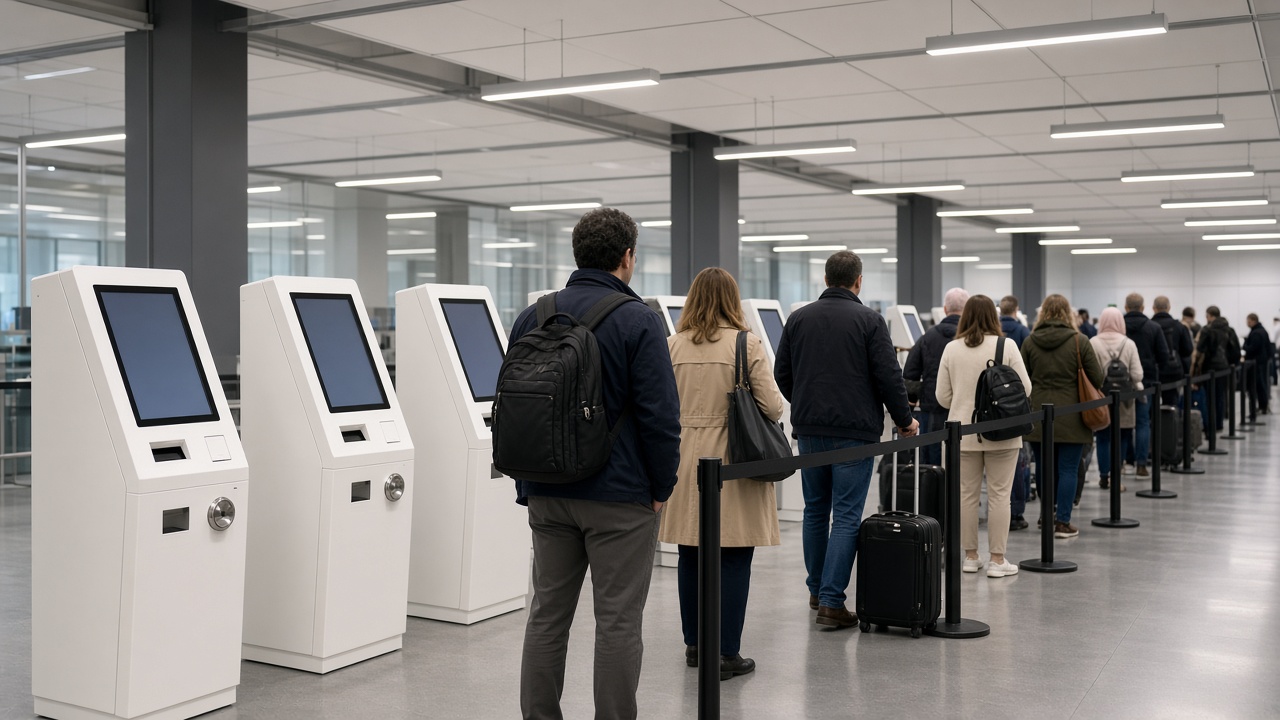
The Immigration and Checkpoints Authority rolled out Singapore Arrival Card support in 19 languages on MyICA kiosks at Woodlands Checkpoint in August 2026, letting car and bus passengers submit entry details before manual counters while keeping the same data fields required on the mobile app, according to ICA service pages updated this quarter.
What changed at Woodlands
Travellers who previously relied on English or Mandarin prompts can now complete arrival declarations in major ASEAN, South Asian and European languages on lobby kiosks installed during the checkpoint’s ongoing expansion. ICA said the interface mirrors the SG Arrival Card digital form, reducing duplicate questioning when families cross by bus during weekend peaks.
Checkpoint staff told InfoHandle that language expansion targets bus hall bottlenecks, where tour groups often arrive together and slow manual lanes when one member needs translation help.
How MyICA fits the flow
Passengers may still complete the card on the MyICA mobile app up to three days before arrival, but kiosks remain the fallback for visitors without data roaming or compatible devices. The August update adds on-screen keyboards and audio cues in the expanded language set without altering passport chip reads at automated gates.
What travellers should expect
ICA advises keeping confirmation screens until officers verify passports, especially when buses unload large groups. Frequent commuters said kiosk lines move faster when everyone in a party completes declarations before reaching the front, a habit checkpoint signs now illustrate pictorially.
The Woodlands trial underpins a broader digital arrival push: more languages on the same SG Arrival Card backbone, with slug and media assets unchanged even as the counter experience shifts toward self-service.
Why 19 languages matter
ICA selected tongues that cover the majority of bus passengers arriving from Malaysia and long-haul coaches, including Bahasa Indonesia, Tamil and Japanese alongside European languages used by tour groups. Translators reviewed on-screen prompts for plain language, avoiding idioms that confuse automated text-to-speech for visually impaired travellers.
Officers said error rates on handwritten forms dropped after kiosks became default, because missing passport numbers trigger on-the-spot fixes rather than rejections at manual counters.
Next checkpoints
Tuas Checkpoint will receive the same language pack after Woodlands throughput data are analysed, ICA told trade associations in an August briefing circulated to bus operators. Until then, Woodlands remains the stress test for weekend queues, when arrival halls swell and kiosk uptime becomes as critical as lane staffing.
Bus companies said they brief drivers to remind passengers about kiosk steps before disembarking, cutting repeated questions at counters. MyICA app downloads spiked in August according to ICA analytics cited in the briefing, though kiosks remain essential for travellers who delete travel apps after each trip.
Customs brokers noted fewer declaration errors on trade lanes when arrival data are complete before cargo inspections, a secondary benefit as passenger halls digitise.