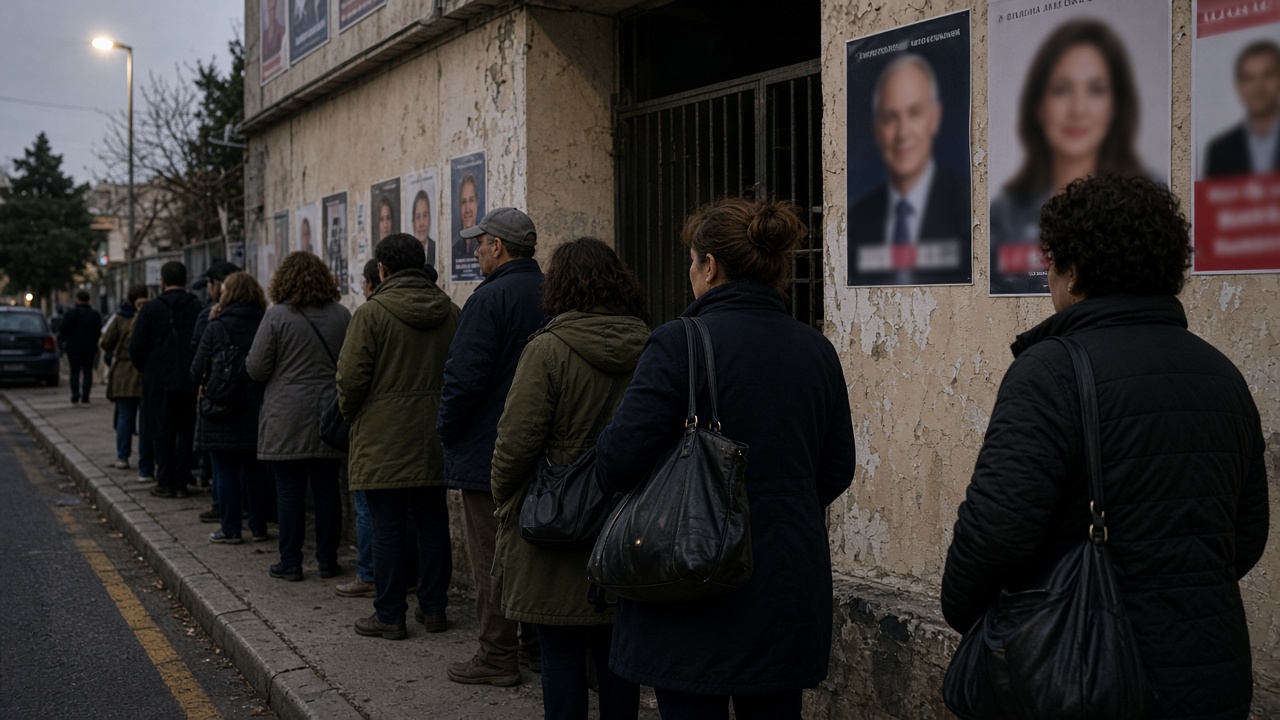
Israel’s first wartime national election since the October 2023 Hamas attack ended Tuesday night without a projected majority for either Prime Minister Benjamin Netanyahu or the opposition bloc led by former military chief Gadi Eisenkot. Exit polls released after voting closed at 10 p.m. local time pointed to a narrow lead for anti-Netanyahu forces, yet left weeks of coalition bargaining — and the possibility of another repeat vote — on the table.
What the exit polls showed
Projections from Israel’s three main commercial broadcasters clustered around the same arithmetic: Eisenkot’s change bloc on roughly 52 or 53 Knesset seats, Netanyahu’s right-wing and religious alliance on about 50, and Arab-led parties on a record combined total near 17 or 18 seats. Sixty-one seats are required to form a government.
Within those blocs, Likud was still projected as the largest single party, with about 24 to 25 seats, while Eisenkot’s Yashar list was polling near 22 to 23. Former Prime Minister Naftali Bennett’s B’Yachad faction and the Arab-led Joint List were also shown winning double-digit representation in several projections.
The numbers offered Netanyahu’s opponents a symbolic edge but not a clear governing path. Partnering with Arab parties has historically been politically fraught for Jewish-led coalitions, and several opposition factions have ruled out sitting with Netanyahu while he remains on trial in cases he has contested in court.
Record turnout and a long count
The Central Elections Committee said 77.7 percent of eligible voters had cast ballots by the time polls closed — the highest participation rate since 2001 and well above the 70.6 percent recorded in 2022. Committee officials have eight days to publish certified results in the official gazette, with a legal deadline of 4 November, though partial official tallies are expected to stream through the night and into Wednesday.
Exit polls are based on interviews with voters leaving stations and are often revised as more data arrives; the committee’s hand count frequently shifts seat allocations from early projections. Analysts cautioned that the true seat map may not settle until “double envelope” ballots — including soldiers, diplomats and hospital patients — are opened at the Knesset in the coming days.
What happens next
President Isaac Herzog will eventually task a lawmaker with trying to assemble a coalition. If neither camp can reach 61 seats, Israel could face another election while Netanyahu continues as caretaker prime minister, echoing the five votes held between 2019 and 2022.
Netanyahu had framed the contest as existential, urging supporters to turn out in the campaign’s final hours. Eisenkot and allied leaders cast the vote as a referendum on Netanyahu’s wartime leadership and the direction of the Gaza ceasefire. With no outright winner on election night, those arguments now move from the ballot box to back-room negotiations that could run for weeks.