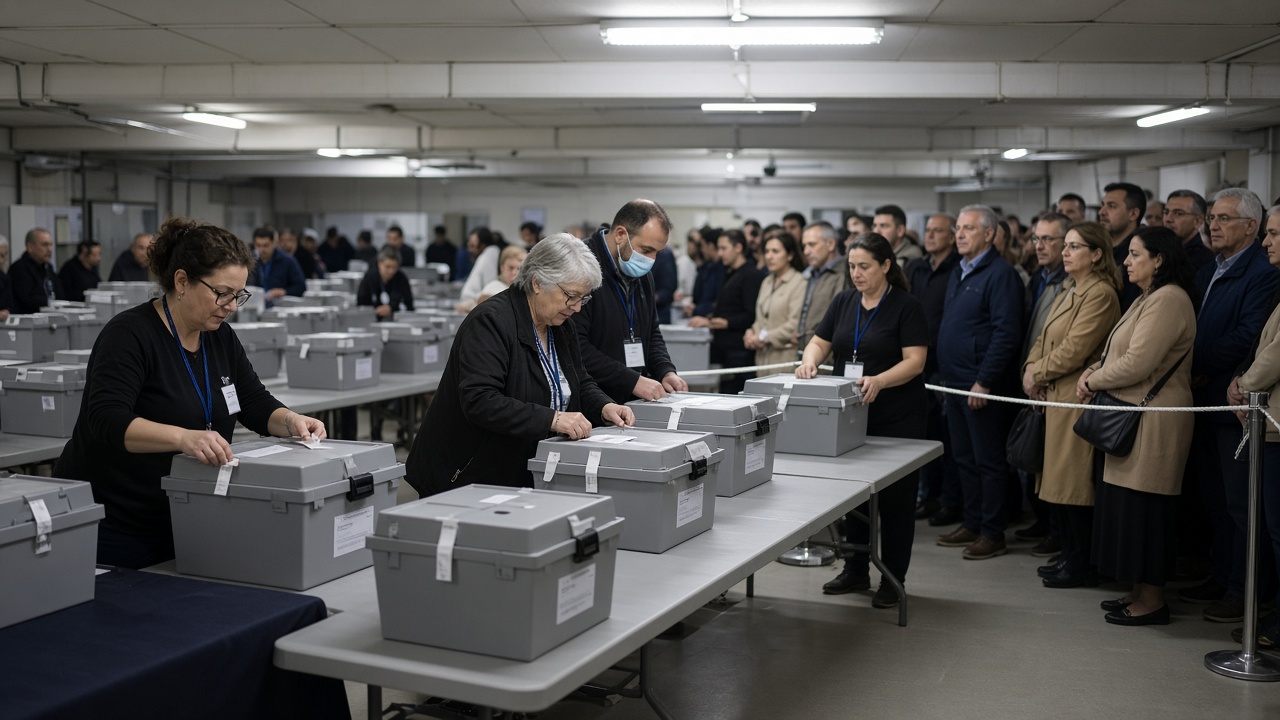
Israel’s Central Elections Committee began releasing verified vote totals early Wednesday, and the first partial count pointed toward a stronger showing for Prime Minister Benjamin Netanyahu’s coalition than television exit polls had suggested hours earlier. With about 31 percent of ballots processed by roughly 5 a.m. local time, the committee’s figures allocated 59 seats to the ruling coalition, 46 to the change bloc and 15 to Arab parties, Israel National News reported in live updates.
That trajectory, if it holds as counting continues, would reverse the stalemate projected when polls closed Tuesday. Exit surveys from Kan, Channel 12 and Channel 13 had put Gadi Eisenkot’s anti-Netanyahu bloc narrowly ahead—roughly 52 or 53 seats to about 50 for Netanyahu’s camp—with neither side close to the 61 seats needed for a Knesset majority. Eisenkot told supporters Tuesday night that the projections reflected a “complete lack of confidence” in the government and vowed to move quickly to replace it, according to Xinhua’s summary of his remarks.
What the early seat map shows
At the stage captured in the committee update, Likud led individual parties with 29 seats, followed by Eisenkot’s Yashar list at 20 and the Joint List and Together alliance at 11 each, Israel National News said. United Torah Judaism held nine seats in the projection, Yisrael Beiteinu eight, and Otzma Yehudit, the Democrats, Shas and the Religious Zionism–Zehut alliance seven each. Ra’am remained above the electoral threshold at 3.7 percent, enough for four seats in the partial allocation.
Two newer lists—the Reservists–Economic Party and Amcha Yisrael—remained below the threshold at 2.72 percent and 1.8 percent respectively. The committee stressed that all published figures are preliminary and will shift as ballots from soldiers, diplomats and hospitals are added to the tally.
Turnout and what happens next
Turnout for the 26th Knesset election finished at 77.7 percent, the Central Elections Committee said Tuesday evening—the highest participation since 1999 and about 7.1 percentage points above the 2022 vote. Arab Israeli turnout reached 80 percent, a level Israeli media flagged as unusually high and potentially decisive for Ra’am and the Joint List.
Even with a coalition-leaning early count, Netanyahu could still face weeks of bargaining. Israeli law allows a caretaker prime minister to remain in office while parties negotiate, and small shifts in late-arriving votes or threshold math have reversed early leads in past elections. The committee has said final certified results are not expected until 4 November.
Washington watches a wartime vote
The election was Israel’s first nationwide vote since the Hamas-led 7 October 2023 attacks, held while fighting continues in Gaza and under the shadow of conflict with Iran. U.S. officials have tracked the race closely; President Donald Trump told reporters Tuesday that the war in Iran would end “when I want it to,” according to a flash update carried by Israel National News during the count.
Netanyahu’s Likud still appeared set to be the largest single party in early returns, which would give him a procedural advantage if he seeks the first chance to form a government. Eisenkot’s camp, however, will argue that Tuesday’s exit polls and high anti-government turnout give him a moral mandate even if the official sheets eventually tighten the gap. The next 48 hours of counting will determine which narrative survives contact with verified ballots.