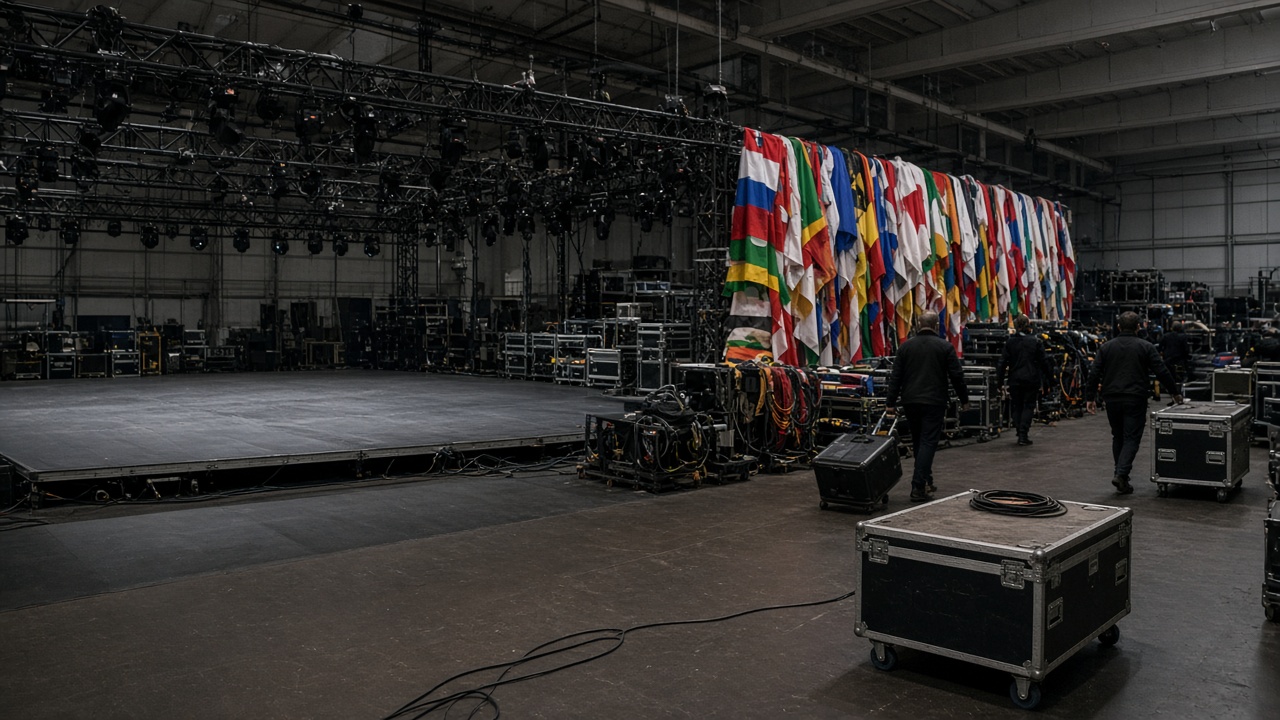
The Netherlands will not compete at the Eurovision Song Contest in 2027, public broadcaster NPO said Tuesday, abandoning a plan to rejoin the pop competition after a boycott over Israel’s participation proved impossible to bridge inside Dutch public media.
NPO chair Jet de Ranitz said the umbrella body had pressed the pause button after talks with member broadcasters failed to produce a format that could carry a Dutch act to Burgas, Bulgaria, with full institutional backing. Media director Jurre Bosman pointed directly at the political friction around Israel’s continued place in the contest, which has split European broadcasters since the Gaza war deepened.
From September comeback to Tuesday reversal
The Dutch withdrawal is a U-turn. Subsidiary Avrotros pulled out of the 2026 contest alongside Ireland, Slovenia, Spain and Iceland, citing opposition to Israel’s entry. NPO stepped in last month and said the Netherlands would return in 2027, arguing that Eurovision belonged on public television as a major cultural event.
That decision triggered a revolt at Hilversum. Roughly four hundred programme makers from outlets including BNNVARA, NTR and VPRO signed an open letter telling NPO leadership there could be no “connection in genocide,” NRC reported, using the phrase that has dominated internal debate. NPO had initially overridden Avrotros; on Tuesday it conceded it could not mandate participation through the statutory “gap filler” role held by NTR without forcing an unwilling broadcaster to run the project.
De Ranitz said conversations had initially suggested enough support to return, but “we were unable to find a suitable format.” Given sensitivities around current themes, she said, “we have decided to take a step back for the time being.”
What stays on air — and what the EBU says
Dutch viewers will still see Eurovision on NOS, with Dutch commentary and preview programming, even without a home entry. NPO stressed that it remains in dialogue with the European Broadcasting Union on the contest’s future and that Martin Green, the EBU’s contest director, said the organisation respected the strength of feeling behind the Dutch decision while regretting the absence of a 2027 competitor from one of Eurovision’s founding countries.
Israel has competed throughout the period of boycotts elsewhere; the EBU has maintained that the contest is a non-political music event governed by membership rules. For NPO, the practical test was narrower: could any broadcaster guarantee artists and crews the “full support” Bosman said was required before sending them to a televised stage that has become a proxy battlefield for Middle East politics?
Industry stakes beyond one missing flag
The Netherlands won the contest as recently as 2019 and has hosted multiple times since the 1956 debut it helped invent. A second consecutive absence — after the 2026 boycott year — removes a major commercial and creative market from the 71st edition while leaving the diplomatic fault line between Israel’s allies and critics inside the Eurovision family unresolved.
Other broadcasters are watching whether more withdrawals follow or whether Burgas becomes a contest defined as much by who stayed home as by who takes the stage. For now, Dutch fans get a broadcast without a ticket to the green room — and NPO executives get a lesson in how quickly a September compromise can unravel when staff, audiences and geopolitics pull in opposite directions.