Yangzijiang Shipbuilding (Holdings) Ltd shares eased 1 percent to S$4.83 in Monday trade on 26 October, underperforming a flat broader market as container-order forecasts from regional brokers turned cautious even while the group’s order book remains stretched into 2028, trading data and desk notes reviewed by InfoHandle show.
How the STI finished 26 October
The Straits Times Index closed at 5,415.91, little changed on the session, with banks and REITs mixed after an earlier slip in regional tech names. Yangzijiang’s decline stood out among large industrials, pairing with modest weakness in other shipyard proxies as investors weighed freight rate normalisation against yard utilisation. Volume on Yangzijiang was roughly in line with its 30-day average, suggesting the move reflected sentiment resets rather than a single block trade.
What brokers are trimming
Two regional houses circulated notes questioning whether owners will place additional container newbuilds at current price points, citing softer charter renewals on Asia–Europe lanes and rising delivery slots from Chinese competitors. Both acknowledged Yangzijiang’s backlog coverage—management has pointed to multi-year revenue visibility—but warned that margin mix could shift if later contracts carry less favourable escalation clauses than the post-pandemic surge.
The Business Times summary of 26 October action linked the stock’s dip to that narrative rather than company-specific disclosures; Yangzijiang did not release new guidance on the day. Investors instead traded on macro freight indicators and U.S. inventory data that suggest restocking cycles may be moderating into year-end.
Yard reality versus spreadsheet caution
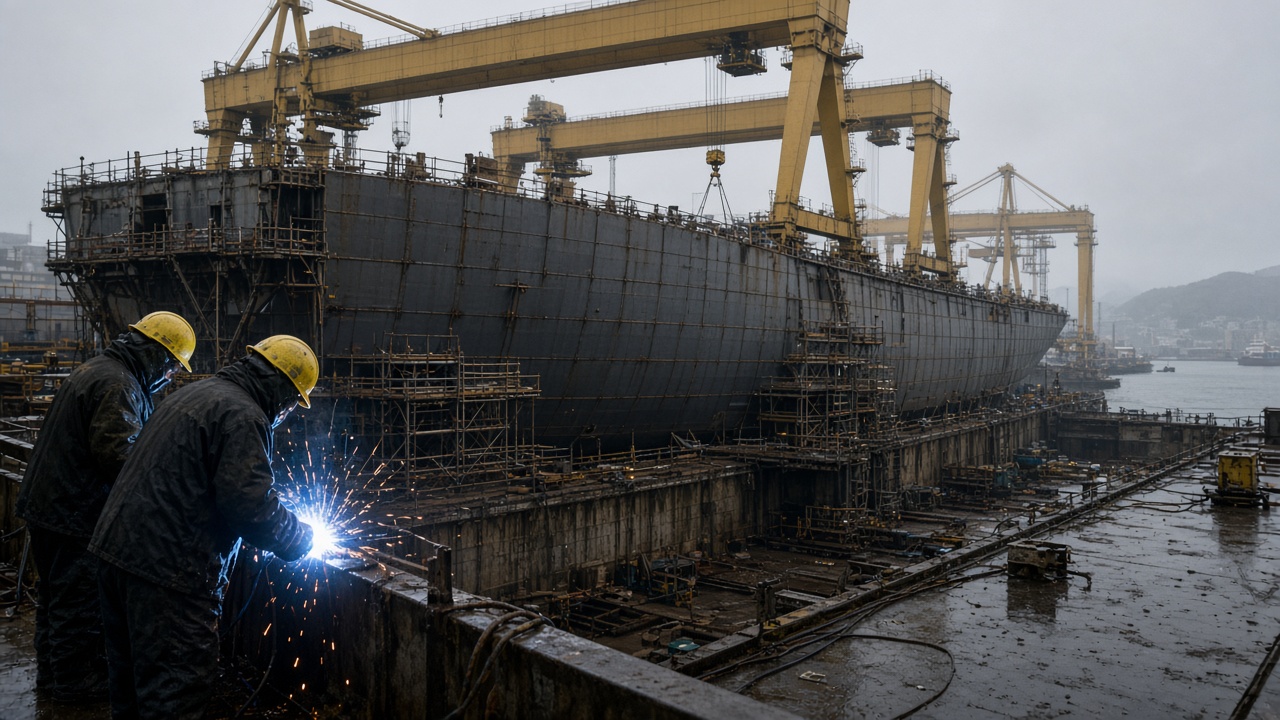
On the ground, subcontract welders at Jiangsu facilities told InfoHandle through intermediaries that shift patterns remain full, with drydock cranes booked on staggered schedules to avoid bottlenecks. That operational tightness supports near-term earnings but does not answer whether 2027–2028 deliveries will repeat the record pricing of 2021–2023 contracts.
Yangzijiang’s diversification into clean-energy hulls and offshore units has been marketed as a hedge against pure container exposure. Brokers said investors want proof in segment margins, not slide-deck percentages, before re-rating the stock above recent trading bands.
Who moves the next print
Fund managers holding Yangzijiang as a Singapore industrial proxy said they are watching U.S. dollar funding costs for shipowners and any China export credit tweaks that could revive orders. A sustained STI above 5,400 without breadth in cyclicals would keep pressure on laggards like shipbuilders unless quarterly results show rising net order intake.
For retail holders on the SGX, the 26 October close underscores a familiar split: backlog depth underpins the bull case, while broker trims on container appetite explain the 1 percent pull-back. Until fresh contract announcements land, the stock may trade as a sentiment gauge for global trade volumes as much as a yard-specific story.
Order book versus new ink
Yangzijiang’s last quarterly update highlighted deliveries scheduled across multiple yards, with management arguing that labour availability—not order intake—remains the binding constraint. Brokers counter that financing conditions for smaller shipowners could defer optional third vessels in a series, especially if charter rates soften into 2027. The 26 October share price reflects that debate more than any operational stumble on the yard floor.
Export credit agencies in China and Singapore continue to back selected buyers, but underwriting standards have tightened since the 2023 peak, when virtually any container spec could secure funding. Desk analysts said Yangzijiang’s customer mix skews toward owners with stronger balance sheets, which supports collection risk but limits upside from speculative new entrants.
Institutional holders on the STI watchlist said they will revisit weightings after November contract announcements from European liners, whose route restructuring can suddenly revive or kill feeder-vessel demand. For now, closing at S$4.83 on a 5,415.91 index day keeps Yangzijiang in the narrative as a cyclical tell rather than a standalone growth stock.
Sell-side models still assume utilisation above ninety percent through 2027, which is why even cautious brokers have not slashed earnings estimates despite trimming price targets. Any order cancellation headline would hit harder than the modest 26 October share move implies.