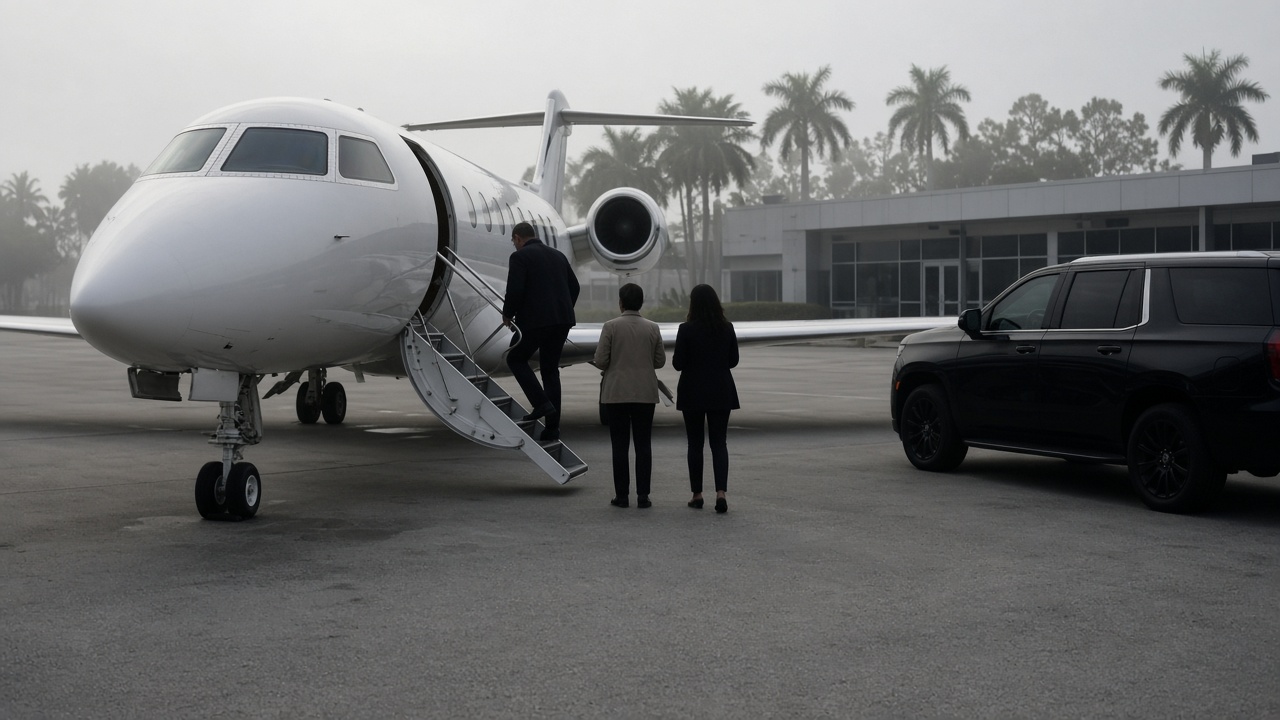
Senator Flávio Bolsonaro landed at Miami-Opa Locka Executive Airport on Wednesday morning with his wife and two daughters, hours after Brazilian authorities said he had left the country without a recorded exit through official migration controls. U.S. customs records now show he was admitted under a one-year humanitarian classification, a separate track from the visa promises President Donald Trump and the State Department had offered his camp.
What the entry record says
Documents from U.S. Customs and Border Protection list Bolsonaro’s admission class as DT, a humanitarian parole category that allows temporary stay when standard visa rules do not apply. The record cited by Brazilian outlets shows authorized presence from October 2026 through October 27, 2027. That timeline matches the family’s arrival on a private flight from Ecuador after an overland crossing into Argentina on Tuesday night.
The State Department had told reporters it would issue visas to Bolsonaro and his relatives, but the published entry data describes a border admission rather than a consular visa stamp. Folha de S.Paulo and O Globo both published excerpts of the CBP filing on Wednesday, prompting immediate questions in Brasília about whether Washington had short-circuited Brazil’s court-ordered travel restrictions.
Brazil’s court order and police response
Bolsonaro lost Sunday’s presidential runoff to Luiz Inácio Lula da Silva and refused to concede. On Sunday, Brazil’s Federal Police asked the Supreme Court for precautionary measures after identifying a flight risk tied to money-laundering probes linked to attorney Willer Tomaz and to financing questions around a documentary on former President Jair Bolsonaro. The court ordered surrender of Brazilian passports, a ban on leaving the country, and limits on contact with other targets in the same inquiry.
Police canceled Bolsonaro’s ordinary and diplomatic Brazilian passports, flagged his name in the SONAR migration system, and on Monday gave him 24 hours to hand over any foreign passports. He did not comply. In a statement Wednesday, the Federal Police said there is no official record of his departure through Brazilian controls and that violating the passport order does not by itself make him a fugitive or authorize arrest. The force said it is investigating how the orders were breached.
Route out and reception in Florida
Allies initially claimed Bolsonaro had already fled on Tuesday morning; he remained in Brazil until crossing into Argentina at the Foz do Iguaçu bridge late Tuesday, Argentine authorities confirmed. Reuters and The Associated Press tracked the jet from Argentina through Ecuador to Florida. Video from the tarmac showed the family entering a private terminal before leaving in a black SUV.
Trump had said he would welcome Bolsonaro, a longtime ally, though he told reporters he did not know the senator’s whereabouts as the flight unfolded. The landing ends a frantic 48 hours in which Liberal Party lawmakers publicly described an “exile” while judges in Brasília weighed contempt findings. Lula’s government has not announced an extradition request; any move would collide with the fresh U.S. admission and with Bolsonaro’s pending Senate term.
What happens next
Brazilian prosecutors can still pursue contempt or obstruction charges tied to the passport order. In Washington, humanitarian parole can be renewed or revoked case by case, meaning Bolsonaro’s legal footing depends on both CBP discretion and any future visa applications. For U.S. audiences, the episode also tests how far the administration will shelter foreign politicians facing active criminal probes at home while midterm politics dominate the domestic calendar.