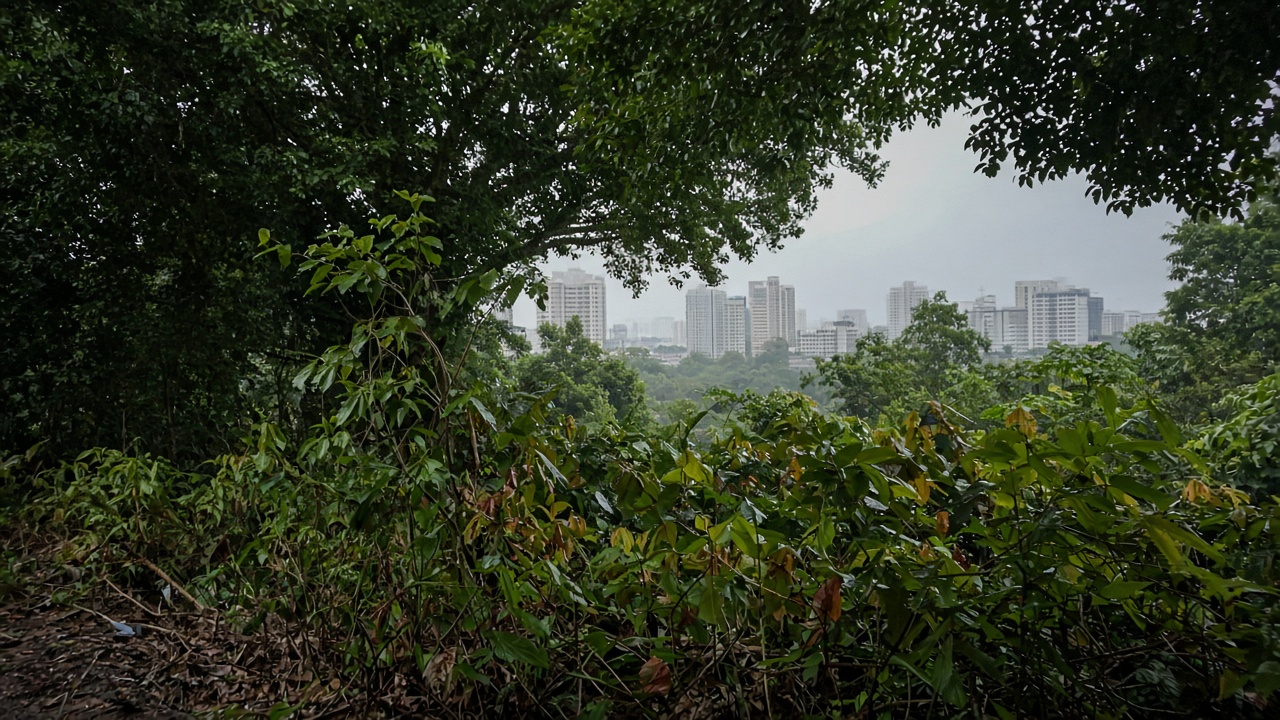
Singapore’s Housing and Development Board on Wednesday trimmed roughly 1,200 planned homes from its Maju Forest and Gillman Barracks programmes, keeping larger green buffers that residents and nature groups argued were essential to the Clementi Nature Corridor and the Southern Ridges chain. The revision leaves about 11,000 units still scheduled over the next decade—4,000 public flats at Maju Forest and 7,000 homes at Gillman Barracks, of which roughly 5,500 will be public housing.
What changed on the ground
At the 23-hectare Maju Forest site, HDB will retain about 10 hectares of greenery, up from roughly 8 hectares under the original sketch. That lifts the green share to about 45 percent of the parcel, compared with 35 percent previously. Minister of State for National Development Alvin Tan told reporters the southern portion would stay wider and more contiguous so wildlife links are not severed between inland woods and coastal patches.
Gillman Barracks, a former military precinct near Telok Blangah, sees an even sharper shift. Green coverage rises from about 8 hectares to 12 hectares—roughly 60 percent of existing forest on the 20-hectare footprint versus 40 percent in earlier drawings. Planners said more of the hillock forest would remain visible from Telok Blangah Street 31 while the north-south ecological corridor along Lock and Malan roads would widen toward Berlayar Creek and Labrador Nature Reserve.
How feedback moved the numbers
Public engagement sessions this year drew repeated warnings that stacking an additional 12,000-plus units across both sites would heat local microclimates and squeeze already stressed bird routes. Nature Society volunteers mapped canopy gaps that would have appeared if HDB had kept initial block heights along the Ulu Pandan fringe. The agency said it incorporated those submissions alongside technical studies on drainage and shade before signing off on the slimmer yield.
The trade-off is pace. Cutting 400 flats from Maju Forest and about 800 from Gillman Barracks may push some ballot timelines back, though HDB did not publish fresh launch dates on Wednesday. Private developers with adjacent en-bloc ambitions will also recalculate absorption, because fewer public-housing entrants could mean slower foot traffic for future retail pods.
What residents watch next
Home seekers who queued for southern-region flats will parse the new mix of Build-to-Order and future development sites. Environmental monitors said they would track whether retained patches are legally protected or merely landscaped buffers that could be reworked in later detail plans. For now, the agency’s message is that density gave way to connectivity: fewer keys, but a wider strip of forest between the city and the coast.