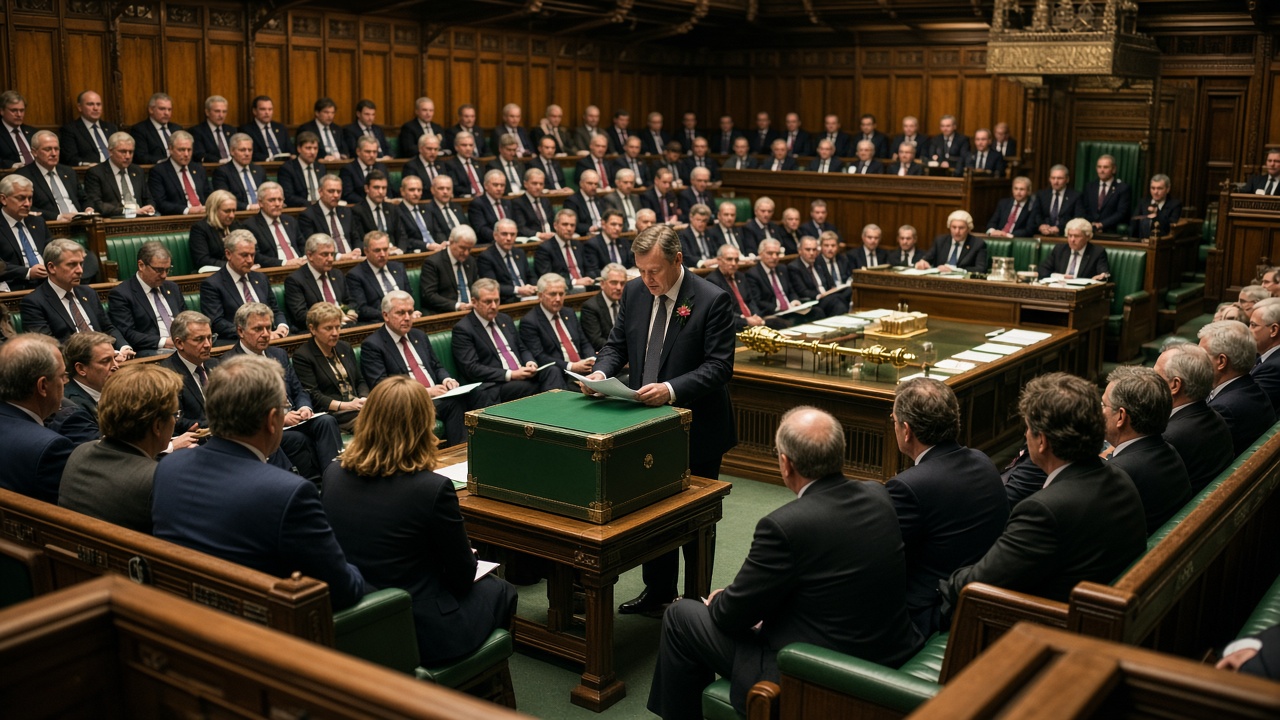
Chancellor John Healey used his first Budget on Wednesday to promise a one-off £100 household energy payment for roughly twenty million homes in England's council tax bands A through D, framing the move as targeted relief while Middle East conflict keeps fuel prices elevated.
Healey told the House of Commons that devolved governments would receive funding to mirror or adapt the payment, with Welsh ministers saying they would match it and Scottish officials planning a replicated scheme. The Treasury said the measure would land alongside a time-limited three-percentage-point surcharge on bank profits, a smaller levy than some analysts had forecast.
What the watchdog said about living standards
The Office for Budget Responsibility's accompanying report painted a bleak picture for household incomes, estimating that real disposable income per person might be only about one percent above pre-pandemic levels by 2029-30. The watchdog said rolling ten-year growth in living standards could average less than 0.1 percent annually in the near term, continuing a post-financial-crisis slump in wage and productivity gains.
Healey argued that stabilizing energy bills through targeted payments was more effective than relying solely on Bank of England rate moves to counter supply-driven inflation linked to oil markets. Opposition leader Kemi Badenoch said the package was "not good enough, not strong enough, not bold enough," while Liberal Democrat spokespeople pressed the government to repair trading ties with the European Union.
Other tax and devolution moves
Beyond the energy payment, the Budget raised taxes on some savings and rental profits and outlined fiscal devolution steps, including retaining business rates locally by the end of the decade and sharing income tax receipts with mayors from 2028. Treasury officials said the bank surcharge would be explicitly temporary, though they did not fix an end date in Healey's statement.
The payment arrives weeks after Labour faced backbench pressure over energy affordability and follows earlier debate about standing charges on bills. Treasury aides said bands A to D were chosen because lower-band households disproportionately feel short-term spikes in heating and transport costs.
What happens next
Implementation details, including payment timing and eligibility verification through council tax records, will be set out in secondary legislation, officials said. The Scottish and Welsh governments must confirm final amounts and delivery channels in Edinburgh and Cardiff.
Financial markets focused on whether the bank levy and modest spending increases would satisfy gilt investors already watching Middle East-driven inflation. The OBR's growth downgrade ensures Healey will face repeated Commons scrutiny on whether one-off checks can offset structurally weak income growth through the remainder of the parliament.
Commons Treasury committee chairmembers said they would summon Healey within fortnight to explain delivery timelines for the energy payment and to test assumptions behind the bank surcharge revenue forecast.