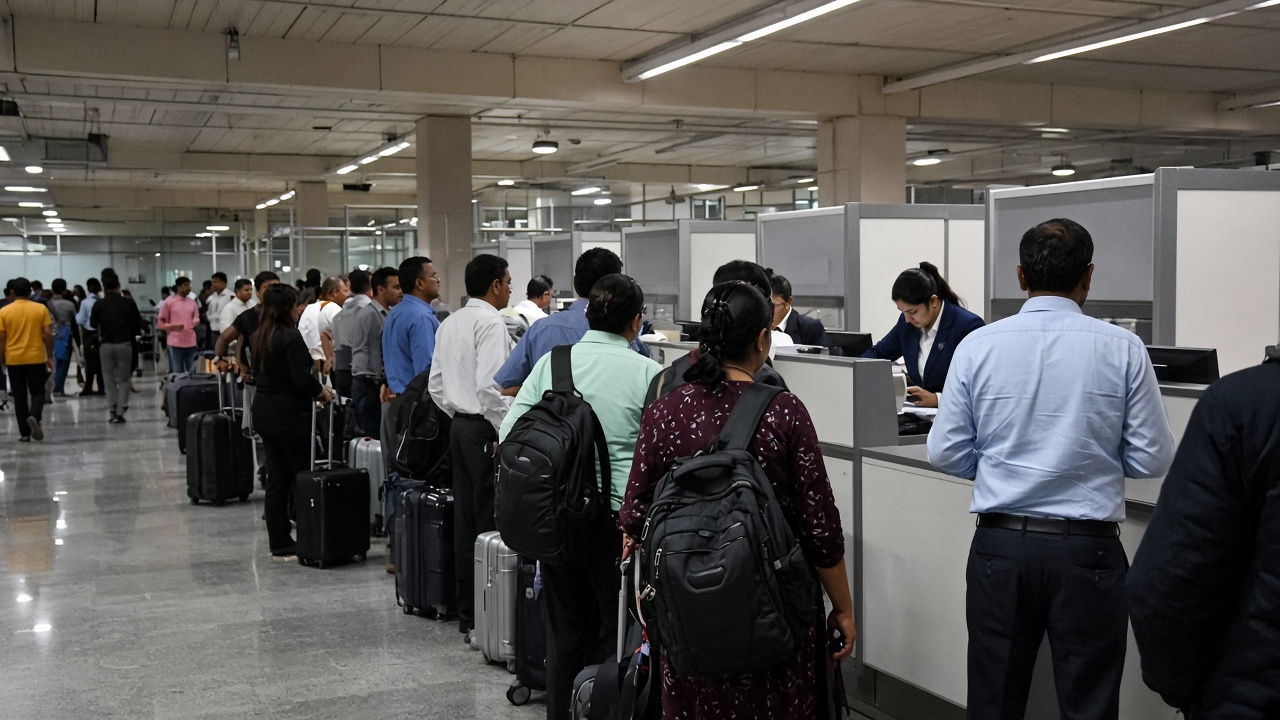
A network failure at Mumbai’s Chhatrapati Shivaji Maharaj International Airport on Tuesday evening snarled passenger processing for IndiGo and Air India travellers and added to a day of cascading delays at India’s second-busiest airport. The outage began around 7:05 p.m. local time and lasted about an hour, according to airport and airline officials cited in local media.
Manual check-in and disabled e-gates
Mumbai International Airport Ltd, the Adani Group-controlled operator, said teams switched to manual procedures for check-in counters, boarding scanners and DigiYatra biometric lanes to keep essential services running. The company maintained in a statement that flight operations themselves were not affected, though passengers reported long queues in departure halls.
Automated e-gates at terminal entrances stopped working, and Central Industrial Security Force personnel cleared travellers one by one, people familiar with the operation told the Hindustan Times. Photographs from the terminal showed passengers waiting in lines while gate equipment sat idle. Airport officials acknowledged anonymously that recovery was uneven and that systems were still fluctuating more than two hours after the failure began.
Scale of delays
Flight-tracking data painted a heavier picture than the operator’s initial account. Flightradar24 listed 327 Mumbai departures as delayed by around 9:30 p.m., with average hold times near 50 minutes, according to Livemint and other outlets. Hindustan Times analysis of the 7 p.m. to 9 p.m. departure window found 18 flights leaving at least an hour late and three cancellations among 44 scheduled passenger services, with two aircraft still on the ground nearly two hours after their planned take-off.
Airline executives said air-traffic congestion had already slowed the evening bank before the network dropped, meaning the IT failure compounded existing backlogs. By late evening, more than three-quarters of the day’s departures from Mumbai were showing delays on tracking sites, though not all of those holdups could be tied directly to the glitch.
Cause still unclear
MIAL did not identify a root cause on Tuesday night. Technicians worked to restore connectivity while staff continued processing passengers by hand. India's aviation regulator had not issued a public statement on the incident by the time the airport’s statement circulated.
For Mumbai, the episode revived questions about resilience at a hub that handles tens of millions of passengers a year on infrastructure that airlines and airport staff already strain during monsoon disruptions and peak-hour congestion. Travellers stuck in manual lines on Tuesday faced the practical cost of those constraints in real time, even as the operator insisted the core runway schedule had kept moving.