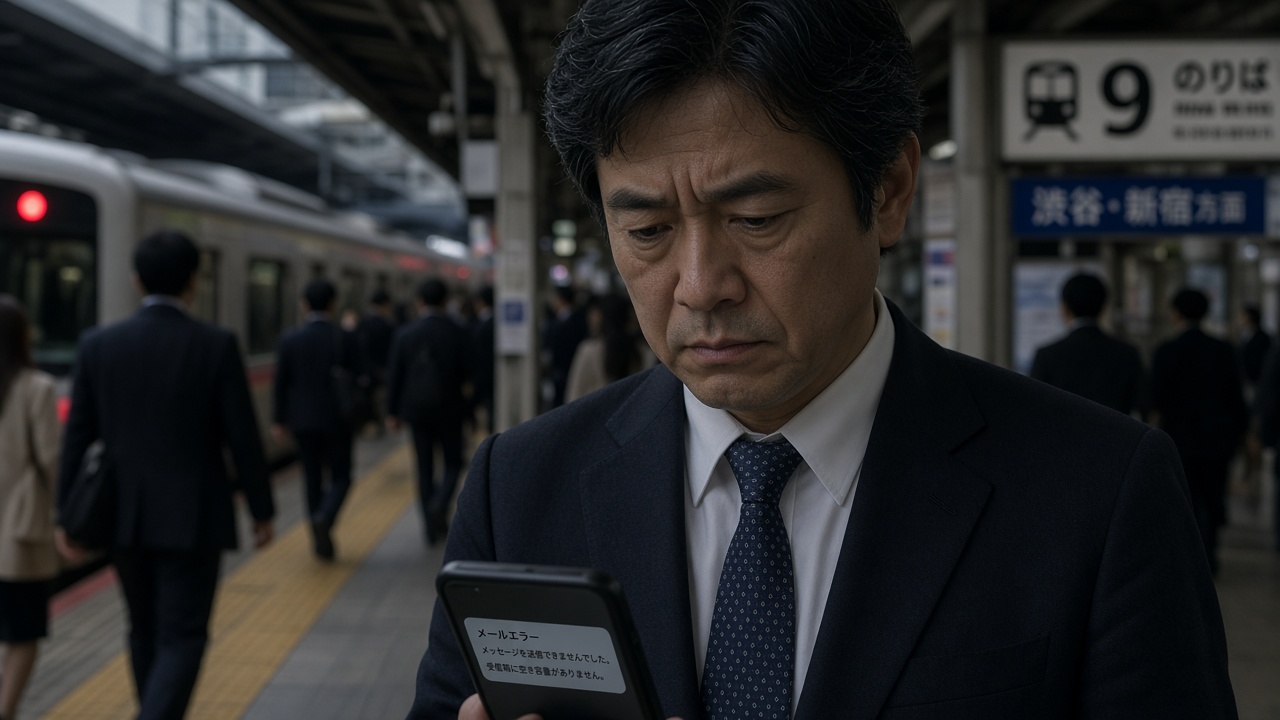
KDDI said au and UQ mobile carrier email was fully restored at 1:40 p.m. Japan time on Wednesday after a nationwide failure that began at 6:00 a.m., leaving millions of subscribers unable to receive messages reliably or, at times, to use carrier mail at all.
The company blamed “continued high processing load” on mail equipment rather than a cyber intrusion, and said it had not confirmed unauthorized access to its systems. Voice calls and mobile data continued to work normally throughout the incident, a distinction that frustrated office workers who could browse the web but missed time-sensitive messages on their @au.com or UQ addresses.
How the outage unfolded
KDDI’s incident page, updated repeatedly through the morning, described a rolling impairment: users could not receive mail, later could send but still struggled with inbound delivery, and were steered toward browser-based Web mail where accounts had already been configured. The Nikkei reported that the disruption lasted about seven hours before the 1:40 p.m. all-clear.
Because the failure hit both au’s flagship brand and the UQ mobile budget line, the footprint covered a large share of Japan’s mobile market. Yomiuri Shimbun noted that messages queued during the outage would be delivered gradually, meaning some inboxes could remain backlogged into the evening even after the technical recovery.
Why carrier mail still matters
Japan has one of the world’s most mature smartphone markets, yet carrier-provided email accounts remain embedded in small-business invoicing, school club notices, and legacy enterprise workflows that never migrated to cloud inboxes. An outage that spares data service nonetheless breaks those chains, which is why Wednesday’s problem dominated morning television bulletins alongside transport disruptions from overnight wind damage on other lines.
KDDI apologized for “great inconvenience” and opened its usual chat and phone support lines. Regulators at the Ministry of Internal Affairs and Communications often ask for post-mortems after prolonged telecom failures; the company has not yet published a minute-by-minute technical timeline beyond the load explanation.
What subscribers should expect
Customers who rely on carrier mail for two-factor codes or parcel delivery notices were advised to verify Web mail settings before the next peak commute. KDDI said anyone who configured Web mail in advance could reach messages through a browser, though even that route experienced slow receipt at the height of the failure.
The episode is unrelated to the ransomware crisis at GMO Internet Group that has occupied cybersecurity headlines this month; KDDI explicitly separated processing load from hacking. Still, the juxtaposition keeps pressure on Japanese carriers to prove resilience as election-season phishing and corporate extortion attempts both climb.