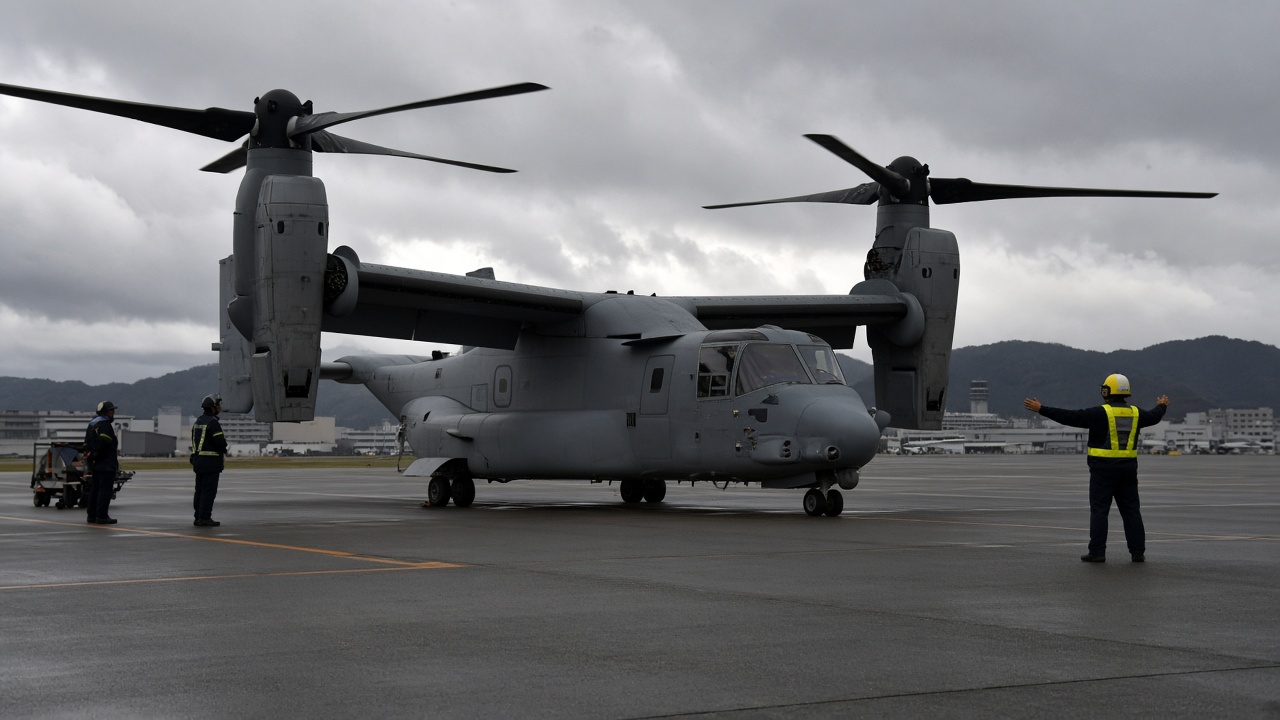
A U.S. Marine Corps MV-22 Osprey tilt-rotor aircraft assigned to Marine Corps Air Station Futenma in Okinawa made an emergency landing at an airport in Kagoshima Prefecture on Wednesday during the Keen Sword joint exercise with Japan, the Japanese Defense Ministry said.
The ministry said the aircraft was transporting personnel as part of the drill when the crew diverted to the southwestern airport. It remained on the ground for roughly three hours before taking off again, according to ministry officials quoted by Kyodo News.
What Japanese authorities reported
Defense Ministry spokespeople did not publicly specify the mechanical or operational reason for the diversion, saying only that the landing was precautionary and that no injuries were reported among those aboard. Local aviation authorities temporarily adjusted traffic while the Osprey was on the tarmac, Kyodo reported.
Keen Sword is a recurring Japan-U.S. command post and field training exercise designed to test interoperability between the Self-Defense Forces and U.S. units based in Japan. This year's iteration has drawn additional scrutiny in Okinawa and Kyushu because of heightened regional tensions and long-standing community concerns about Osprey operations near civilian airfields.
Osprey operations under scrutiny
The MV-22 has been a focal point of base politics in Okinawa since its deployment to Futenma, with prefectural leaders repeatedly asking Tokyo and Washington for tighter safety protocols after past incidents involving the type. Wednesday's diversion did not trigger a prefectural emergency declaration, but Kagoshima officials said they were notified through defense liaison channels as the aircraft approached.
U.S. Forces Japan typically conducts post-incident reviews after unplanned landings but often releases limited detail publicly. A Marine Corps spokesperson had not issued a separate statement beyond the Japanese ministry's account by Wednesday evening Tokyo time.
What happens next
Defense Ministry officials said Keen Sword activities would continue on schedule while engineers inspected the aircraft following its departure from Kagoshima. Parliamentary opposition members in Tokyo said they would request a written briefing on whether the diversion reflected a fleet-wide issue or an isolated alert.
Okinawa Governor's office staff said they were monitoring the incident but had received no request for prefectural assistance because the landing occurred outside Okinawa Prefecture. Naha airport officials noted that most Osprey training sorties still originate from Futenma and nearby auxiliary fields.
For residents near civilian airports that occasionally host diverted military aircraft, the episode renewed questions about coordination between the SDF, U.S. commanders and local governments when tilt-rotor flights need an unscheduled stop outside Okinawa. Kagoshima Prefecture's crisis management division said it would debrief municipal aviation officers once U.S. forces share a final incident summary.