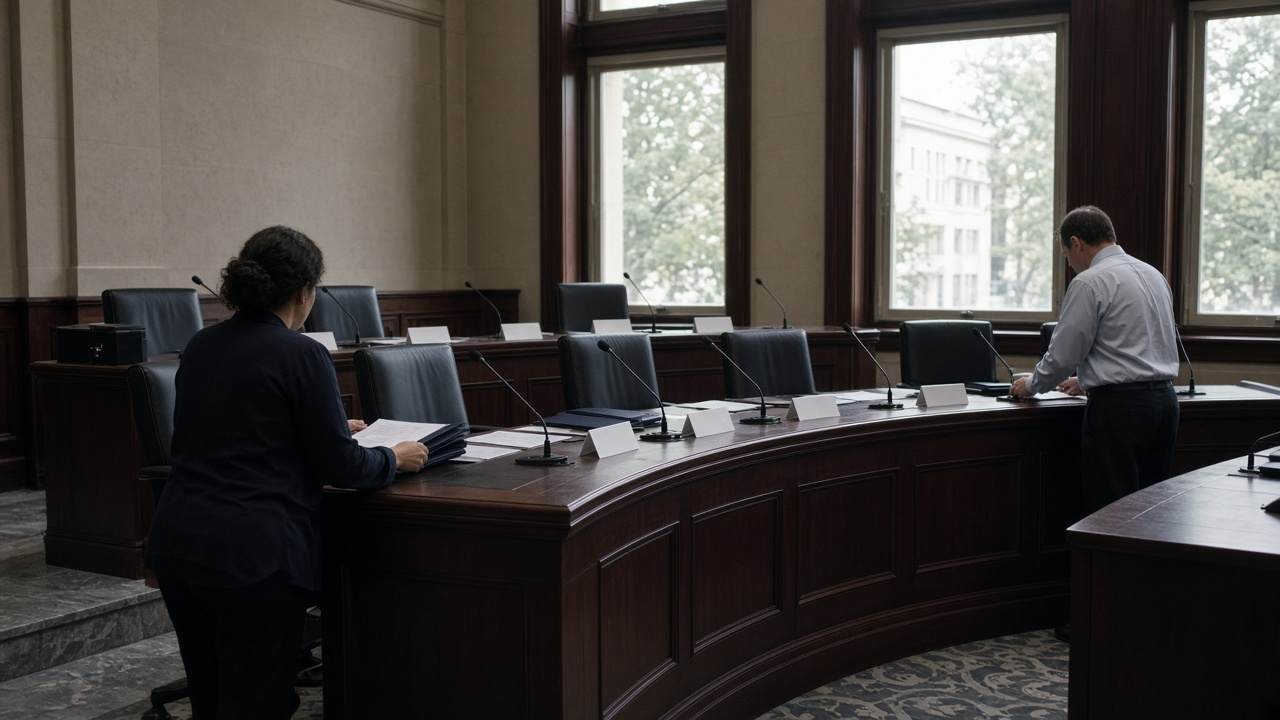
Foreign Minister Lin Chia-lung is set to report to the Legislative Yuan’s Foreign Affairs and National Defense Committee on Wednesday morning on the Ministry of Foreign Affairs’ operational priorities, with questioning expected to focus on cross-strait stability, partnerships with democratic allies, and consular workloads after recent typhoon disruptions.
Committee agenda
The hearing, convened by opposition lawmaker Hsu Chiao-hsin, follows the standard format: a ministerial overview, then rotating questions from party caucuses. Defense-related topics often spill into export controls on dual-use technology and coast guard cooperation, even when the defense minister is not present. Lin’s appearance comes the same day the Economics Committee opens a two-day energy security review, splitting media attention between fuel imports and diplomatic signaling.
Cross-strait atmosphere
Taipei markets reopened this week after Typhoon Champi without a cross-strait military escalation matching the storm’s domestic damage, but legislators still press on aerial and naval activity around the median line. Lin is likely to repeat calls for dialogue paired with deterrence, while opposition members demand specifics on U.S. arms deliveries and Japanese coordination. Civil society groups asked for transparency on emergency travel advisories issued during the typhoon closure.
Alliance diplomacy
Taiwan’s partnerships in the Pacific and with Central European countries face budget scrutiny as the legislature reviews the 2027 central government budget. Lawmakers from both camps want metrics on investment office openings and visa facilitation for business travelers. Lin may highlight science and technology attaché posts that support semiconductor talent exchanges without duplicating Ministry of Economic Affairs trade missions.
Consular pressure
Storm-related flight cancellations stranded thousands of citizens abroad earlier in October. The foreign ministry operated extended hotlines; legislators will ask whether staffing is adequate for simultaneous crises during peak holiday travel. Diaspora voting procedures for November local elections may also surface, given tight timelines for overseas ballot processing.
Information operations
Recent satellite imagery releases from Beijing depicting Taiwanese military sites drew ministry statements emphasizing calm resolve. Committee members may probe whether Taipei coordinates messaging with Washington and Tokyo before public responses, a sensitive line given election-season rhetoric.
Expected outcomes
Hearings rarely produce immediate policy shifts, but they set talking points for interpellation on the budget floor. Watch for bipartisan interest in expediting visa-free travel pilots for Southeast Asian tourists—a economic lifeline for eastern counties rebuilding tourism after Champi.
Citizen takeaway
For voters, the session is a temperature check on whether diplomatic agencies can articulate priorities beyond press releases. For investors, it is secondary to U.S. earnings and Fed decisions, unless questioning unexpectedly escalates into sanctions or travel warnings.
Budget linkage
Foreign ministry appropriations for 2027 include higher travel budgets for economic security dialogues in Europe and the Indo-Pacific. Opposition lawmakers may demand line-item cuts if they believe overlapping missions with the trade ministry waste funds.
Humanitarian corridors
Taiwanese NGOs continue Ukraine and Middle East aid shipments; legislators will ask whether customs clearances slowed during the typhoon week and whether diplomatic pouches need expanded capacity for medical donations.
Digital diplomacy
Social media teams at the ministry field constant misinformation spikes during elections. Lin may outline staffing plans for Mandarin and English rapid-response units that coordinate with national security authorities without duplicating police cyber commands.
Historical precedent
Prior ministers used FA committee appearances to preview visa liberalization pilots; similar announcements Wednesday could boost service exports even if defense headlines dominate live coverage.
Media logistics
Press galleries expect overflow interest if questioning turns to recent satellite imagery releases; security staff added an extra scanner line at the legislature’s south entrance for Wednesday morning.
Business travel
Chambers of commerce submitted letters asking Lin to press Japan and the United States for faster business visa renewals after pandemic-era backlogs cleared only partially. Executives argue semiconductor talent rotations depend on predictable consular appointments.
Parliamentary follow-up
Regardless of Wednesday’s tone, interpellation on the foreign ministry budget will revisit the same themes with sharper partisan edges. Investors should treat the hearing as scene-setting unless new travel alerts or sanctions language appears in official statements afterward.