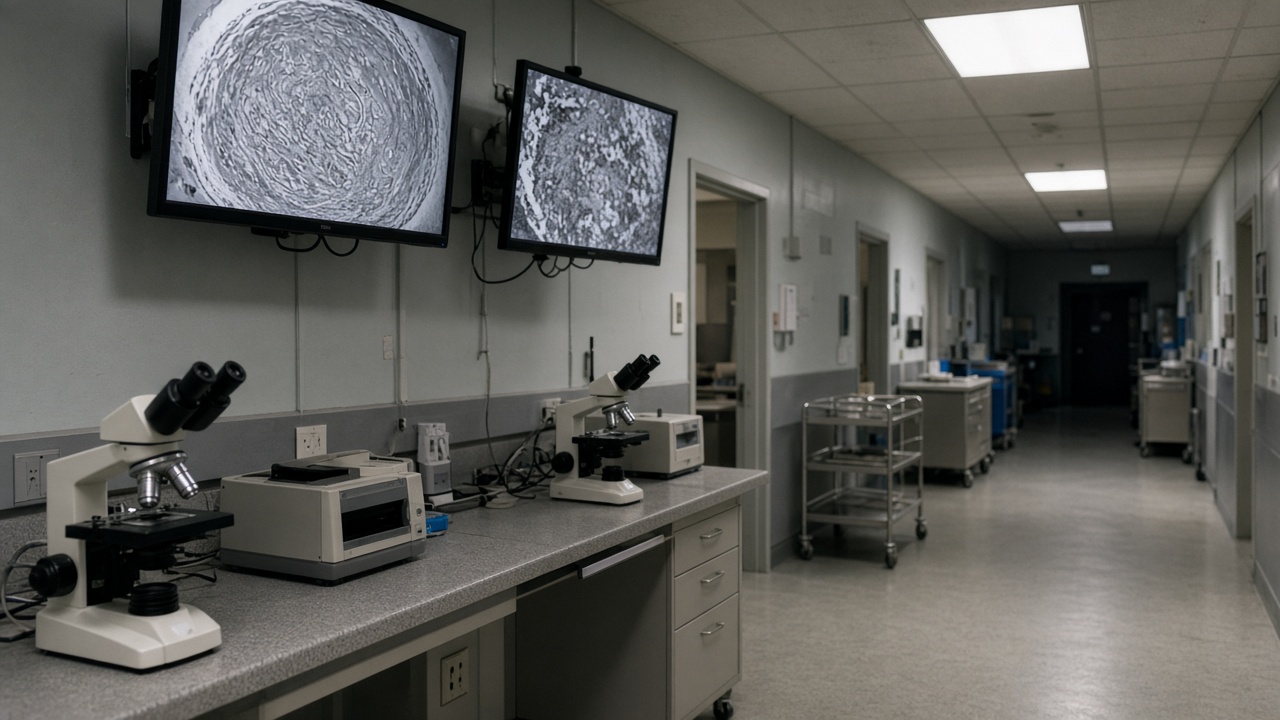
Health ministry inspectors toured Korea University Guro Hospital on Wednesday to check how an approved pathology AI tool plugs into live workflows, part of a nationwide sweep of hospitals enrolled in a 4.8 billion won medical AI testbed program.
The visit followed an initial October inspection at the same site and focused on whether vendors hit integration milestones for digital slide analysis used in cancer diagnostics. Officials from the Ministry of Health and Welfare and the Korea Health Information Service watched demonstrations and collected complaints about data pipelines that must feed real-world evidence back to regulators.
What the testbed buys
The support project pairs 21 small and medium AI developers with 22 medical-data-centric hospitals, covering 80 percent of project costs through December with monitoring continuing into late 2027. Category-one grants back Food and Drug Safety-approved devices such as diagnostic aids, while category-two projects fund hospital operations tools that fall outside device rules.
At Guro, AVIS showcased its Qanti IHC assistant, which quantifies biomarker expression on digitized immunohistochemistry slides. The product already holds domestic regulatory clearance; the testbed asks whether it saves pathologist time without drifting accuracy when hospital information systems swap vendors.
Field issues on the checklist
Ministry director Choi Kyung-il said earlier this month that successful adoption depends on reviewing validation steps, not just funding pilots. Wednesday's team heard about multi-site trials linking Guro with Samsung Medical Center, Seoul St. Mary's and other hospitals, each with different slide scanners and review committees.
Integration — not dataset dumps — is the metric inspectors said they would score.Companies also showed chest X-ray draft report software from Sumbit AI during the first Guro visit; Wednesday's follow-up emphasized pathology because those workflows touch tumor boards and insurance claims. CIO-led data committees must approve each extract, slowing installs when consent language lags.
Why Guro matters on the map
Guro sits in southwest Seoul's industrial belt and treats high volumes of gastric and lung cancers, making it a stress test for slide throughput. If Qanti IHC can log time savings there, MFDS and the Health Insurance Review and Assessment Service gain evidence to negotiate reimbursement. Failure would signal that approved algorithms still choke on PACS interfaces.
The ministry said it will visit every testbed site before year-end. Hospitals that miss deliverables risk losing second tranche funding, while vendors need hospital references to export. For patients, the inspections are invisible, but they determine whether AI reads ordered this winter arrive as decision support or as research-only experiments.