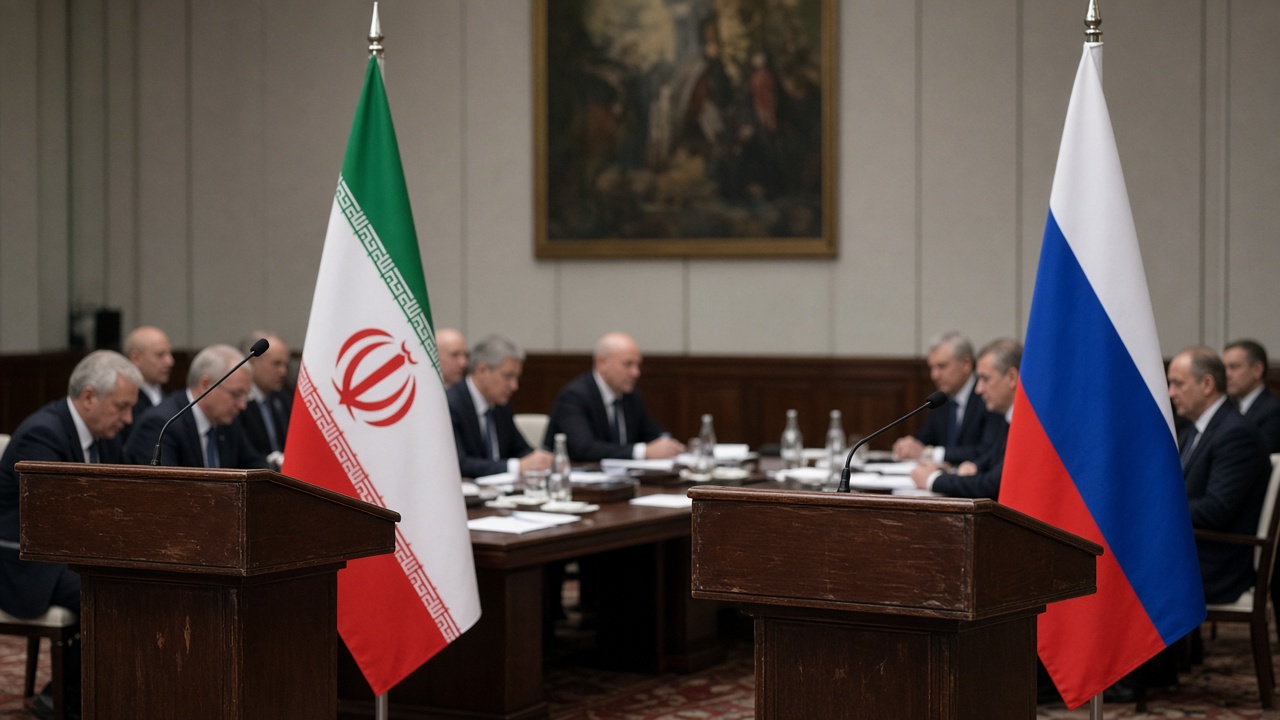
Iranian President Masoud Pezeshkian told Russian President Vladimir Putin on Tuesday that Middle Eastern countries can resolve their own conflicts without relying on the United States, a message delivered in Moscow as missile fire and diplomacy continued to compete across the Gulf.
Pezeshkian said regional states should not depend on American assistance to settle disputes, according to a summary carried by China’s Xinhua news agency and echoed in regional roundups on Wednesday. The remark lands at a moment when U.S. officials have been warning allies about possible new military action against Iran after the Nov. 3 U.S. midterm elections, and when Saudi Arabia says its air defenses destroyed two ballistic missiles launched toward Riyadh.
What changed in Moscow
The bilateral meeting gave Pezeshkian a platform to frame Tehran as a partner for regional stability rather than a party that needs outside mediation. Putin’s government has kept open channels to Iran while also hosting discussions that touch on the war around the Strait of Hormuz and Houthi attacks on energy infrastructure.
Pezeshkian’s language stopped short of detailing a concrete initiative, but it signaled continuity with Iran’s push to limit U.S. influence in the Gulf. Russian state media and Iranian outlets have highlighted Moscow’s role as a venue for talks that include Qatar and other mediators, even when those sessions produce no breakthrough on reopening Hormuz shipping or ending cross-border strikes.
Missiles and markets in the background
While the presidents met, the Saudi-led coalition said it intercepted two Houthi ballistic missiles aimed at the Saudi capital. Coalition spokesman Turki Al-Maliki posted on X that air defenses destroyed the weapons before they could reach Riyadh. Yemen’s Houthi movement has separately claimed strikes on Saudi energy sites, including Ras Tanura, though Riyadh has not confirmed damage to the refinery complex.
Oil traders have been weighing those security reports against diplomatic chatter and U.S. force movements. Anadolu’s Wednesday morning briefing cited people briefed on conversations in which Washington asked several Gulf Arab states to prepare for a short, intense military campaign against Iran after the midterms, and noted the Pentagon’s shift of a Patriot battery from Texas toward the region.
What Washington hears
U.S. messaging has mixed deterrence with offers of negotiation. President Donald Trump’s administration has kept sanctions pressure on Iran while discussing strikes that could be ordered on short notice, according to recent U.S. media reporting citing unnamed officials. Pezeshkian’s statement to Putin does not directly answer those threats, but it gives Iranian diplomats a talking point: that the region’s future should be written by its own capitals.
For Gulf monarchies, the tension is practical. They want protection from missile and drone attacks that have disrupted shipping and raised insurance costs, yet they also fear being drawn into a wider U.S.-Iran war that could hit their own infrastructure. Pezeshkian’s appeal to regional self-reliance is unlikely to replace Patriot batteries or carrier deployments, but it may resonate in capitals that are hedging between Washington and Moscow.
What comes next
Diplomats will watch whether Moscow can translate Tuesday’s optics into a new round of Hormuz or Houthi talks, and whether Riyadh’s intercept claims trigger another cycle of retaliation claims from Sanaa. In Tehran, Pezeshkian must balance outreach to Russia with domestic pressure to show resistance to U.S. and Israeli operations.
Until shipping lanes stabilize and missile launches stop, his argument that the Middle East can manage its problems without America will be tested daily on radar screens and futures markets, not only in summit communiqués.