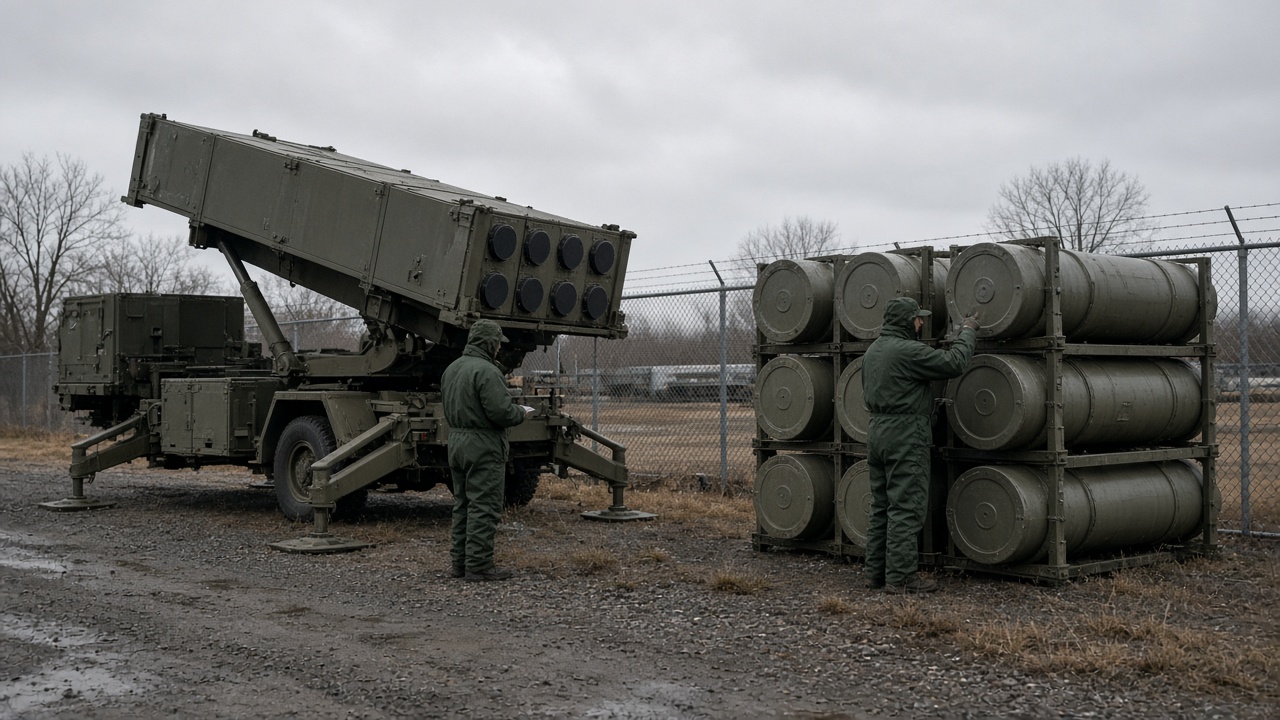
The United States has selected Poland to host the only Patriot Advanced Capability-3 missile maintenance facility outside American soil, a decision announced on the margins of NATO’s Conference of National Armaments Directors as wars in Ukraine and the Middle East strain interceptor stocks across the alliance.
What Poland will do
Deputy Defence Minister Magdalena Sobkowiak-Czarnecka said the centre will repair, refurbish, test and re-certify PAC-3 interceptors used in Patriot batteries, work that today often requires shipping missiles back to the United States for more than a year. Poland competed with Germany, the Netherlands and Norway for the investment, which Warsaw values at about one billion zlotys, roughly €227 million.
Lockheed Martin, which builds the PAC-3 family, will partner with Warsaw on follow-on negotiations expected to last several months before the site becomes operational. Sobkowiak-Czarnecka told reporters in Brussels that bringing servicing closer to operators could cut maintenance cycles that now stretch across transatlantic logistics.
Who is involved
The Pentagon’s acquisition and sustainment office said Germany, the Netherlands and Sweden will integrate critical supply-chain elements alongside the Polish hub. Undersecretary Michael Duffey said allies were “sending a clear message” that NATO is “serious about deterrence” on the eastern front.
Polish Defence Minister Władysław Kosiniak-Kamysz called the choice proof that Poland is a trusted security partner, noting that two Patriot batteries delivered under the Wisła programme reached operational readiness in December. Warsaw has ordered hundreds of PAC-3 MSE interceptors since 2018, with further batteries and missiles scheduled through 2029.
Why timing matters
Interceptors have become a bottleneck as Russia continues long-range strikes on Ukraine and as Middle East air-defence demand grows. Breaking Defense reported that the facility will not manufacture new missiles but will focus on overhaul capacity that keeps existing rounds certified for launch.
Lockheed Martin separately told investors it plans to triple PAC-3 MSE production by 2030 under multiyear U.S. contracts worth tens of billions of dollars, underscoring how maintenance capacity is racing to keep pace with factory output. A European hub reduces the risk that a single U.S. backlog delays allied readiness during a crisis surge.
Regional politics
U.S. Ambassador to Poland Mark Brzezinski welcomed the decision on social media as a milestone in bilateral defence cooperation. Euronews noted that Poland’s bid scored highest during the application stage, though final approval followed months of talks with Washington.
The announcement lands as NATO members debate how to meet higher defence-spending targets and as Ukraine continues to seek additional Patriot coverage. Pentagon officials have previously explored licensed production options for interceptors, but today’s facility addresses sustainment rather than new manufacturing lines.
What comes next
Polish officials said it would take about a year to stand up the centre after contracts with Lockheed Martin are settled. Until then, allies will keep sending missiles requiring certification to the United States, preserving the long turnaround Sobkowiak-Czarnecka described in Brussels.
For NATO air-defence planners, the operational question is whether shortened servicing timelines translate into more interceptors available along the eastern flank during the winter fighting season in Ukraine and during continued Houthi missile activity toward the Gulf. The political question is whether other European states will seek similar regional hubs for different missile families as stocks remain under pressure.