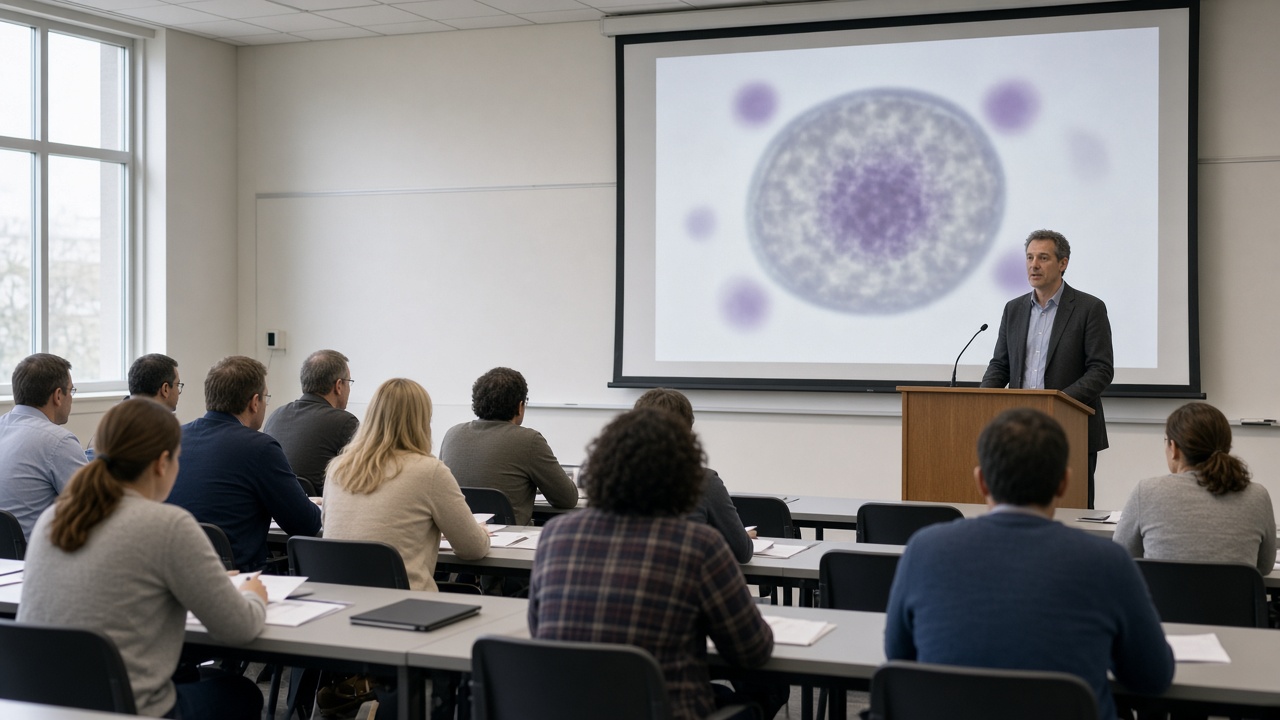
Academia Sinica’s Genomics Research Center will host physician-scientist Muh-Hwa Yang on Wednesday for a lecture on molecular gatekeeping of epithelial identity in cancer progression and therapeutic resistance, part of a recurring GRC seminar series open to Taipei biomedical researchers.
Research focus
Yang, who holds appointments at National Yang Ming Chiao Tung University, studies how epithelial cells maintain identity during metastasis and how those pathways confer drug resistance in solid tumors. The talk is scheduled from 10:30 a.m. to noon in the center’s first-floor auditorium, with abstracts distributed to registered attendees beforehand.
Why epithelial identity matters
Many aggressive cancers reactivate developmental programs that let cells detach from primary tumors and survive therapy. Understanding the “gatekeepers” that preserve or abandon epithelial traits helps design combination treatments that prevent relapse. Taiwan’s oncology community follows Yang’s work because it bridges clinical practice at Taipei veterans hospitals with basic research funded by national grants.
Institutional context
The Genomics Research Center sits in Nangang’s biomedical corridor alongside National Biotechnology Research Park facilities. Seminars like Wednesday’s session knit together Academia Sinica investigators, hospital physicians, and graduate students who might otherwise silo in separate campuses. English-language abstracts accommodate international postdocs working on Taiwan’s bilingual science policy goals.
Clinical pipeline implications
Resistance to targeted therapies remains a leading reason trials fail in late-stage gastric and lung cancers prevalent in East Asia. Yang’s group has published on signaling cascades that could pair with existing immunotherapy checkpoints. Hospital partners watch these seminars for early collaboration cues before formal industry licensing talks begin.
Public access
Attendance is primarily professional; the center posts slides selectively after events under authorship agreements. Patients’ groups occasionally request lay summaries, which Sinica communications may publish if speakers approve.
Broader calendar
Wednesday also features energy and dentistry symposia elsewhere in Taipei, reflecting a dense fall conference season after typhoon disruptions cleared. For policymakers, the science hearing contrasts with legislative energy debates occurring the same day—both touch resilience, one at the grid level, the other at the cellular level.
For students
Graduate students attending can earn credit through participating universities’ seminar logs. Registration filled early according to the center’s calendar entry, suggesting steady interest despite market volatility distracting Taiwan’s tech-heavy news cycle.
Funding environment
National Science and Technology Council grants increasingly require translational milestones; Yang’s dual hospital appointments align with that policy push. Industry listeners attend to scout licensing opportunities before competitors sign exclusive option agreements.
Collaboration tools
Post-seminar networking sessions allow clinicians to request tissue samples under existing IRB protocols, speeding hypothesis testing without waiting for formal MOU signings between hospitals and Sinica institutes.
Comparative oncology
Taiwan’s gastric cancer incidence keeps basic epithelial biology relevant domestically, even when global headlines focus on lung cancer immunotherapy trials led by U.S. pharmas.
Equipment sharing
Single-cell sequencing cores at the research park booked solid October utilization after typhoon-related cancellations in southern labs redirected projects north. Yang’s team occasionally contracts those cores for spike-in experiments that would be costly to duplicate in hospital labs.
Ethics training
Attendees must complete conflict-of-interest declarations when samples involve veterans’ hospitals, a routine step that nonetheless slows first-time collaborations between civilian and military medical centers.
Publication pipeline
Seminar topics often preview papers under review at international journals; journalists are asked not to quote unpublished figures, but traders in biotech watchlists still monitor attendance lists for hints about upcoming data releases.
Regional collaboration
Japan’s RIKEN and Korea’s KAIST send fellows to Sinica series regularly; Wednesday’s talk may include side meetings on East Asia cancer registry harmonization, a bureaucratic project with long-run clinical trial implications.
Takeaway for clinicians
Oncologists attending from Taipei Medical University and Veterans General hospitals will look for actionable biomarkers that could enter hospital lab menus within 12–18 months, the typical lag between discovery talks and institutional review board approvals for new panels.
Recordings, if authorized, will appear on the center’s intranet for researchers who missed registration. Security staff will check badges at the auditorium door because seating is capped at fire-code limits.