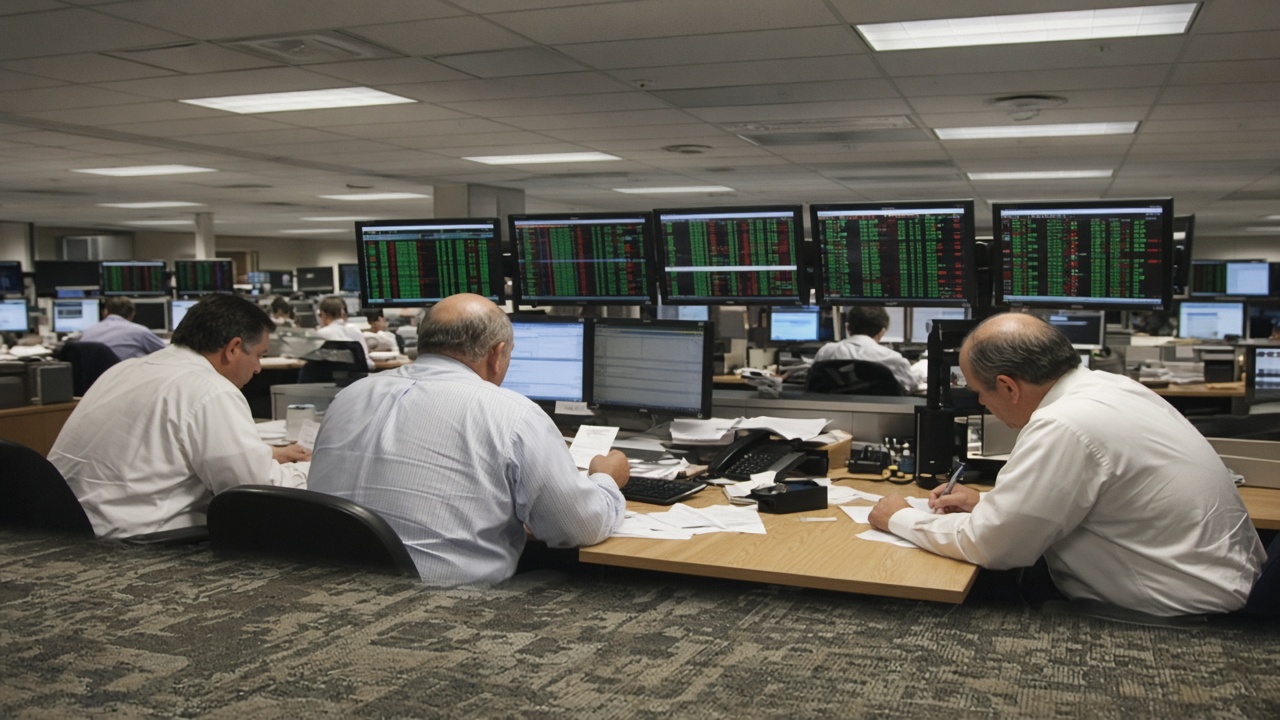
Taiwan’s eight major state-linked financial institutions bought a net NT$7.37 billion of local equities on the main board Tuesday, extending a post-Double Ten buying streak to thirteen sessions as brokers estimated their combined stabilization purchases since early October at roughly NT$4 trillion. The purchases landed on a day when the weighted index finished only modestly higher, underscoring how official desks are absorbing supply while foreign funds still trimmed holdings.
How the streak shows up in flow data
Securities investment trust companies, the channel often used by government-linked funds, bought a net NT$23.6 billion on Tuesday, according to exchange tallies cited in morning brokerage notes. That figure dwarfed foreign institutional sales of NT$8.1 billion and helped offset profit-taking in optical and handset supply-chain names that had led the prior week’s decline. Proprietary desks at brokerages flipped to a small net buy after eleven consecutive sell days, a shift traders attributed to short-covering once Taiwan Semiconductor Manufacturing Co. reclaimed the NT$2,400 level.
Why desks stepped in after the long break
Markets reopened Monday after a two-day closure tied to Typhoon Champi, with investors bracing for a catch-down move following losses in U.S. technology shares. Instead, a rebound in Seoul and Tokyo, plus a firmer Philadelphia semiconductor index, pulled Taipei higher at the open. Midday selling emerged when Nasdaq futures turned negative, leaving the Taiex with a narrow gain and a 908-point intraday range. State buyers were active on the way down, traders said, concentrating orders in financial and large-cap chip names that anchor index calculation.
Margin and retail stress
Financing balances fell another NT$10.49 billion on Tuesday, continuing a two-week slide from a record high above NT$6.53 trillion. Desk economists read the drop as forced deleveraging rather than voluntary risk reduction, because the index had not yet reclaimed the quarterly moving average that many retail accounts use as a sentiment line. Several domestic brokerages kept “neutral” ratings on the benchmark, arguing that U.S. Federal Reserve decisions and next week’s U.S. midterm election would cap upside even with local support.
Corporate issuers watch the tape
Secondary offerings and convertible bond resets scheduled for November remain sensitive to whether stabilization bids continue once earnings season thins out. Two electronics issuers postponed investor briefings that had been set for late October, citing volatile ADR trading in Taiwan’s largest chipmaker. Investment bankers said state buying does not remove the need for clearer guidance from U.S. cloud customers, whose capital spending plans dominate order books at server assemblers and packaging houses.
What policy makers say publicly
Financial regulators have not labeled the activity a “national team” intervention, but repeated statements that the banking system is liquid and that the exchange’s disposition mechanisms are functioning normally. Cabinet officials separately told lawmakers that energy and infrastructure budgets remain on track, a fiscal message that state bank shareholders read as permission to keep supporting sentiment ahead of local elections in late November. Opposition legislators asked whether repeated index support crowds out private price discovery; treasury officials answered that purchases follow fund mandates and risk limits.
Near-term calendar
Wednesday’s session opens with U.S. megacap earnings and a Federal Reserve decision on the horizon, events that historically raise foreign hedge turnover in Taipei. Dealers expect state desks to remain buyers on dips near the quarterly average, but not to chase gaps driven by overnight U.S. futures. If foreign sales re-accelerate beyond NT$20 billion a day, several houses warned that even aggressive local buying may not prevent another test of the half-year line that held during the Champi closure week.
On the floor in Taipei
Day traders described a split tape: memory and co-packaged optics suppliers bounced, while power-supply and handset chip designers lagged. Lunch-break conversations centered on whether NT$1 trillion daily turnover could return without mainland hedge funds re-entering Taiwan depositary receipts. For corporate treasurers, the message is simpler: state-linked flows are backstopping liquidity, but they are not a substitute for earnings beats from customers that actually consume wafers and racks.