Taiwan’s defense minister said China is waging “cognitive warfare” after Beijing released high-resolution satellite pictures of Taipei landmarks and a military propaganda poster on the anniversary of Japan’s 1945 handover of the island to the Republic of China government.
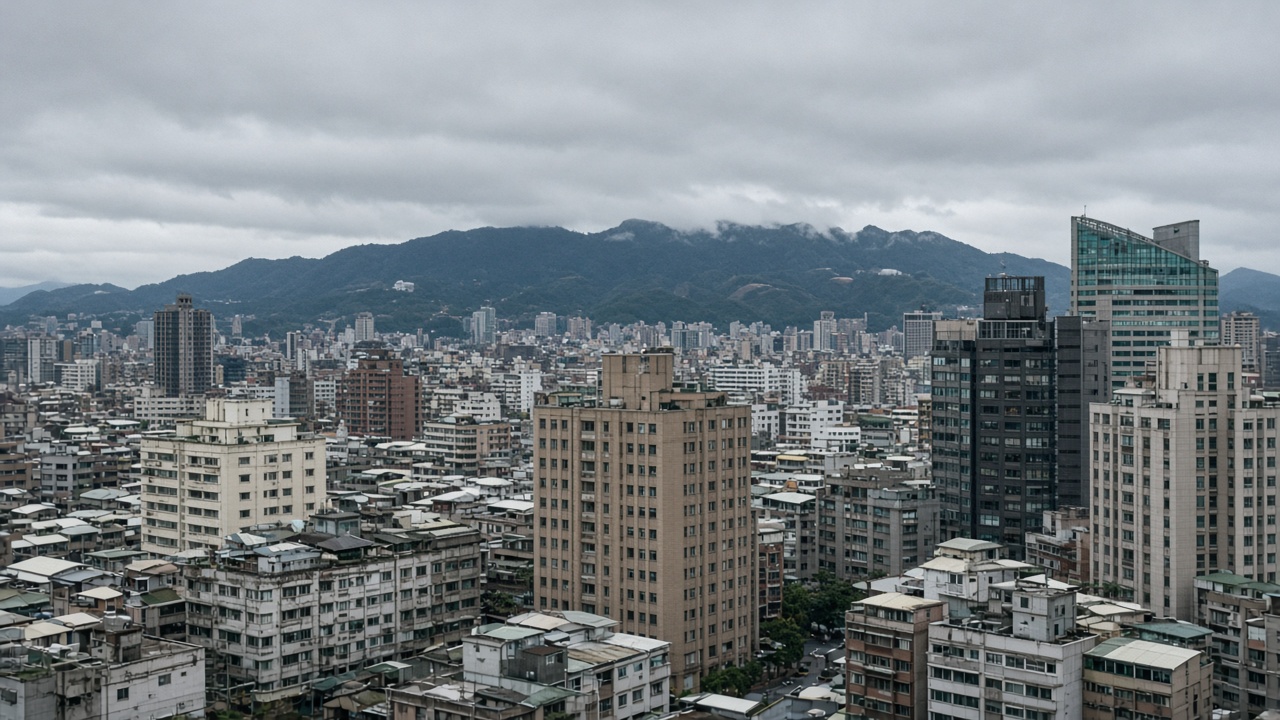
Speaking to reporters at the Legislative Yuan on Tuesday, Wellington Koo said the People’s Liberation Army Eastern Theater Command published a map of Taiwan overlaid with fighter jets and warships under the title “Remember the history of the restoration.” Separately, state-linked outlets circulated Jilin-1 satellite footage showing Taipei Main Station and the National Palace Museum, according to the Taipei Times and the South China Morning Post.
Two histories, one date
Japan took control of Taiwan from the Qing dynasty in 1895 and ruled until 1945, when it transferred the territory to the ROC administration. The People’s Republic of China, founded in 1949, claims Taiwan as its own but has never governed the island.
Koo argued that Beijing was twisting that timeline for psychological effect. “We must stress that the People’s Republic of China was established in 1949,” he said. “The War of Resistance has absolutely nothing to do with the People’s Republic of China — this is a clear, objective fact.”
He contrasted China’s messaging with Taiwan’s own late-October commemoration of the 1949 Battle of Guningtou on Kinmen, when ROC forces repelled a PLA invasion attempt. That battle, Koo said, is the anniversary worth remembering because it shows Beijing’s determination to seize Taiwan by force has not changed.
What the imagery shows
The satellite release marked the second straight year that Jilin-1 imagery featured prominently in Beijing’s Oct. 25 messaging, the SCMP reported. Defense officials in Taipei said the pictures show how commercial and dual-use sensors can expose fixed infrastructure and cultural sites at street-level resolution.
Koo pledged that the ministry would not lower vigilance over collection aimed at Taiwan. He said the armed forces would continue concealment, mobility and dispersal measures to protect operational security, without detailing specific units or bases.
Election-season pressure
The satellite drop landed as Taiwan’s nine-in-one local elections enter their final month. Interior Minister Liu Shyh-fang told lawmakers Monday that police would intensify efforts against election interference linked to transnational repression, and Premier Cho Jung-tai cited foreign harassment of candidates as evidence that cognitive campaigns can pair with on-the-ground intimidation.
Officials did not publicly link the Oct. 25 imagery release to any single investigation. Analysts in Taipei said the combination of orbital photos and combat artwork is meant to signal reach and resolve to domestic Chinese audiences while unsettling voters in Taiwan. For Koo, the response is straightforward: treat the posters and pixels as part of the same pressure campaign, and keep forces dispersed while the political season runs hot.