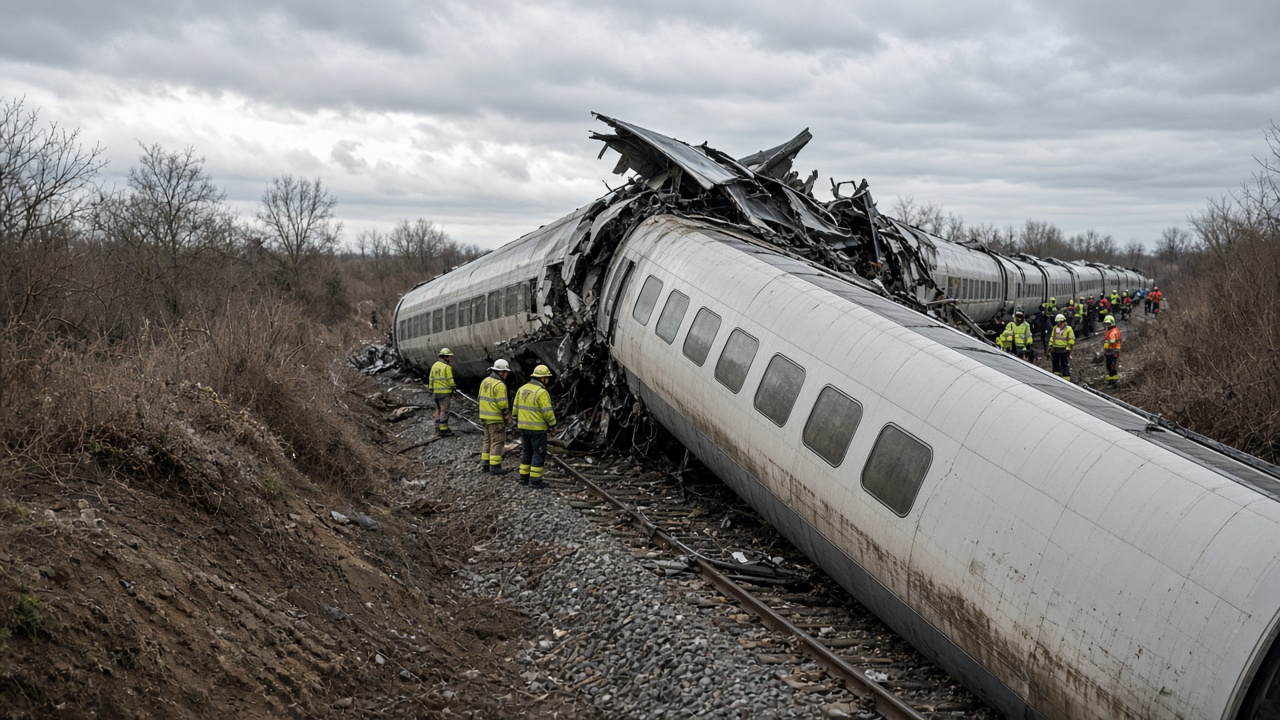
A Renfe AVE train running the Madrid–Sevilla corridor slammed into the rear of a stopped Iryo train near Urda in Toledo province at about 8:54 a.m. local time on Wednesday, killing at least 30 people and leaving dozens more injured, regional and national officials said. Two carriages derailed down an embankment, and rescue teams warned the death toll could climb while they worked inside the most crushed wagons.
Castilla-La Mancha President Emiliano García-Page, speaking at the crash site, said authorities had confirmed 24 fatalities aboard the AVE and six aboard the Iryo train, with more casualties likely once crews reached deeper sections of the wreckage. Health Minister Mónica García described a high-impact collision and said hospitals across Madrid and Castilla-La Mancha were freeing intensive-care beds and operating rooms for incoming patients. Spanish Prime Minister Pedro Sánchez said he was shocked by the disaster and that emergency services were on the ground.
What officials say happened on the line
Spain’s rail infrastructure manager Adif said the crash occurred at kilometer 118 between Mora and Urda. The Iryo train, carrying 147 passengers, was stopped on the track when the Renfe AVE, with 397 passengers aboard, hit it from behind. García-Page said about 30 people were treated for lighter injuries, roughly 50 for more serious wounds, and a smaller number were in critical condition.
Early accounts from Adif and engineers interviewed by Spanish broadcasters pointed to a failure in the primary LZB cab-signaling system that normally prevents one train from catching another. Adif said trains in the area were moving under a backup lateral block system while the main protection was repaired. Under that regime, drivers follow lineside signals while an ASFA on-board system can intervene if speeds or indications are ignored.
José María Goicolea, a civil engineer speaking to RTVE, said several trains had been held during the LZB outage and were later cleared to proceed under the alternate rules. He cautioned that investigators still had to establish why the Iryo train remained halted and why the following AVE was authorized to continue. Cadena SER reported government sources saying a stop signal was showing red even though the AVE was told to move—claims that remain unconfirmed pending a formal inquiry.
Service shutdown and political pause
High-speed service between Madrid and Andalusia was suspended after the collision, stranding travelers on one of Europe’s busiest AVE links. Urda’s town hall opened a sports hall to support survivors and families. Major parties paused campaign events after the crash, which came during an active election period in Spain.
The accident is the second major Spanish rail disaster in 2026 after a separate crash earlier in the year. Transport Minister Óscar Puente and Adif executives face immediate pressure to explain how a rear-end strike could occur on a line marketed for decades as among the safest high-speed networks in Europe.
What investigators will examine next
Judicial and technical probes will focus on signaling logs, radio traffic between the Atocha control center and the two trains, and maintenance records for the LZB installation. Union officials have already questioned whether staffing and backup procedures during equipment failures left too much discretion with dispatchers.
Forensic teams must identify victims trapped in derailed cars before authorities publish a final toll. Xinhua, citing Spanish civil-protection sources, reported later Wednesday that the count had risen toward 46, underscoring how fluid the numbers remain while search operations continue.