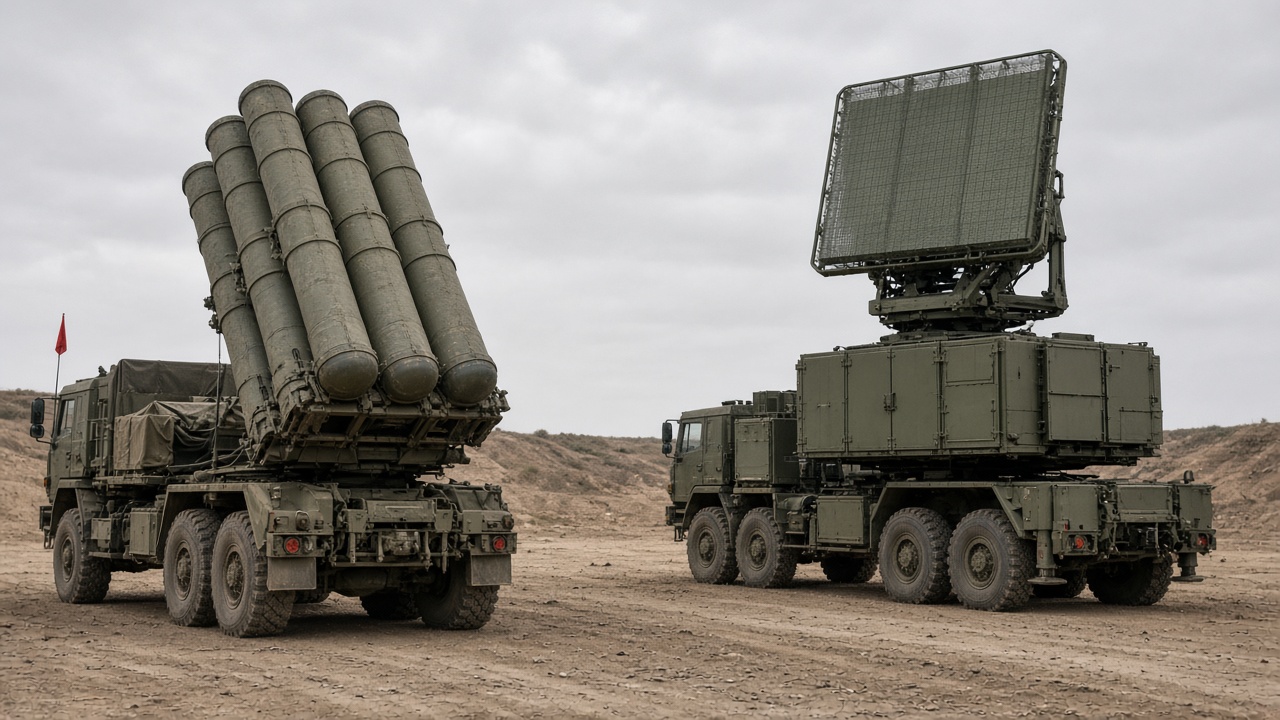
Australian defence officials told a parliamentary committee on Thursday that Canberra is weighing proven offshore missile-defence kits—including interceptors derived from Israel’s Iron Dome—for a accelerated ground-based shield, with formal recommendations to government due next year after competitive evaluation tied to the Talisman Sabre exercise cycle.
What LAND 6504 seeks
Project LAND 6504, a medium-range ground-based air and missile defence program, opened an industry notice in mid-October seeking military-off-the-shelf systems that can deploy with Army manoeuvre groups and plug into existing integrated air and missile defence architecture built around CEA Technologies radars. Breaking Defence reported slides from a Land Forces briefing describing an “acceleration project” focused on rapid delivery, with vendor selection planned for late 2027, live firing at Talisman Sabre in 2029, and initial capability in the early 2030s.
Air Marshal Robert Chipman told senators Defence would run a competitive process and bring options to government in 2026 after war-game evidence, including the U.S. Marine Corps’ June trial on Guam of the Medium Range Intercept Capability. That launcher carries SkyHunter missiles—a U.S.-built variant of Rafael’s Tamir interceptor co-produced with Raytheon—and recorded a live intercept during the Pacific drill in which Australia also participated.
Patriot, Aegis and political scrutiny
SBS News reported officials are simultaneously discussing availability of the U.S. Army’s Patriot system and a land-based adaptation of the navy’s Aegis combat system, alongside the Marine Iron Dome derivative. The Jerusalem Post noted Canberra has approached Washington on cost and delivery timelines for MRIC while Norwegian Kongsberg and South Korean Hanwha Aerospace are expected to bid with their own medium-range portfolios.
Any Israeli-linked hardware draws domestic scrutiny because Australia does not export weapons to Israel, though purchasing Rafael-derived components through U.S. prime contractors is legally distinct from direct arms sales. Environment Minister Murray Watt, appearing before the same committee, said the government would “always seek to deliver the most suitable military technology” when asked about Iron Dome-associated interceptors. Opposition and crossbench members are likely to press whether the chosen system covers population centres or only forward bases and airfields—One News Australia reported tender language emphasising protection of deployed forces and critical infrastructure rather than suburban capitals.
Why Thursday’s testimony matters
Defence Minister Richard Marles has framed the strategic environment as the most complex since World War II, citing long-range strike demonstrations in the Indo-Pacific, including a Chinese submarine-launched test that Canberra said showed extended nuclear reach. LAND 6504 is Canberra’s answer to drone and cruise-missile lessons from Ukraine and the Middle East, but the committee hearing made clear no contract is signed: expressions of interest close to industry, Washington is pricing three U.S.-led options, and Chipman’s 2026 recommendation is still a staff paper away from cabinet dollars.
For Australian bases from Darwin to RAAF facilities in the southeast, the practical question is integration latency—how quickly a truck-mounted MRIC battery can share tracks with Army radars already in service. Thursday’s testimony did not pick a winner; it confirmed SkyHunter is in the same conversation as Patriot and Aegis, and that parliament will see the merit list before taxpayers commit to a multi-decade shield that will not reach full operational status until the mid-2030s even under the accelerated schedule.