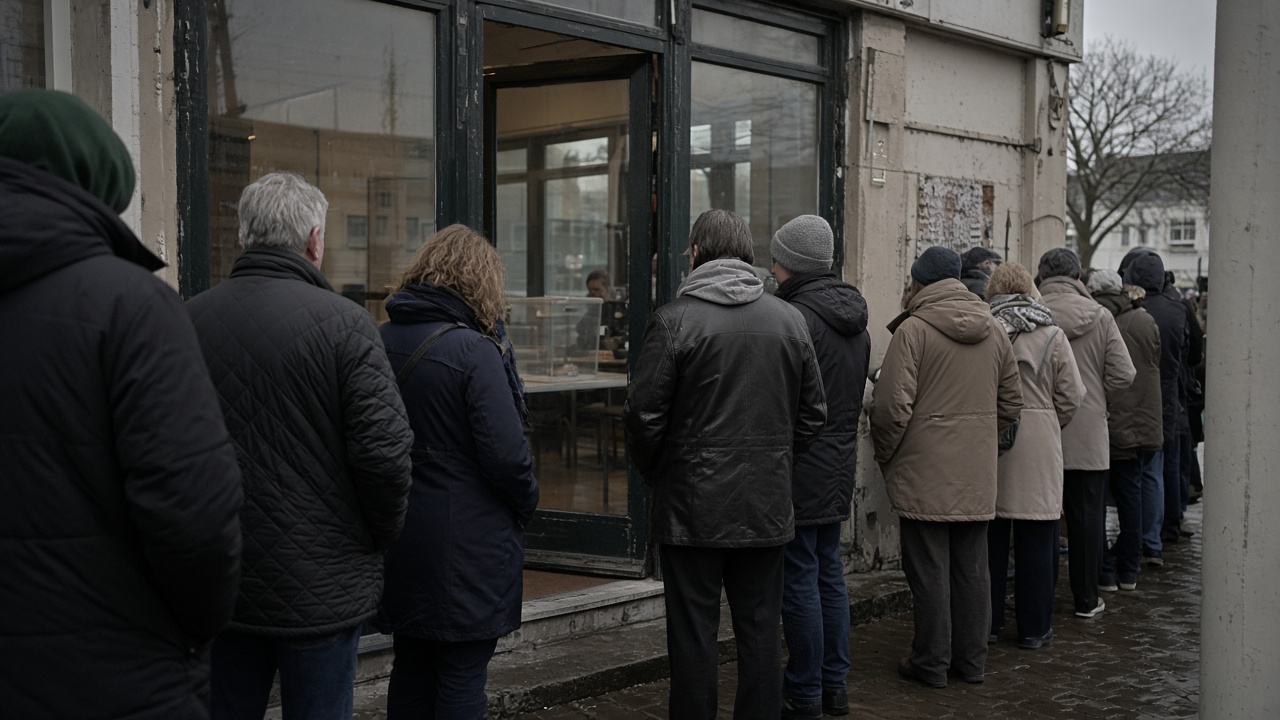
Voters in the Netherlands ended months of political crisis on Wednesday with a result that offered momentum to the center but no clear winner. The national broadcaster NOS and pollster Ipsos I&O projected D66 on 27 seats and Geert Wilders’s Party for Freedom on 25 immediately after polls closed, a gap within the survey’s margin of error. As counting advanced through the night, the picture tightened until both parties sat on 26 of the 150 seats in the Tweede Kamer, according to the election authority’s running totals.
Turnout reached 78.3 percent of the roughly 13.6 million eligible voters, one of the highest figures in recent Dutch elections. Rob Jetten, the 38-year-old D66 leader who could become the country’s youngest prime minister if he can assemble a majority, told supporters the outcome showed voters wanted “hope and cooperation” after the collapse of Dick Schoof’s four-party government in June. Wilders, whose PVV had been the largest party after the 2023 vote, said he would wait for the definitive seat allocation before claiming a mandate, while insisting his movement remained “the voice of millions who feel unheard.”
What the numbers mean for coalition math
The tie at the top did not erase D66’s surge. The centrist liberals gained 18 seats compared with 2023, while the PVV shed a dozen, according to the partial official returns published on Wednesday evening. The conservative VVD held 22 seats, the Green-Labour alliance 20, and the Christian Democratic Appeal 18, leaving Jetten with several plausible paths if he can keep those parties at the table.
Wilders’s options are narrower. He spent much of the last government feuding with partners over asylum and budget rules, and several centrist leaders ruled out serving under him during the campaign. Even a repeat of the awkward 2023 arrangement would require Wilders to accept policy concessions he previously rejected. Analysts in The Hague said the most likely next step is an exploratory round led by a senior informateur, with Jetten given the first chance to test a four- or five-party bloc that excludes the PVV.
Why this election mattered beyond the Netherlands
The snap vote was watched across Europe as a test of whether far-right parties could consolidate gains after a string of strong showings in Germany, France, and Austria. A PVV retreat would ease pressure on Brussels to accommodate nationalist demands on migration and EU spending, while a Jetten-led government would align more closely with French and German efforts to fund Ukraine and tighten fiscal rules.
Financial markets reacted calmly. Dutch government bond yields moved only slightly after the exit poll, and the euro was little changed against the dollar in late trading. Investors said the bigger risk was prolonged talks rather than any single party’s platform, noting that the last coalition took nearly seven months to form after the 2023 election.
What happens next
The Electoral Council must certify the final result, a process that typically takes days rather than hours. King Willem-Alexander will then invite party leaders for consultations before naming an informateur to map coalition options. Jetten said he would begin calling other party chiefs on Thursday, while Wilders demanded clarity on which bloc had truly won before any talks start.
For Dutch households, the immediate stakes are domestic: housing costs, nitrogen farm rules, and asylum processing backlogs dominated the campaign. Whoever forms the next cabinet will inherit a budget deficit that the outgoing finance minister warned cannot be fixed without painful choices. Wednesday’s deadlock suggests those choices will be negotiated by a fragmented parliament rather than a single dominant party.