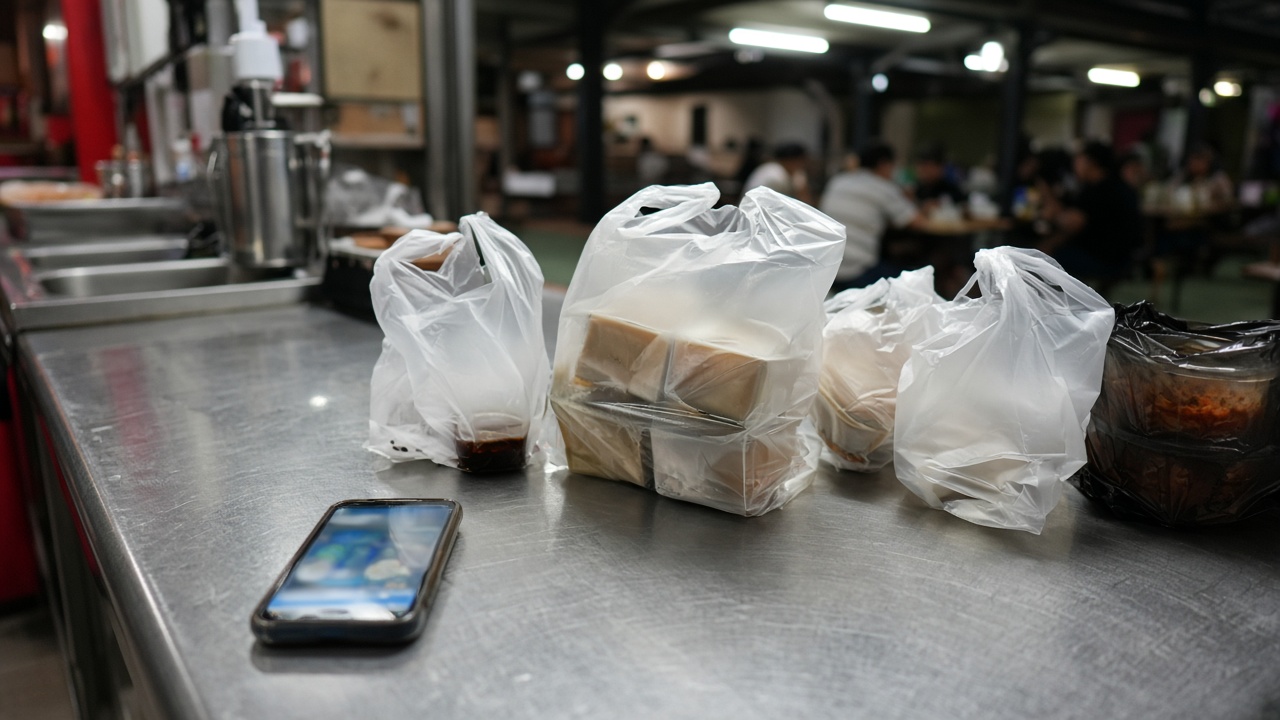
Food rescue apps that sell hawker surplus at a discount have found steady demand in Singapore, yet operators say matching late-day unsold plates with buyers who can reach the stall before closing still wastes more meals than the sustainability pitch suggests.
Yindii, Treatsure and FoodToo list bags of rice, stir-fries and bakery items that would otherwise be discarded, often at half price or less. The economics work for budget-conscious office workers—until a meeting runs long and the pickup window closes.
Where the model breaks
Stallholders at Bedok and Toa Payoh told reporters that apps help on rainy days when walk-in traffic dips, but drivers circling carparks during the 30-minute collection slot clog service lanes. Hawkers pay rent by the hour; waiting for a rider who ordered six kilometres away can mean keeping gas burners on for one S$4 bag.
Apps respond with tighter geofencing and pre-payment, yet cancellation rates spike when MRT delays stack up after 8 p.m. A vendor selling chicken rice said he still throws away two to three portions nightly because the app could not assign a rider in time.
Who uses the apps
Students and young couples dominate the user base, according to operators, while families planning dinner still prefer wet markets where they can choose ingredients. Treatsure’s grocery-bag model works better for bakeries with shelf-stable buns; cooked dishes need eat-within-an-hour discipline that not every buyer follows.
What would help
Urban planners experimenting with five-minute pickup bays at hawker centres could cut double-parking, vendors said. Apps are piloting locker drops at selected malls, but lockers need cleaning and cold-chain rules that hawker food was never designed for.
Until logistics catch up, the lifestyle story is a honest trade-off: you save a few dollars and a meal from the bin if you can reach the stall faster than the cleaner sweeping the floor at closing time.
Stall economics
Rent and utilities for a typical cooked-food stall still run into thousands of dollars monthly; vendors said rescue apps must beat throwing food away without adding labour—some stalls batch surplus only after 9 p.m. when regular queues thin.
NEA food hygiene rules still apply to rescued meals; buyers must consume promptly, and stalls keep temperature logs like any other transaction.
Community fridges in a few estates offer an offline alternative, but volunteers struggle with liability waivers, pushing tech solutions back into the spotlight.