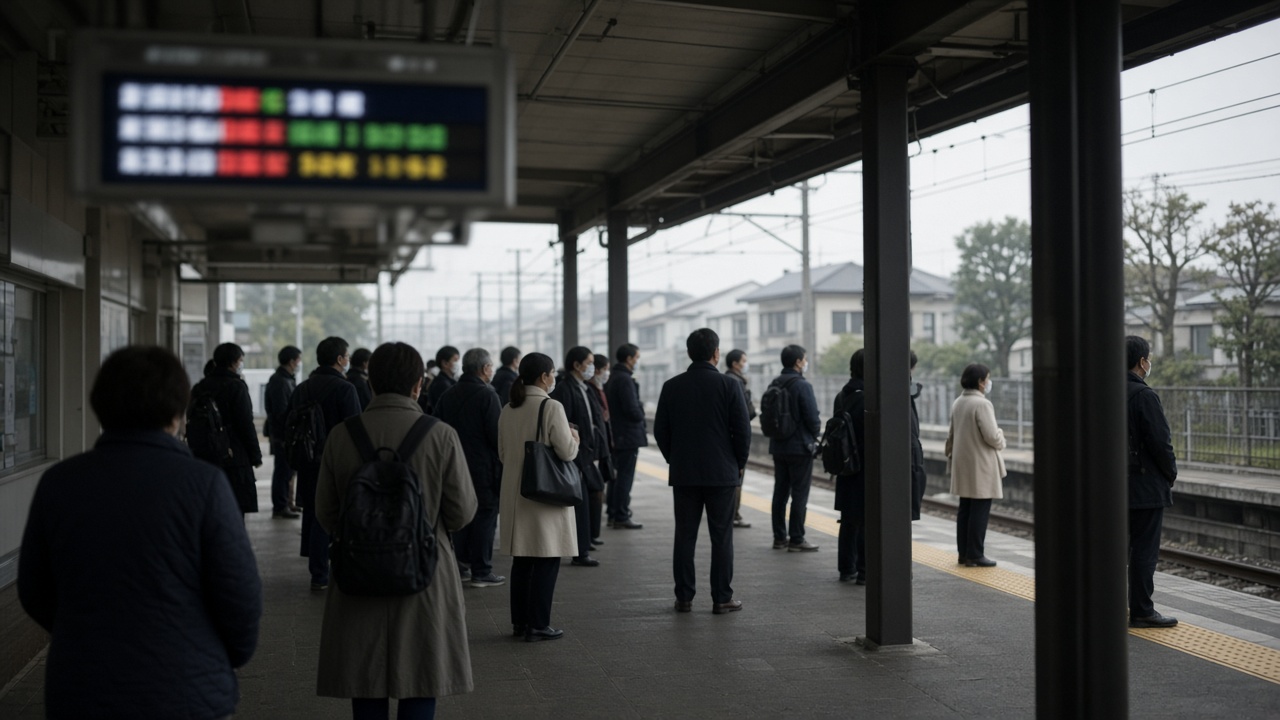
East Japan Railway Co. suspended all Tokaido Line trains between Tokyo Station and Odawara for about an hour on Thursday morning after a person was hit on the tracks at Fujisawa Station in Kanagawa Prefecture. JR East said operations on the up and down lines stopped at 10:43 a.m. and that it expected service to resume around 11:50 a.m., deploying bus substitutes for stranded commuters.
Commute impact
The Tokaido Line is one of the busiest corridors feeding Yokohama, Kawasaki and southwestern Tokyo suburbs. Local media reported crowded platforms at intermediate stops as passengers waited for updates, with some switching to the Yokosuka Line or private railways where possible.
JR East’s initial bulletin did not identify the person involved or confirm whether the contact was fatal, but police and fire units responded to the station as standard in railway incidents. The operator warned that even after reopening, trains would run on a reduced schedule while crews inspected tracks and signals near Fujisawa.
Context in a sensitive month
The shutdown landed in a month when rail safety and disaster messaging are under extra scrutiny in the Kanto region. A magnitude-5.4 earthquake struck northeastern Chiba early on October 29, shaking parts of Tokyo at intensity 2 while Yokosuka and Miura registered higher levels; the Japan Meteorological Agency said no tsunami was expected but cautioned that similar shocks could follow for about a week.
That quake came only weeks after a false emergency earthquake alert on October 17 briefly halted some Shinkansen services and rattled confidence in the warning system. Thursday’s human-incident suspension was unrelated to seismic sensors, but it added another layer of delay for riders already on edge about infrastructure reliability.
Operator response
JR East posted rolling updates on its official disruption site and on station displays, urging travelers to allow extra time. The company said it would cooperate with Kanagawa police on the circumstances leading to the track intrusion and would review whether platform barriers or staff positioning needed adjustment at Fujisawa, a stop between Yokohama and Odawara used by both commuters and tourists heading toward Enoshima.
Japan’s transport ministry typically waits for the operator’s formal incident report before commenting on possible orders. Past track fatalities have led to speed restrictions near stations and renewed debate over platform doors, though cost and heritage station layouts have slowed nationwide installation.
What riders should expect
Evening services may remain uneven if equipment checks continue, JR East said in follow-up notices. Passengers holding commuter passes can use designated alternate routes where mutual ticketing agreements apply, but express trains on the Tokaido corridor were likely to skip some stops to recover spacing once the line reopened.
For the Diet’s fall session, punctual arrivals matter to staffers and lobbyists traveling from Kanagawa constituencies; Thursday’s delay was modest compared with typhoon closures but still registered in a week marked by both shaking ground and crowded platforms.