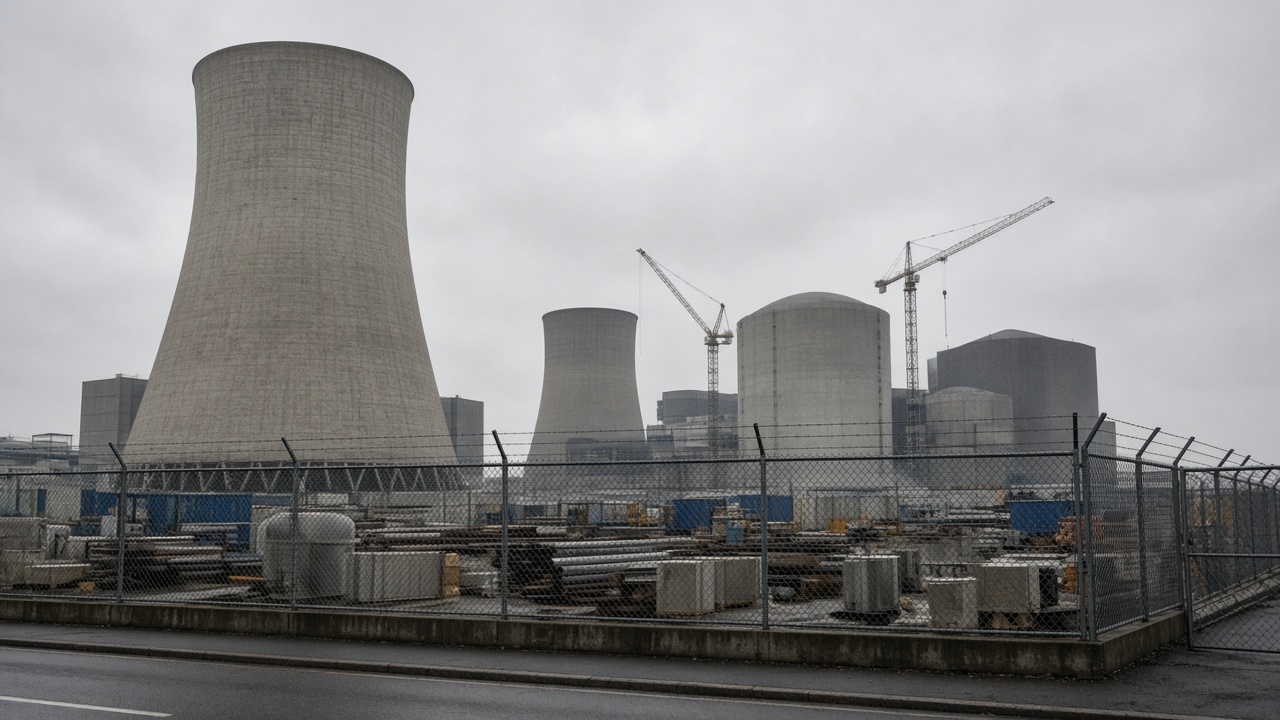
Korea Hydro and Nuclear Power said Thursday it would terminate construction-contract negotiations for two new reactors at the Dukovany site in the Czech Republic, ending a flagship export push that had paired the state-run operator with Doosan Enerbility and Daewoo Engineering and Construction.
In a morning briefing document, KHNP said “differences on key contract terms” with the Doosan–Daewoo consortium could not be bridged despite working-level talks, a dispute-settlement committee, and executive-level meetings. The announcement hit Seoul’s equity market within minutes: the KOSPI was down about 3 percent late Thursday morning, with Daewoo E&C shares falling more than 20 percent and Doosan Enerbility down roughly 12 percent, according to Yonhap’s market report.
What Prague was buying
The Czech government has been racing to replace aging coal capacity and secure long-term power for industry. KHNP’s APR-1400 design won the Dukovany tender last year after a competitive process that drew Westinghouse and EDF, making the Korean consortium’s construction deal a symbolic win for Seoul’s nuclear export strategy.
Under the planned arrangement, KHNP would serve as the nuclear technology vendor while the Doosan–Daewoo group handled the heavy civil and equipment scope. Yonhap’s Korean-language bulletins said both sides had spent months in “practical negotiations” before the breakdown was made public on October 29.
Why the talks failed
KHNP did not publish a line-by-line list of disputed clauses in its initial statement, but the operator framed the collapse as a mutual inability to finalize commercial terms rather than a technical rejection of the reactor design. Construction megaprojects often snag on liability caps, schedule penalties, and local-content rules; any of those fault lines can stall a signature even when the underlying technology choice stands.
For Czech officials, the immediate question is whether KHNP remains willing to stay on as technology provider while Prague searches for another construction partner, or whether the entire Korean package unravels. Energy ministers in Central Europe have little margin for delay given Russia’s curtailed gas flows and the region’s push to decarbonize without sacrificing baseload power.
Market ripples in Seoul
Investors had already been parsing Samsung Electronics’ third-quarter earnings when the KHNP news crossed. Samsung’s record chip profit failed to meet some analyst expectations, and the nuclear headline added a second shock to industrial names tied to overseas engineering revenue.
Construction stocks bore the brunt because Daewoo E&C and Doosan Enerbility had priced in Czech backlog. KHNP itself is state-owned and not traded, but its export pipeline underpins policy speeches from President Lee Jae-myung’s administration about nuclear as a strategic industry alongside semiconductors and shipbuilding.
What comes next
Prague will need a public timeline: restart talks with a slimmed consortium, reopen the construction slice of the tender, or negotiate directly with European contractors while keeping the APR-1400 license path open. KHNP said it had “exhausted” internal escalation steps, language that signals the door is not entirely shut but that another round would require movement on money and risk allocation.
For Korean workers and subcontractors, the collapse is a reminder that overseas reactor deals can evaporate even after a win on paper. Union leaders at Doosan and Daewoo will press management for clarity on domestic backfill projects, while policymakers in Seoul weigh whether to intervene diplomatically with Czech counterparts before alternative vendors step in.