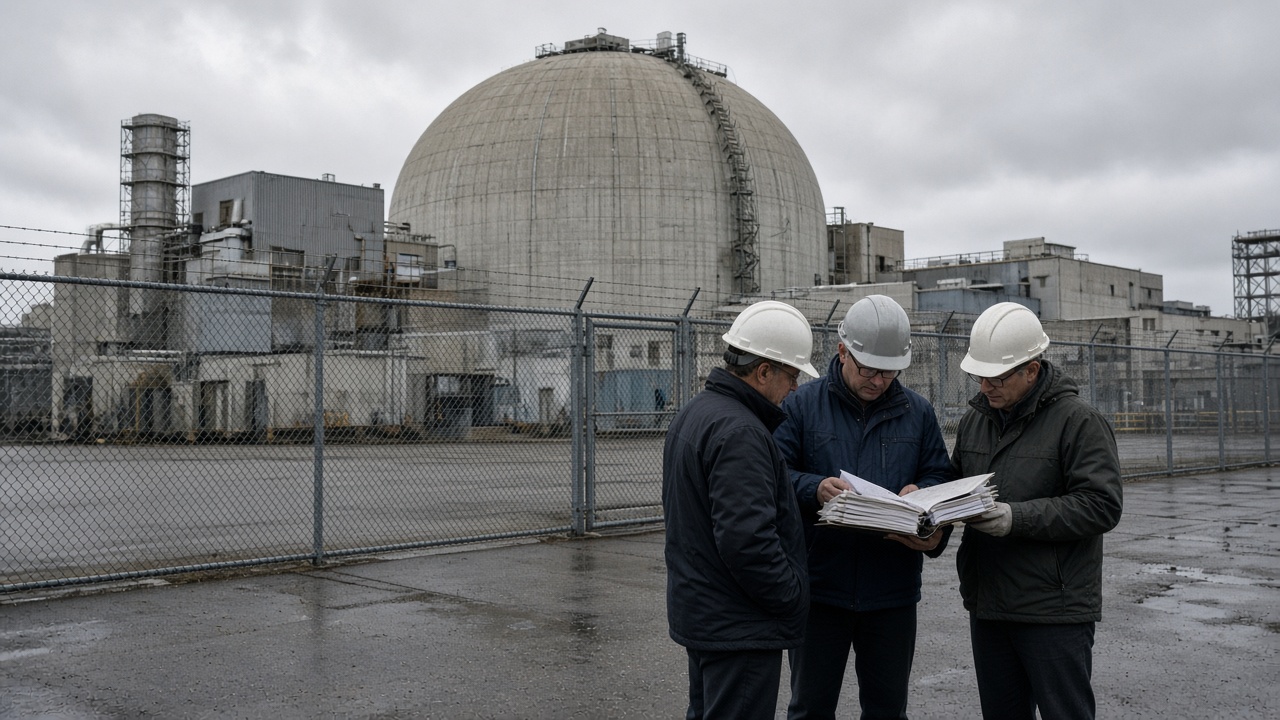
Korea Hydro and Nuclear Power Co. pulled out of a Doosan Enerbility–led consortium competing for Czechia’s Dukovany nuclear expansion on Wednesday, forcing Prague to reopen vendor talks after Seoul and the bidders failed to align on cost guarantees and completion risk. The withdrawal ends months of lobbying in which Korean officials tied the tender to summit-era industrial cooperation, yet leaves Doosan and its partners free to pursue a slimmed bid or exit entirely.
What Prague wanted
Czech industry minister Jozef Síkela had pressed bidders for fixed-price envelopes and local-content pledges that would survive inflation in steel and turbine components. KHNP’s board argued the Czech risk-sharing formula would expose the state-owned operator to uncapped delay penalties if European regulators extended licensing reviews. Doosan Enerbility, which had hoped to export APR1400-derived modules, said it would study a revised structure without KHNP’s balance-sheet backing.
Why KHNP stepped back
People briefed on the decision cited two sticking points: Czech demand for parent-company guarantees beyond KHNP’s export-insurance coverage, and disagreement over who would own early cost overruns on site preparation near the existing Dukovany units. KHNP told employees the move protects cash reserved for domestic Shin Kori and Shin Hanul schedules. A trade ministry official said Seoul still supports Czech nuclear cooperation but will not force KHNP into a contract the board rejected.
Market read in Seoul
Doosan Enerbility shares had rallied on summit hopes for shipbuilding and energy exports; traders trimmed gains after the walkaway, noting revenue from a Czech win was always outer-year. Competitors Westinghouse and France’s EDF remain in Prague’s frame, while Korean construction affiliates that pre-positioned equipment in Central Europe may redeploy to domestic maintenance work. Bond investors focused on whether Doosan must write off bid costs booked during the tender’s due-diligence phase.
Jobs and supply chains
The consortium had mapped subcontractor slots for Korean valve makers and steel fabricators. Industry groups in Changwon and Ulsan said losing the anchor order hurts export visibility but avoids worse losses if Prague imposed penalty clauses. Czech unions wanted Korean partners to train local welders; those programs pause unless a new bidder revives the training annex.
What happens next in Prague
Minister Síkela scheduled briefings for Thursday with remaining teams, seeking refreshed price tables by mid-November. EU state-aid reviewers still watch how Czech guarantees are structured. Korean diplomats in Prague will continue technical dialog without committing KHNP capital. Analysts say a slimmed Korean bid could return if Czechia accepts milestone payments instead of a single fixed price.
Seoul policy context
President Lee Jae Myung’s government promoted nuclear exports alongside U.S. summit language on energy security, yet KHNP’s exit shows commercial boards still veto deals that strain domestic schedules. National Assembly trade panels may ask whether export credit agencies should back future bids differently. For Czechia, the expansion timeline slips; for Korea, the episode clarifies that headline diplomacy does not override project finance math.
Investor checklist
Watch Doosan Enerbility disclosures for bid-cost impairments and any partner lawsuits over withdrawn guarantees. KHNP’s domestic capex calendar unchanged is the base case. If Prague reopens talks with Westinghouse-only framing, Korean suppliers shift to component roles rather than lead-contractor status—a smaller prize but lower risk than the collapsed consortium structure.
Diplomatic follow-up
Embassy channels in Prague and Seoul emphasized that civilian nuclear training exchanges continue even without a Dukovany win. Czech engineering students still rotate through KHNP simulators under university agreements unrelated to the tender. That soft cooperation may keep doors open if politicians on both sides want a face-saving relaunch after price talks reset.