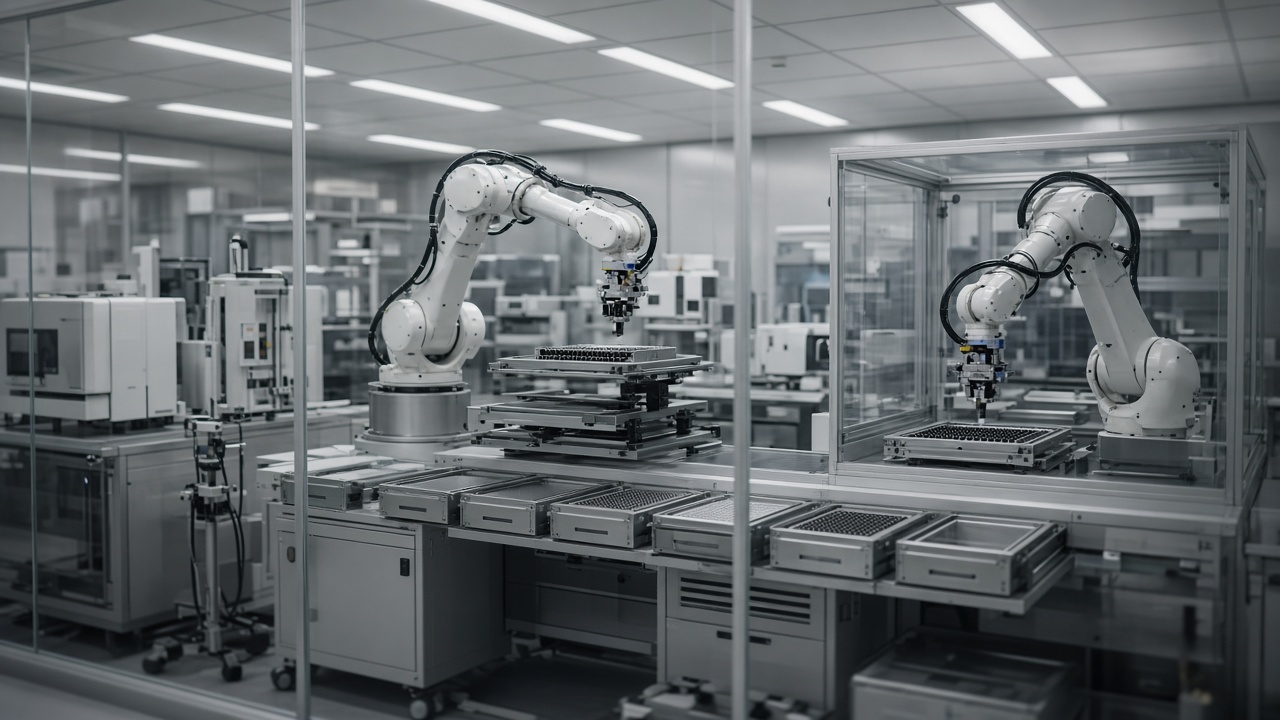
Singapore unveiled MARVEL-AI this week, a S$150 million government-backed programme that wires automated laboratories to artificial intelligence models so researchers can test new compounds faster for batteries, semiconductors and lightweight structures.
The initiative sits alongside existing A*STAR infrastructure but emphasises closed-loop experimentation: algorithms propose formulations, robots synthesise samples, and feedback from tests retrains the model without weeks of manual bench work.
Why materials matter now
Export-oriented manufacturers here depend on specialty chemicals and substrates that face tighter supply after global shipping disruptions. Faster discovery reduces reliance on single-source imports and supports the Economic Development Board’s push for higher-value production on limited land.
Public funding covers shared robotics and data platforms; private partners contribute domain problems such as heat-resistant coatings for data-centre chips or membranes for water treatment.
Local jobs angle
Technicians who once logged samples by hand will shift toward supervising automated runs and validating outliers flagged by AI. Polytechnics said they are aligning final-year projects with MARVEL-AI nodes so graduates can operate the equipment rather than compete with it.
If the programme hits its throughput targets, the technology desk story is not another chatbot headline but hardware on the ground that could shave months off qualifying a new battery electrolyte.
Implementation timeline
Agencies said first shared lab nodes should accept external proposals in the first half of 2027 after safety certification, with pilot industry projects running on anonymised datasets where IP sensitivity requires it.
Competing jurisdictions offer similar robot-lab concepts; Singapore’s pitch is tight integration with port logistics and semiconductor packaging lines already here.
Startups without their own wet labs could rent robot time by the hour, lowering capex for firms testing niche coatings.
Defence-adjacent materials remain classified, but civilian partners said corrosion-resistant coatings for offshore rigs are already in the proposal queue, showing how dual-use labs could feed both energy and security supply chains.
Universities asked for graduate fellowships tied to MARVEL-AI so talent does not migrate to hyperscaler AI labs with fewer hardware constraints.
Energy-intensive robot runs will draw power under EMA’s tariff structures; agencies said they will site labs near grid-ready industrial zones to avoid competing with households for peak capacity.
Open-science advocates want summary results published so SMEs can reuse failure data, not just successful formulas.
Industry observers compare MARVEL-AI to overseas “self-driving lab” programmes, but note Singapore’s advantage is tight coupling with existing wafer fab and chemical import hubs at Jurong Island.
Grant applications open to institutes of higher learning next quarter with peer review panels mixing academic and industry chemists.