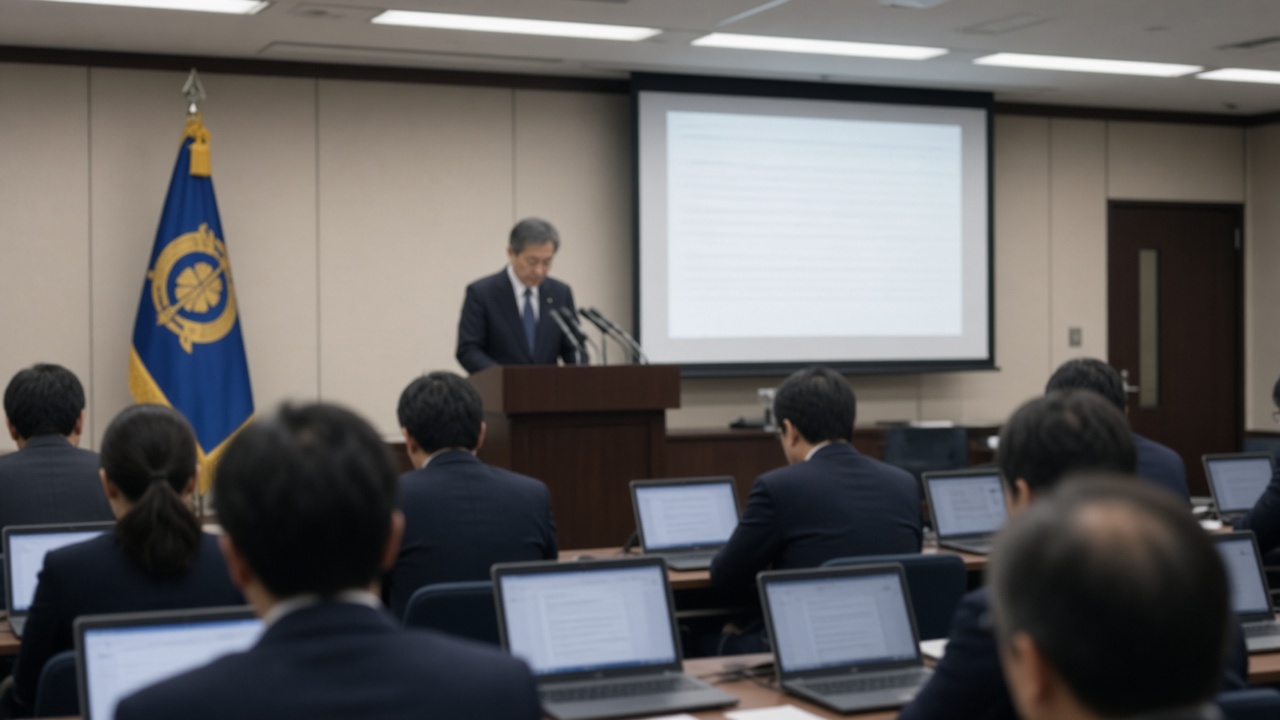
Economy, Trade and Industry Minister Taro Kono used a Wednesday Tokyo energy briefing to spell out ammonia co-firing milestones Japan’s major utilities must meet on existing coal units, linking METI subsidy tranches to verified burn tests and long-term fuel supply contracts rather than slide-deck pledges alone—a politics desk read because Kono’s timeline lands as Prime Minister Sanae Takaichi’s government prepares the next strategic energy plan revision and opposition parties ask whether hydrogen-family fuels are cover for extended coal runs.
What Kono announced
According to briefing materials distributed to reporters, utilities in the Federation of Electric Power Companies must demonstrate stable co-firing at agreed percentage bands on designated units by fiscal-year checkpoints, with third-party measurement of NOx and ammonia slip before grant money releases. Kono named no single plant Wednesday but referenced prior pilot burns at coastal stations where ammonia tank farms and vaporizer skids were installed with METI green innovation fund support.
Officials said milestones differ by unit age and grid role: baseload plants face stricter continuity tests, while mid-merit units may qualify with seasonal campaigns if they publish outage windows to grid operators. Missing a checkpoint pauses subsidies but does not automatically trigger retirement orders—language Akari Kato’s sources say Komeito coalition partners pushed to keep employment transitions gradual in host municipalities.
Supply chain and imports
Japan’s ammonia road map assumes blue and eventually green molecules imported from Australia and the Middle East until domestic electrolysis scales. Kono told utilities to file binding offtake letters or equity-linked supply MOUs before the next METI audit, after trading houses warned spot ammonia volatility could make co-firing uneconomic on months when coal alone is cheaper on marginal cost.
Port safety rules for toxic ammonia handling slowed some tank approvals in Chiba and Nagoya bays; METI said it will coordinate with MLIT on berth scheduling so utilities are not penalized for harbor delays outside their control. Environmental groups in the room asked whether co-firing extends coal life; Kono answered that milestones are stepping stones toward full ammonia or hydrogen combustion and carbon capture retrofits listed in the GX league framework.
Diet and fiscal politics
Opposition Constitutional Democratic Party lawmakers said they will demand committee testimony on whether co-firing grants substitute for accelerated renewable auctions offshore wind developers want. LDP tax-panel members tied METI outlays to sunset clauses in the supplementary budget debate Takaichi chairs after UN week travel, a packaging move opposition whips may split into standalone energy votes.
Kono, a former digital minister, framed dashboards that will publish utility progress quarterly—an transparency pitch after prior METI programs faced criticism for opaque vendor selection. FEPC executives standing beside him pledged consolidated reporting across ten regional operators, though smaller municipal utilities outside the federation remain on voluntary tracks.
Grid and price effects
Household tariffs still reflect fuel cost pass-through rules; ammonia co-firing at pilot scale is unlikely to move bills immediately, but METI’s briefing warned that failed supply contracts could force utilities back to pure coal on short notice, a volatility risk the Electricity and Gas Market Surveillance Commission may watch. Industrial users in Kansai asked whether co-firing hours will coincide with their contract peak seasons; Kono deferred to each utility’s scheduling office.
For policy watchers, Kono’s briefing is the administrative calendar: burn tests, contracts, grants—not headlines about fuel types. Whether Takaichi’s cabinet treats ammonia as transition or delay for coal retirements will show up in the strategic energy plan draft expected before year-end—and in whether milestones harden into law or stay as METI notices utilities can miss with fines only on subsidies, not on operations.
Trading desks noted JERA and other major generators already trade ammonia-linked futures exposure through parent trading houses; Kono’s milestone language may accelerate disclosure in next quarterly securities filings even when plants remain physically unchanged this winter.
Regional banks in coal-host prefectures asked METI whether milestone jobs count toward local employment transition grants; briefing staff said labor ministry programs run on separate applications but will accept co-firing training certificates as evidence of reskilling.
Kono closes the loop by insisting Tokyo sets the utility calendar on molecules and meters, not on foreign social posts about energy prices—a subtle separation from FX-heavy news days elsewhere in the edition.