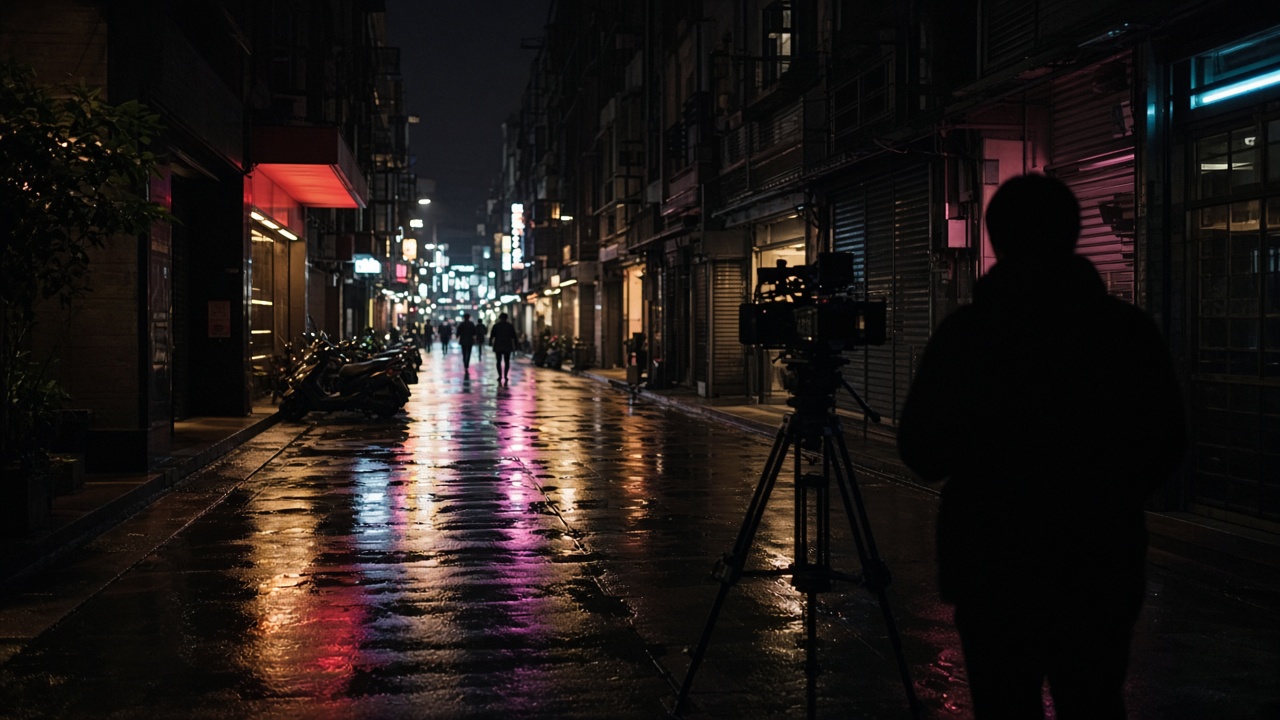
Korean actor and singer Shin Wonho dropped the digital single “Day & Night” on Oct. 28 with a music video filmed across Taipei night streets, pairing his house-and-R&B track with actress Pu He-fei in a romance storyline directed by Cheng Li-yao. The release lands as Taiwan’s concert circuit reboots after typhoon postponements, including singer Liang Wen-yin’s rescheduled Hualien set that same week.
Production choices
Shin said Taipei’s mix of neon alleys and wide boulevards matched lyrics he wrote about sleepless messages between lovers. Crews shot during approved overnight windows with traffic control on side roads near Xinyi and Datong districts, using natural shop glow rather than oversized lighting rigs. Pu, known from the film “The Wedding You Owe Me,” brought dance training to blocking that emphasizes glances over dialogue.
Creative credits
Shin composed and produced the track, writing Japanese lyrics himself after last month’s “Super Star” single surpassed three million views. Cheng’s team used handheld cameras for intimate shots and a crane for a rooftop sequence overlooking blurred city lights—art direction meant to feel like a visitor’s first night in Taipei rather than a tourism ad. Dancers from a local studio appear in a bridge sequence shot under elevated tracks.
Industry context
K-pop and K-drama stars increasingly film in Taiwan for cost and aesthetic reasons, reviving locations scouts favored before pandemic border rules. Amuse Entertainment marketed the MV simultaneously on Korean and Taiwan streaming platforms, hoping cross-strait social buzz boosts chart positions. Local promoters said Shin expressed interest in returning for fan events if view counts hold.
Parallel local headline
Liang Wen-yin’s Oct. 28 Hualien performance—delayed by Typhoon Champi—showed how live music schedules remain fragile. Liang performed without full band rehearsal yet delivered a seven-song set, illustrating veteran adaptability Shin’s team praised in interviews. Both stories highlight Taiwan as a workable base for East Asian pop production even when weather intervenes.
Fan reception
Early comments praised Pu’s chemistry with Shin and Cheng’s color grading; some viewers recognized specific alleys and debated whether locations should stay unnamed to avoid crowds. Privacy-conscious residents noted crews kept noise low after midnight, a requirement Taipei film offices enforce more strictly than a decade ago.
What’s next
Shin plans promotion on Korean music shows while Cheng edits behind-the-scenes clips for streaming. Pu returns to drama shoots in November; tourism marketers quietly hope the MV spurs photo spots without official campaigns. For entertainment desks, the release is a modest but well-crafted example of Taipei standing in for any modern Asian metropolis—provided crews respect neighbors when the neon lights wrap.
Location management
Taipei film offices required the production to post bond for street cleaning and noise monitoring, conditions Cheng’s team met by hiring local contractors familiar with night-shoot rules. Residents received door notices in Chinese and English explaining parking restrictions—a courtesy that reduces complaints when K-pop crews return.
Streaming metrics
Amuse said it will release view counts after 72 hours on major platforms, a standard promotional window for K-pop digital singles. Taiwan streaming partners placed the track on city-pop playlists aimed at commuters returning to offices after typhoon remote-work days.