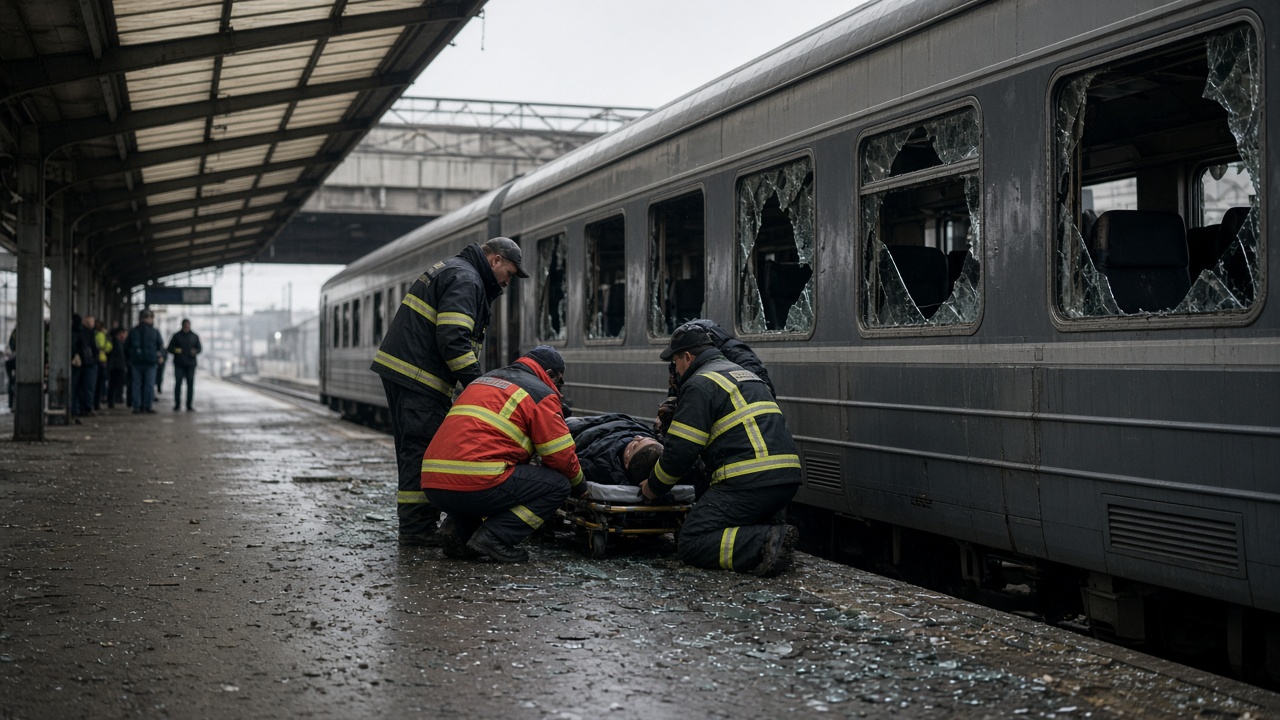
A jet-powered Russian drone tore into a crowded platform at Dnipro’s main railway station on Thursday, killing 14 civilians and wounding at least 14 others, according to regional military administrator Oleksandr Hanzha and state operator Ukrzaliznytsia. The strike hit while passenger train No. 866 to Zaporizhzhia and a commuter service were at the platform, even though railway chief Oleksandr Pertsovskyi had raised the threat alert beforehand.
What operators confirmed
Ukrzaliznytsia said one of four jet-powered attack drones launched toward Dnipropetrovsk Oblast around 11:00 local time evaded air defences and struck the station platform. Pertsovskyi wrote on Facebook that many passengers remained on the concourse despite the elevated warning, and emergency crews found a blast hole near a damaged carriage with shattered windows. Hanzha updated the toll twice on Telegram, reporting six people in critical condition, multiple shrapnel injuries, and a 40-year-old man who underwent double amputation.
President Volodymyr Zelenskyy called the attack “horrific” and said Moscow targeted a routine commuter train alongside scheduled intercity service. Ukraine’s Air Force command said interceptors destroyed three of the four drones before the fourth reached the station. Prosecutors opened a war-crimes case under Article 438 of the criminal code, standard procedure after strikes on transport infrastructure.
Rail network under pressure
The Dnipro hit lands in a year of intensified Russian pressure on Ukraine’s railways, which have kept civilian evacuations and military logistics moving since 2022. Pertsovskyi told reporters that nearly 60 percent of locomotive damage recorded since the full-scale invasion has occurred in 2026 alone, with overall attacks on rail facilities rising from 1,206 last year to about 1,700 so far this year, according to statistics Ukrzaliznytsia supplied to AFP. In September, operators evacuated passengers from more than 5,800 train services because of drone threats.
Thursday’s casualties were not isolated. Associated Press reported additional civilian deaths from a cruise-missile strike in Chernihiv and a drone hit on an apartment block in Kremenchuk, part of a broader wave as Moscow and Kyiv prepare to resume U.S.-mediated talks next month. For Dnipro, the immediate task is identification, hospital surge capacity, and restoring limited service on lines that feed the southern front.
What investigators must establish
Rescue imagery published by Ukraine’s emergency service showed body bags blurred on the platform and structural damage to overhead canopies. Authorities have not released a full passenger manifest for No. 866, and it remains unclear whether any military-age men aboard were mobilization-related travel rather than routine commuters. Western capitals are likely to treat the platform strike as a civilian-targeting incident, but forensic teams still need to confirm drone type and launch corridor before attributing the sortie to a specific Russian unit.
Ukrzaliznytsia said all necessary services were on scene and asked travelers to heed station alerts when threat levels rise. For a network that markets itself as the backbone of civilian movement, the Dnipro platform deaths are both a security failure at the point of impact and a reminder that warning systems alone cannot empty a hub during peak transfer windows.