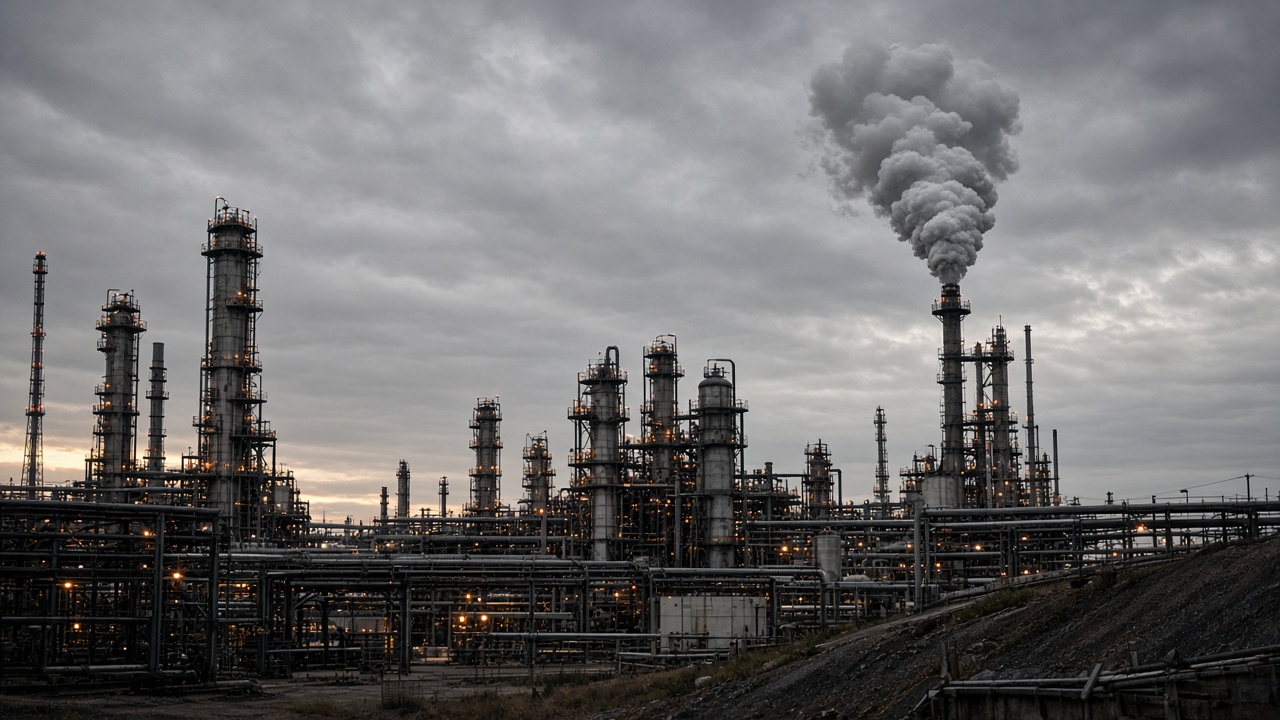
ExxonMobil and Chevron opened the U.S. oil majors’ earnings week with third-quarter beats driven by near-maximum refinery runs while West Texas Intermediate crude traded above $103 a barrel into Friday’s session.
ExxonMobil reported $15.4 billion in earnings, or $3.72 a share, with adjusted profit of $4.23 a share on $113.2 billion of revenue. Chevron earned $9.9 billion, or $5.06 a share, with adjusted profit of $5.28 on $67.8 billion of revenue. Both companies said U.S. downstream units captured wide diesel and jet fuel margins as global supply chains absorbed refinery outages tied to Middle East conflict and Ukrainian strikes on Russian fuel plants.
Refining carried the quarter
Chevron said its U.S. refineries processed a record 1.09 million barrels of crude oil per day at about 98 percent utilization, with diesel and jet fuel yields up more than 10 percent from a year earlier. ExxonMobil said Gulf Coast crude units ran at 100 percent utilization and posted the second-highest diesel production on record at those plants.
CNBC calculated that Chevron’s refining division profit jumped to about $4.9 billion from $1.1 billion a year ago, while Exxon’s energy products earnings strengthened on margins and optimization even as upstream earnings slipped on price and Guyana entitlement effects.
Upstream still prints cash, but growth mixed
Chevron’s total production averaged about 3.9 million barrels of oil equivalent per day, slightly below last year’s quarter, with international volumes pressured by Middle East disruptions while U.S. output held flat. Exxon highlighted milestone barrels from Guyana and the Permian but reported lower upstream earnings on price and accelerated entitlement impacts in Guyana.
Shareholders still saw heavy cash return: Exxon distributed $9.4 billion in the quarter, including $5.1 billion of buybacks, and announced a $20 billion repurchase plan for 2027. Chevron raised its dividend in the period and continued buybacks under its standing authorization.
What holders should watch into November
Refining records tend to mean revert when maintenance season returns or when geopolitical premiums fade. Both companies flagged Middle East conflict in international downstream volumes; any ceasefire that restores exports could narrow diesel cracks quickly even if crude stays elevated.
Index investors see the pair as different bets: Exxon’s adjusted earnings leaned on integrated energy products this quarter, while Chevron’s adjusted beat combined downstream strength with higher oil realizations. Neither release changed near-term production guidance dramatically, but both emphasized reliability after years of post-pandemic repair spending.
Macro crosscurrents on Friday
While energy names reported, broader equity futures slid on technology earnings elsewhere, and Brent crude pushed toward $113 on shipping risk in the Strait of Hormuz. That combination — strong downstream capture plus volatile crude — is exactly what integrated majors are built to hedge, but it also explains why analysts focus on utilization percentages as closely as barrel counts.
For retail holders, the actionable read is segment mix: if you own these stocks for dividends, downstream blowouts can cushion upstream price drops; if you own them as crude proxies, today’s releases show production slightly down year over year at Chevron and mixed at Exxon despite headline profit growth.
Energy Products versus upstream mix
ExxonMobil’s release highlighted record year-to-date refining utilization excluding Middle East impacts, plus Guyana and Permian production milestones. Chevron included one month of Venezuela production under equity accounting and record Australian operated output, showing how geography skews year-over-year comparisons even when headline earnings rise.
Both companies flagged shareholder distributions: Exxon announced $20 billion of repurchases for 2027 after $5.1 billion in the quarter, while Chevron continued dividends and buybacks under its standing program. Income investors should weigh whether downstream-heavy quarters increase dividend cover or signal peak margin cycles.
Retail holders watching pump prices should remember refining windfalls do not map one-to-one to gasoline bills — branded stations set street prices on local competition, while these earnings reflect wholesale margin capture during supply tightness.
Analysts polled by LSEG had expected $4.08 from Exxon and $4.89 from Chevron; both clears give index funds tracking U.S. mega-cap energy a positive surprise heading into November rebalances.