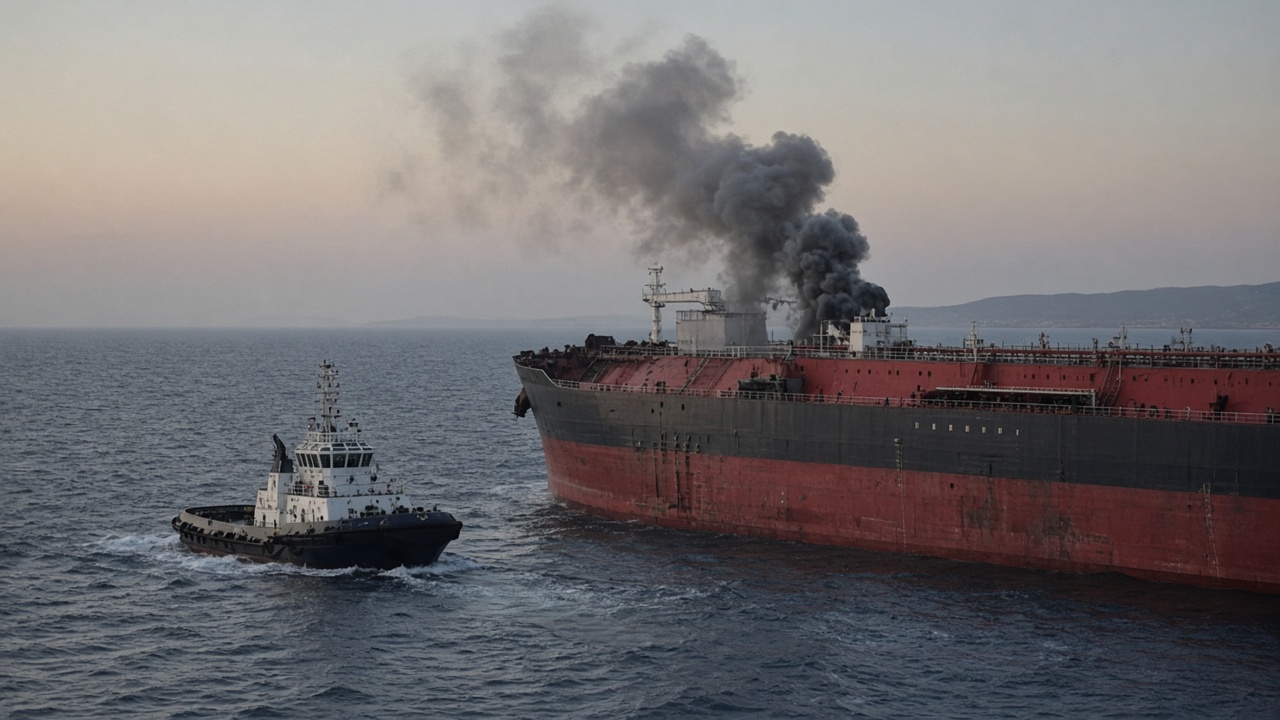
A commercial tanker caught fire in the Strait of Hormuz on Friday after a small boat pulled alongside and attached two explosives above the waterline, the United Kingdom Maritime Trade Operations center said, temporarily disabling the vessel in the channel that carries roughly a fifth of the world’s seaborne oil.
The British military liaison office, which advises merchant crews in the Gulf, reported that the blasts struck while the tanker was transiting the strait. UKMTO did not name the ship, its flag or its cargo in the initial bulletin, and no group immediately claimed responsibility. The account nonetheless landed at a moment when missile and drone exchanges between Yemen’s Houthis and Saudi Arabia have again spiked, including intercepts near Mecca and over Riyadh on the same day.
What maritime monitors reported
UKMTO’s notice described a small craft approaching the tanker, attaching two explosive devices and detonating them. Because the charges were placed above the waterline, the blasts were intended to damage the hull and onboard systems rather than sink the ship outright, analysts who track Gulf shipping risks said. The fire that followed forced the crew to fight flames while the vessel drifted, and UKMTO warned other traffic in the area to steer clear until tugs and naval escorts could respond.
Shipping insurers already classify Hormuz transits as a priced war risk after months of Houthi missile campaigns and retaliatory airstrikes. Friday’s incident fits a pattern of low-tech attacks—speedboats, limpet mines and drone strikes—that aim to disrupt traffic without triggering the full blockade Tehran threatened earlier in the year. Lloyd’s Market Association members have kept elevated premiums on Gulf voyages even as U.S. Central Command reported redirecting commercial traffic away from Iranian harassment zones.
Why crude desks are on alert
Any sustained closure of Hormuz lanes would ripple through Brent and Dubai benchmarks within hours, because Gulf producers have limited alternative export routes. Traders in Singapore and London said Friday’s fire did not yet justify a risk premium spike, but several desks moved contingency plans—chartering smaller shuttle tankers and delaying reloads at Fujairah—until owners confirmed the stricken ship had been towed clear of the traffic separation scheme.
Energy ministers from eleven European Union countries pledged 20.5 million barrels of diesel stocks on the same day, citing winter supply fears tied to Middle East instability. The stock release is separate from the tanker attack, yet officials in Brussels cited the broader pattern of Gulf security incidents when explaining why they wanted refinery capacity and strategic stocks ready if Hormuz disruptions worsen.
Regional context without a confirmed link
Saudi Arabia said it intercepted a Houthi drone near Mecca and destroyed ballistic missiles aimed at Riyadh, while the Houthis denied targeting Islam’s holiest city. AP reported the Hormuz attack alongside those intercepts but cautioned that UKMTO had not attributed the tanker explosions to any faction. U.S. Fifth Fleet spokespeople did not immediately release a statement on the tanker fire, leaving initial confirmation to UKMTO and ship managers filing mandatory security reports.
For crews still sailing the strait, the practical guidance unchanged since earlier attacks remains: maintain lookouts for fast boats, report suspicious approaches to UKMTO and naval escorts, and keep damage-control teams ready. Until investigators identify the attackers and owners disclose whether cargo was lost, the incident will be treated as another stress test on a waterway the global economy still cannot bypass.