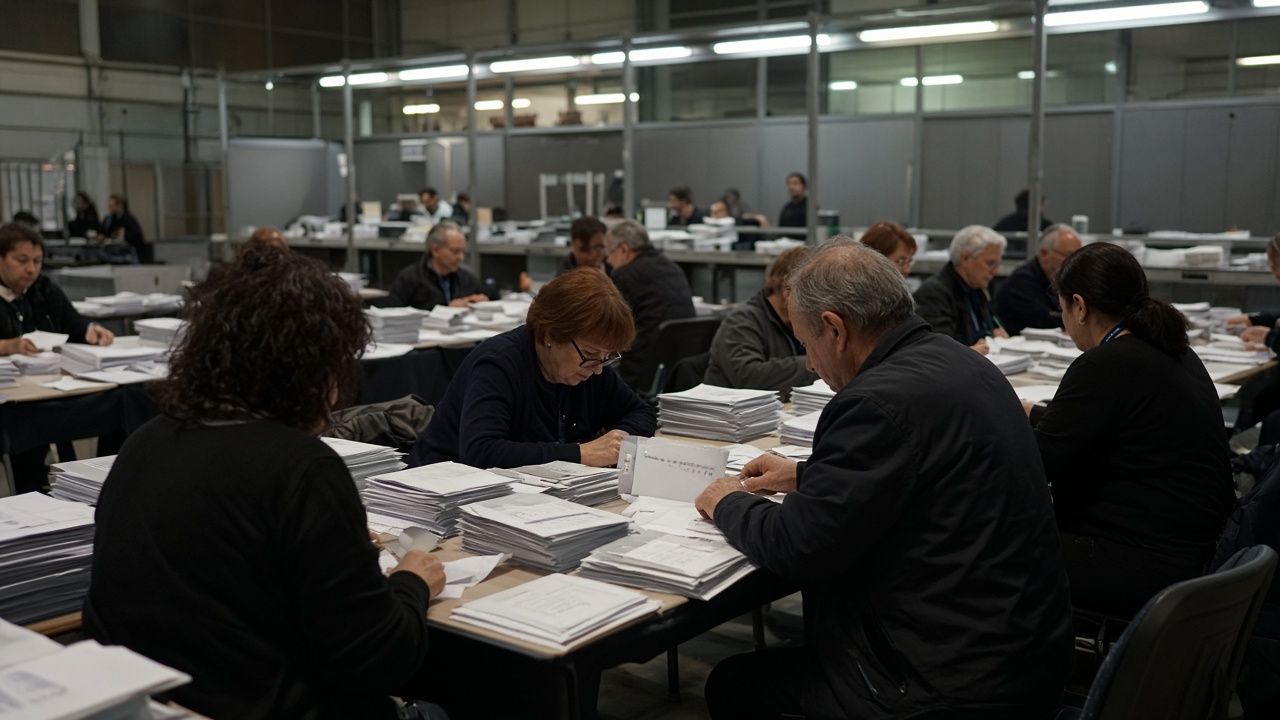
Israel’s Central Elections Committee finished counting every ballot from Tuesday’s wartime election and published the certified arithmetic early Friday, confirming that no faction can claim a Knesset majority without a coalition that has not yet been built.
The headline number for Prime Minister Benjamin Netanyahu is 53 seats for his right-wing and religious allies — enough to lead the tally but eight short of the 61 needed to govern. The bloc aligned with former military chief Gadi Eisenkot holds 48. Arab-led parties, principally the Joint List and Ra’am, hold a record 19 seats between them, nearly double the 10 they controlled in the outgoing parliament.
What the final seat map shows
Official results give Likud 27 seats, Yashar 21, and the pro-Netanyahu alliance B’Yachad 12. On the opposition side, the Joint List takes 11, The Democrats eight, and Yisrael Beytenu seven. Shas falls to six seats, United Torah Judaism seven, Otzma Yehudit seven, and Religious Zionism six. Two lists — Yoaz Hendel’s Reservists-Economic party and Ofer Winter’s People of Israel — finished below the 3.25 percent threshold and won no seats.
Turnout reached 77.9 percent, the highest in decades, with 5,716,665 votes cast and about 25,000 ballots disqualified. The committee said it would still hand the formal certificate to President Isaac Herzog on Wednesday after any remaining complaints are reviewed, and Herzog will then begin consultations on who should receive the first shot at forming a government.
Why the Arab bloc matters now
The Joint List and Ra’am together won more seats than several Zionist factions that once treated them as permanent outsiders. In pure arithmetic, adding all 19 Arab seats to Eisenkot’s 48 would produce a 67-seat anti-Netanyahu majority. In practice, most Zionist opposition parties except The Democrats have ruled out sitting in a government that depends on Ra’am or the Joint List, leaving Netanyahu and Eisenkot to hunt for defectors or unlikely partners instead.
Netanyahu’s outgoing coalition controlled 68 seats before the vote; losing 15 seats while Arab parties surged reshapes both the moral narrative of the campaign and the bargaining power available in back-room talks. Arab leaders have not yet committed to recommending either side to Herzog, and any move to do so would trigger fierce pushback from parts of the right.
What happens next
Party leaders must now file recommendations to Herzog after the certificate is delivered. Netanyahu can still argue that he heads the largest bloc, but Eisenkot can counter that a broader anti-Netanyahu camp outnumbers him if Arab votes are counted — even if those votes cannot easily be converted into a cabinet. The Knesset is scheduled to be sworn in on November 10, and weeks of bargaining are likely before anyone secures a confidence vote.
The committee reiterated that an investigation into alleged voter fraud would not alter the published totals, attempting to close the door on claims that could delay certification. For now, the new fact is simple: Israel has a final count, a record Arab representation, and no prime minister with a ready majority.